
Iran at a Breaking Point: Crisis, Resistance, and the Question of Revolutionary Leadership
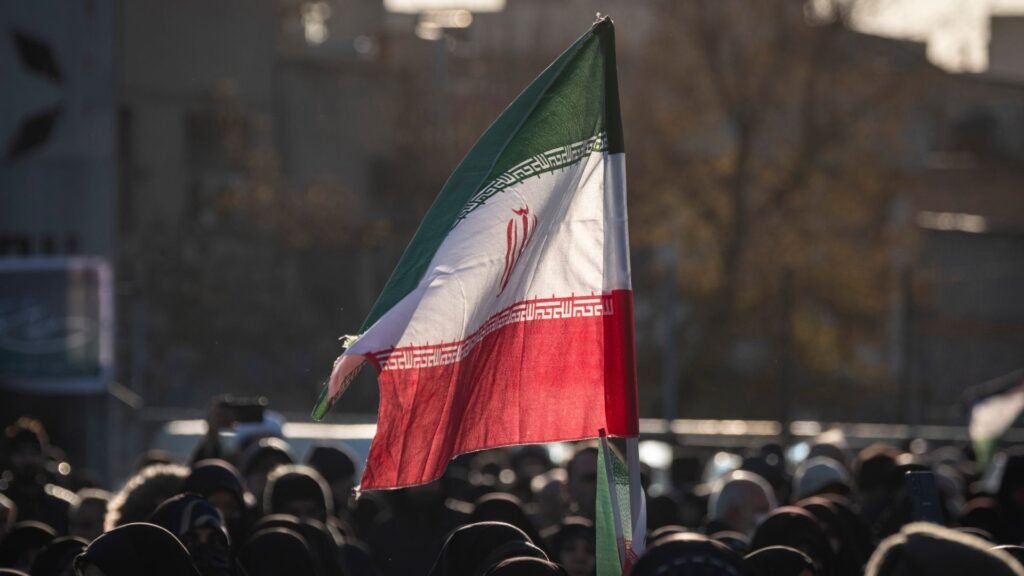
Iran has entered a new and volatile phase of social confrontation. A sharp collapse in the national currency at the end of December triggered an eruption of unrest that rapidly exceeded the bounds of conventional protest. What began as economic outrage in Tehran’s bazaars has evolved into a nationwide challenge to the authority and legitimacy of the Islamic Republic itself. The speed, breadth, and intensity of the current movement signal not a transient disturbance, but a deep structural crisis whose outcome remains profoundly uncertain.
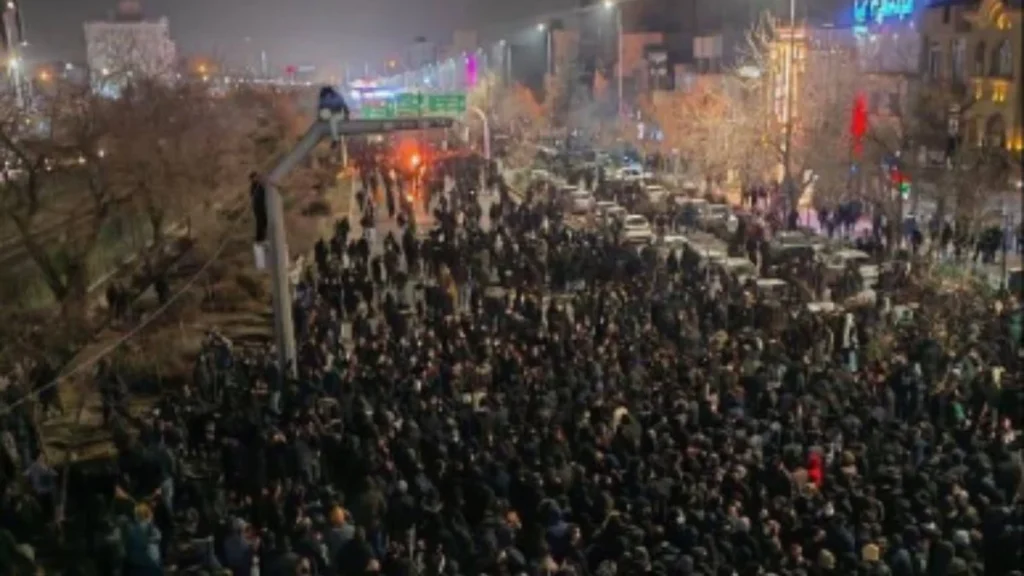
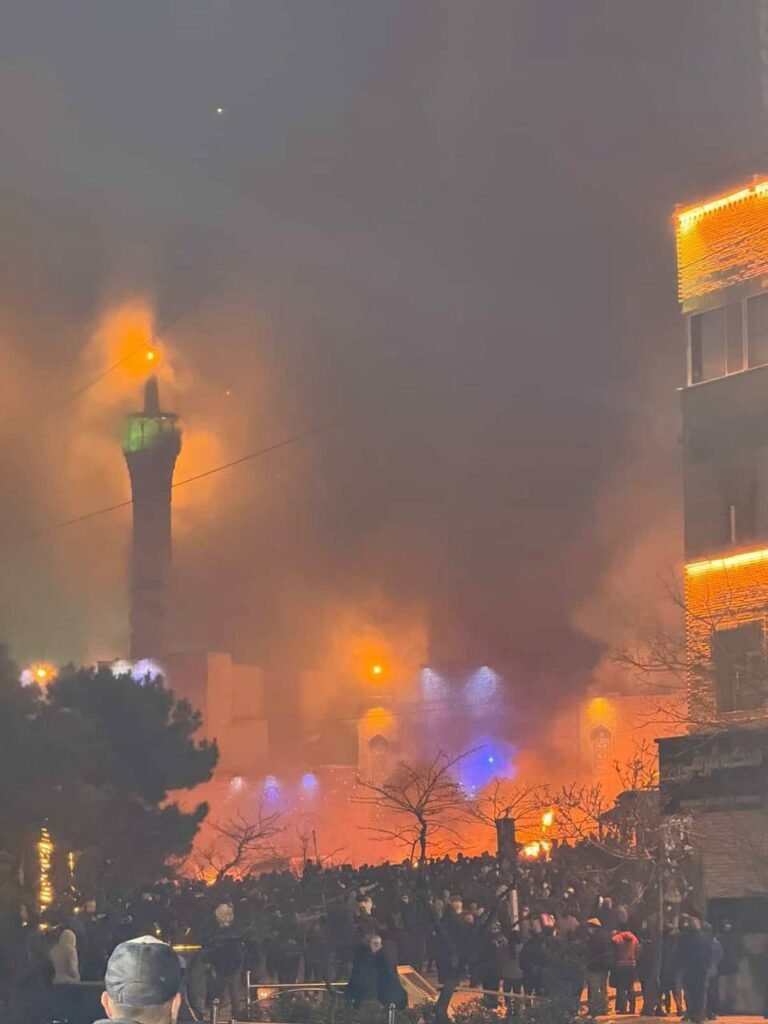
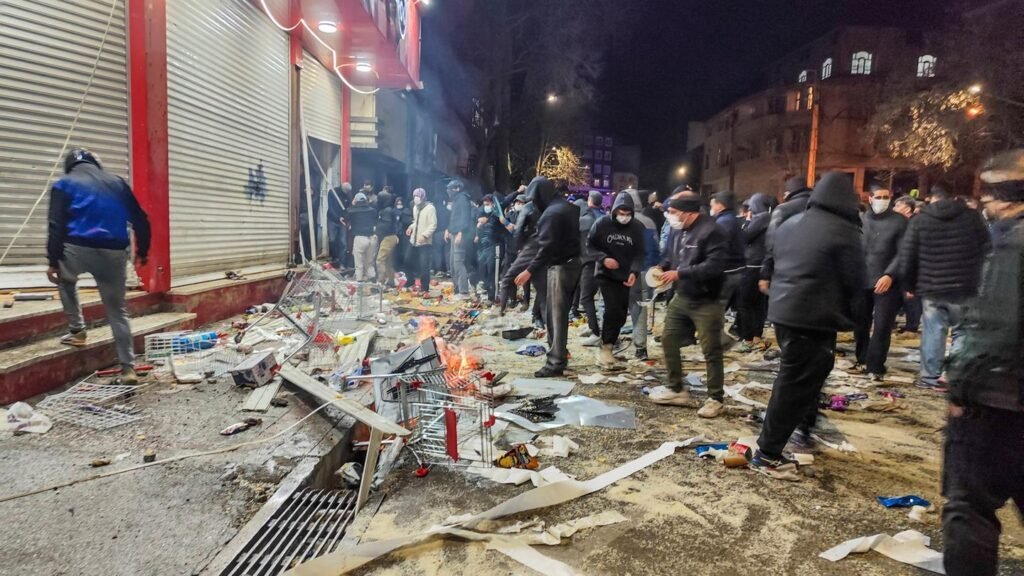
Across dozens of cities and towns, demonstrators have taken to the streets, confronting security forces and openly denouncing the entire political order. The slogans raised in these protests are notable not only for their militancy, but for their clarity: anger is no longer directed at isolated policies or individual officials, but at the regime as a whole. The rejection of both “reformist” and hardline factions reflects a widespread conclusion that no current component of the ruling system offers a viable path out of Iran’s social catastrophe.
From Economic Shock to Political Revolt
The immediate spark for the unrest was economic. The collapse of the rial intensified an already intolerable cost-of-living crisis, pushing basic necessities further out of reach for millions. Inflation—particularly in food—has eroded real wages to the point where even essential consumption has become precarious. Bread purchased on credit, routine electricity cuts, and water shortages are no longer exceptional but endemic. Yet these material conditions alone do not explain the scale of the response. Iran has endured economic hardship for years. What distinguishes the present moment is the convergence of economic collapse with political disillusionment and strategic weakness.
The population increasingly recognizes that the ruling elite has insulated itself from hardship while ordinary people absorb the full burden of crisis. Corruption scandals, speculative financial schemes linked to regime insiders, and the plundering of state-owned enterprises have shattered any residual credibility of official rhetoric about sacrifice or resistance.
The regime’s long-standing claim to legitimacy rested partly on its ability to shield Iran from imperial domination. That claim has now been severely damaged. Recent regional defeats, intelligence failures, and military setbacks have exposed not strength, but vulnerability. The perception that the state can neither provide material security nor national defense has undermined its last remaining source of mass acquiescence.
A Regime Divided, a Society United in Rejection
Internal fractures within the Islamic Republic have sharpened under pressure. Rival factions clash over economic strategy, foreign alignment, and methods of repression.
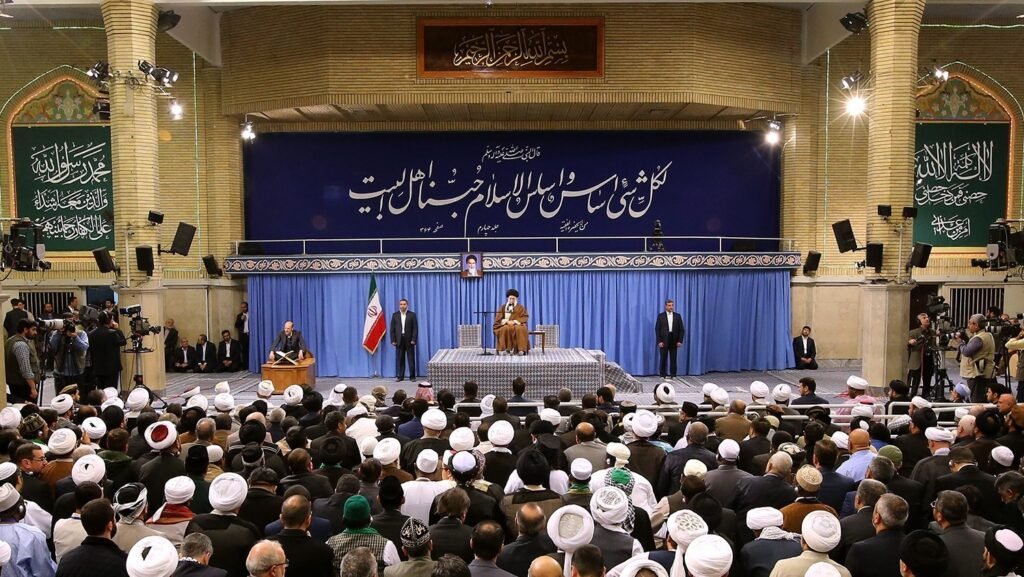
One camp advocates accommodation with Western powers in exchange for sanction relief; another seeks deeper ties with alternative global partners, despite the unequal terms such relationships impose. Domestically, debates rage over privatization versus preservation of corrupt state monopolies.
These divisions, however, do not represent meaningful alternatives for the masses. Protesters have made clear that they regard all wings of the ruling class as complicit in the same system of exploitation and repression. Calls for dialogue from “moderate” figures are met with contempt, while threats from the highest levels of authority confirm that coercion remains the regime’s default response.
The state’s increasing reliance on secular nationalist messaging, rather than religious legitimacy, is itself an admission of ideological exhaustion. Religious authority no longer mobilizes; it repels. Even long-standing mechanisms of social control, such as enforcement of mandatory dress codes, have become unenforceable without provoking mass resistance.
Youth in Revolt, Workers at a Crossroads
The driving force of the current unrest is youth—students and unemployed or precariously employed young people who see no future under the existing order. Their militancy, creativity, and courage have sustained the movement despite arrests, live fire, and targeted repression. Acts of collective defiance, including barricades, attacks on state institutions, and resistance at funerals of those killed by security forces, indicate a radicalization born of experience rather than impulse.
Yet youth alone cannot overturn the Islamic Republic. Iran’s recent history provides painful lessons. Since 2018, multiple uprisings have erupted with extraordinary breadth and intensity, only to be suppressed once they remained socially isolated. The absence of decisive, organized participation by the working class has repeatedly proven fatal.
Workers possess a unique power: the ability to halt production and paralyze the state. Iran’s own revolutionary history demonstrates this clearly. The decisive blow against the Shah was not delivered by street protests alone, but by mass strikes that crippled the economy and fractured the coercive apparatus. Today, while expressions of solidarity from independent labor organizations are significant, declarations are insufficient. Without coordinated, mass working-class action, the regime retains the capacity to exhaust and repress localized revolt.
Imperialism as a Poisoned Alternative
The intervention of foreign powers poses a further danger. Western governments and regional adversaries have already attempted to instrumentalize the unrest, presenting themselves as allies of the Iranian people while pursuing their own strategic objectives.
Such posturing is transparently cynical. These forces bear direct responsibility for much of the devastation across the Middle East and offer nothing but subjugation, fragmentation, and intensified exploitation.
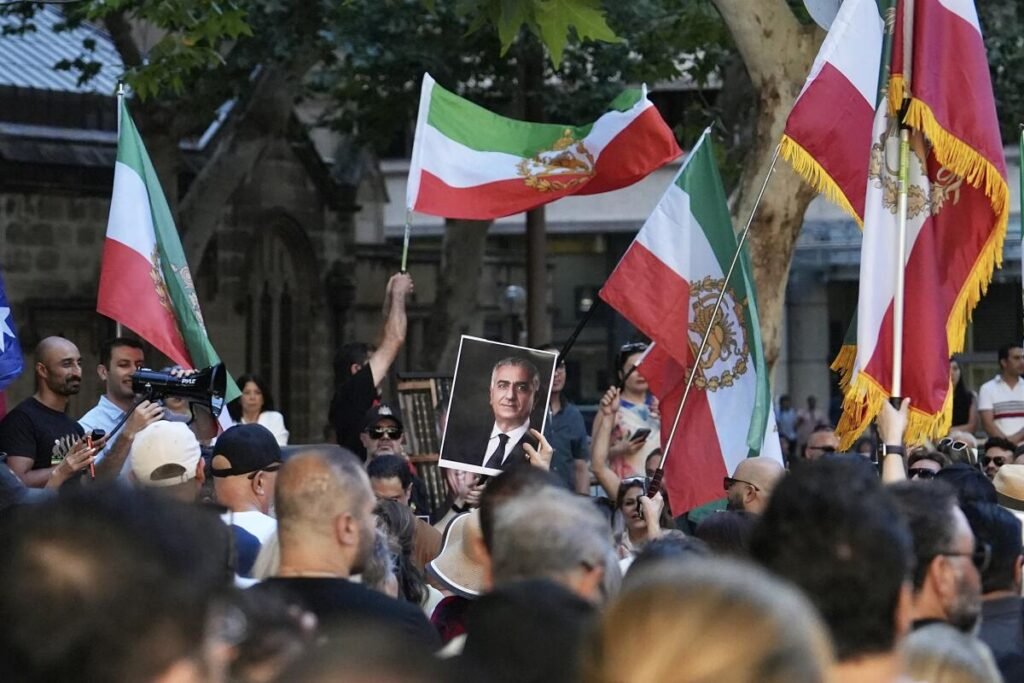
The memory of past imperial domination remains vivid among Iranian workers, who understand that replacing one authoritarian regime with another—backed by foreign capital and military power—would not constitute liberation. This fear contributes to hesitation within the working class and underscores the necessity of absolute political independence from all external powers.
Any movement that seeks legitimacy by appealing to imperial institutions or foreign states will inevitably alienate the very social forces required for victory. Only a struggle rooted in Iran’s working class and oppressed layers can overcome both internal repression and external manipulation.
The Strategic Question: Program and Power
The central weakness of previous uprisings has not been courage or scale, but the absence of a unifying revolutionary program capable of binding youth and workers into a coherent political force. Spontaneous calls for general strikes, while expressive of instinctive class consciousness, cannot substitute for organization and strategy.
Such a program must link democratic demands—freedom of expression, gender equality, ethnic rights, and the release of political prisoners—with concrete material improvements: living wages, secure pensions, restoration of subsidies, and reconstruction of public infrastructure. It must confront the economic foundations of repression by challenging private control over banks, major industries, and strategic resources, placing them under democratic workers’ notice.
Equally central is the dismantling of the coercive machinery of the state: the abolition of paramilitary forces, intelligence agencies, and repressive policing structures that exist solely to defend elite privilege.
Beyond the Islamic Republic
The overthrow of the current regime, should it occur, would not in itself resolve Iran’s crisis. Capitalist social relations—entrenched through decades of mismanagement, corruption, and dependency—cannot deliver stability, equality, or genuine sovereignty. Without a transformation of property relations and political power, any post-regime order risks reproducing oppression in a new form.
Iran stands at a historic crossroads. Whether the present unrest fades or escalates into a revolutionary rupture, the underlying contradictions will not disappear. Each confrontation leaves behind experience, networks, and political clarity.
The future of Iran will not be decided by palace maneuvers, foreign interventions, or symbolic reforms. It will be determined by whether the oppressed majority can organize itself as a conscious political force and seize control of its own destiny. Only through such a transformation can the cycle of repression, crisis, and revolt finally be broken.