

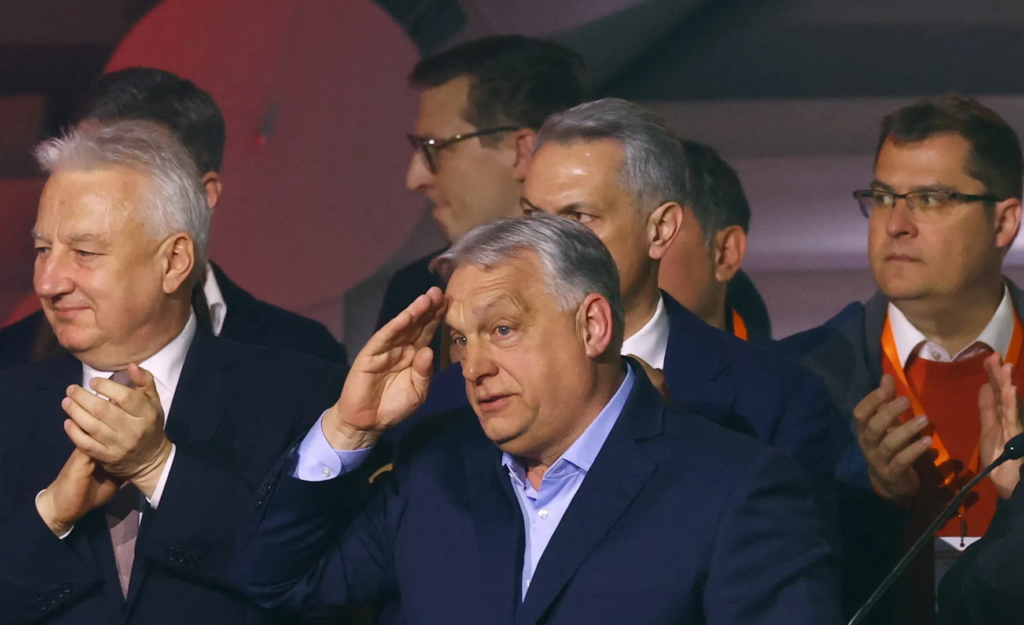
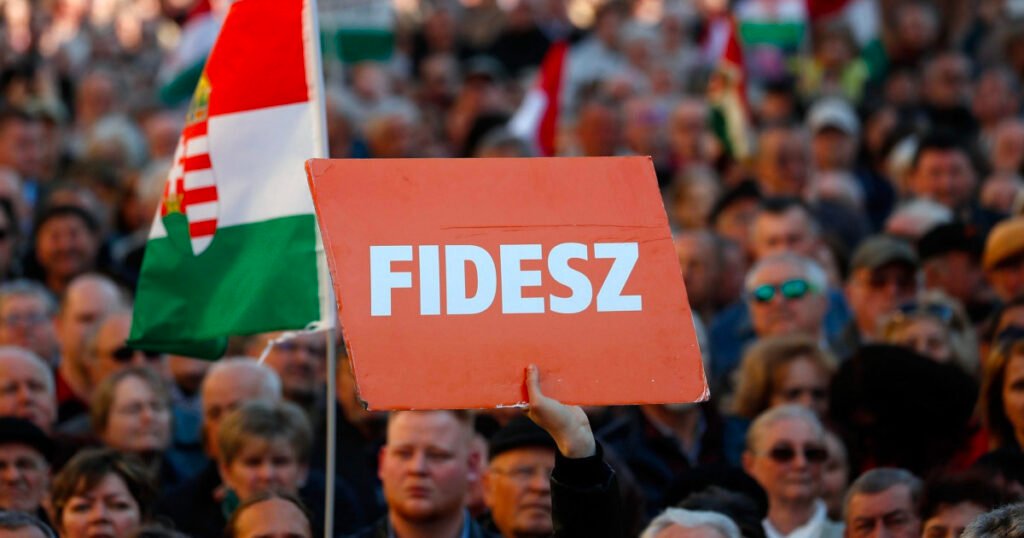
After dominating the Hungarian political landscape for sixteen uninterrupted years, Viktor Orbán and his Fidesz party have suffered a historic electoral defeat. In a dramatic reversal from their decisive 2022 victory, Fidesz recently lost eighty parliamentary seats, surrendering a supermajority to Péter Magyar and his newly revitalized Tisza party. Operating as a major political force for merely two years, Tisza has now secured the two-thirds parliamentary threshold necessary to amend the national constitution.
While international commentators and European liberals have widely celebrated this result as a “revolution” and a triumph over right-wing populism, a rigorous material analysis reveals a far more complex reality. The record-breaking 80 percent voter turnout was not driven by profound ideological alignment with Magyar, but rather by an overwhelming, accumulated public rejection of the Orbán establishment.
The Material Roots of Fidesz’s Collapse
Orbán’s early tenure was characterized by a delicate balancing act between European Union subsidies and cheap Russian energy investments, which temporarily masked deep structural deficiencies within the Hungarian economy. However, as global economic crises accelerated, the domestic situation rapidly deteriorated. Over the past six years, Hungary has endured a staggering cumulative inflation rate of 57 percent, nearly double the EU average of 28 percent.
Furthermore, the government’s highly publicized nationalist economic and social programs have largely failed. In an attempt to boost the domestic labor force and restrict immigration, Orbán’s administration directed roughly 5 percent of the national GDP toward pro-natalist tax breaks and loans. Despite this immense expenditure, the fertility rate paradoxically fell from 1.6 births per woman in 2011 to 1.3 in 2025, contributing to a population decline of half a million people.
This economic stagnation was compounded by the systemic collapse of essential public services. The healthcare sector has suffered an exodus of over 8,500 doctors seeking better compensation abroad over the last decade, leaving Hungary with a sub-standard ratio of 3.5 physicians per 1,000 residents. The education sector faces a parallel crisis; teaching degree applications have halved since 2022, and university dropout rates in the field sit at 50 percent. When coupled with rampant crony capitalism—which earned Hungary the title of the EU’s most corrupt member state for four consecutive years—the deteriorating material conditions generated deep-seated rage, particularly among a younger generation that had never known another government.
Péter Magyar: An Accidental Beneficiary
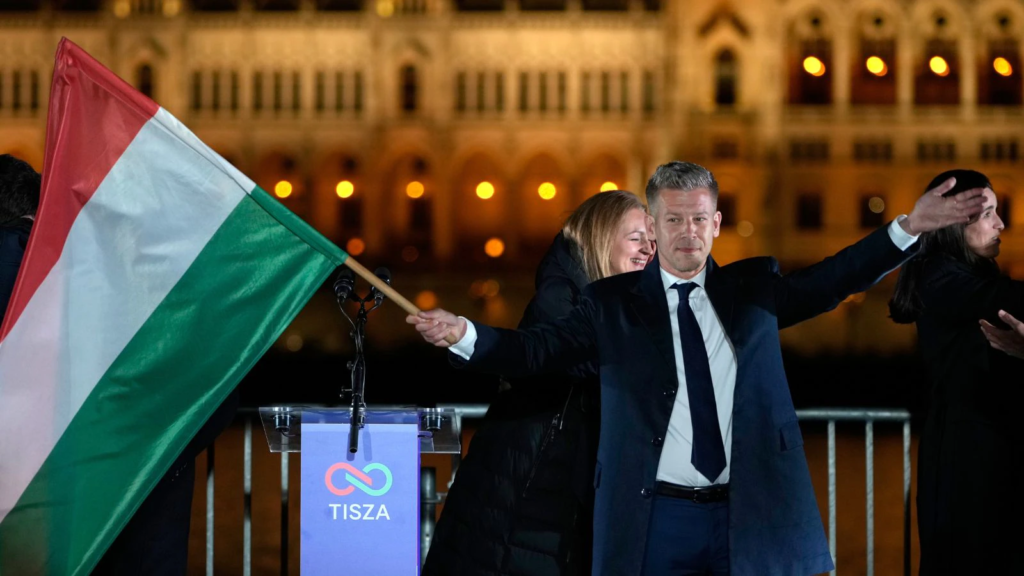
Péter Magyar emerged as the focal point for this anti-establishment anger not through a radical new platform, but primarily by positioning himself as the viable alternative to Orbán. A lifelong Fidesz insider and former government minister, Magyar astutely capitalized on a 2024 scandal in which the government pardoned an official involved in covering up child abuse. This scandal fatally undermined Fidesz’s core narrative as the supreme defender of traditional “Christian values”.
Despite his recent anti-corruption crusade, Magyar represents the conservative political right. He has actively distanced Tisza from all other opposition parties and has, on occasion, attempted to outflank Orbán from the right on issues such as immigration.
For the Hungarian electorate, particularly the youth, voting for Magyar was widely viewed as a pragmatic necessity to dislodge an entrenched regime rather than an endorsement of Tisza’s political philosophy.
Geopolitical Repercussions and Policy Continuity
Internationally, Orbán’s defeat represents a significant humiliation for Donald Trump and the global right-wing populist movement. Trump heavily endorsed Orbán and dispatched Vice President J.D. Vance to bolster Fidesz in the campaign’s final days—an intervention that reportedly damaged Orbán’s polling numbers. This outcome demonstrates that right-wing populists, despite their initial anti-establishment appeal, inevitably face severe public backlash once their governance fails to deliver material improvements.
However, those anticipating a radical shift in Hungarian foreign policy will likely be disappointed.
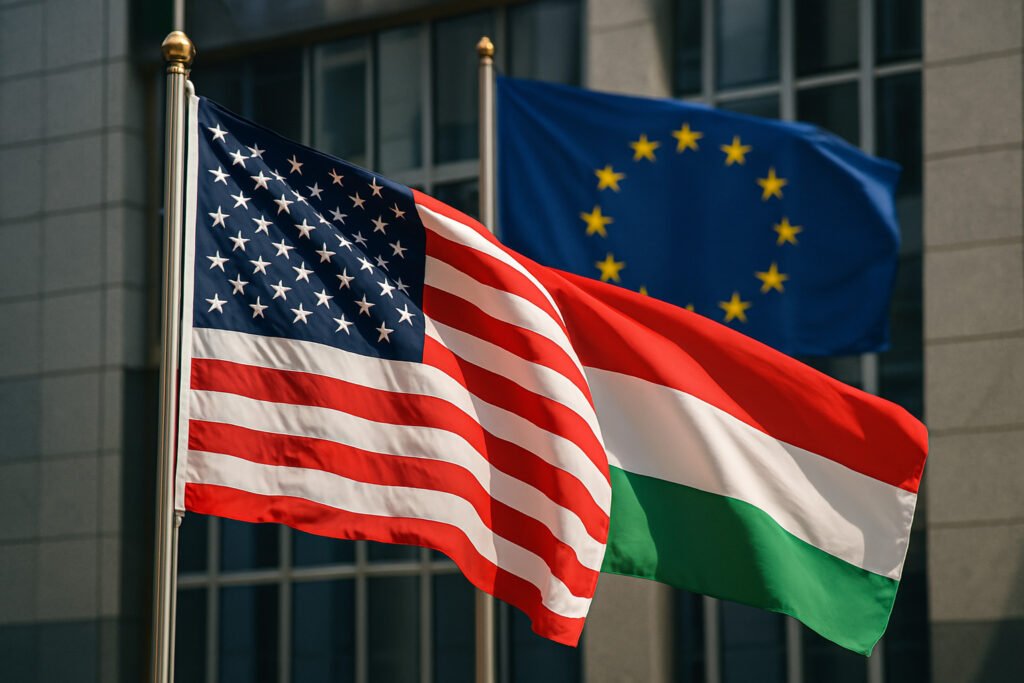
While Magyar has promised not to veto the EU’s €90 billion aid package to Ukraine, he has explicitly stated he will continue Orbán’s policy of withholding Hungarian financial contributions. Furthermore, he opposes fast-tracking Ukraine’s EU membership and acknowledges that Hungary cannot rapidly decouple from its heavy reliance on Russian oil and natural gas.
The Inevitable Crisis of the New Administration
Magyar assumes power under highly unfavorable macroeconomic conditions. The global economy is increasingly volatile, exacerbated by conflicts in the Middle East that threaten to drive up energy costs and domestic inflation even further. Concurrently, Hungary faces intense pressure from Brussels to implement severe public spending cuts to rein in an annual budget deficit approaching 5 percent.
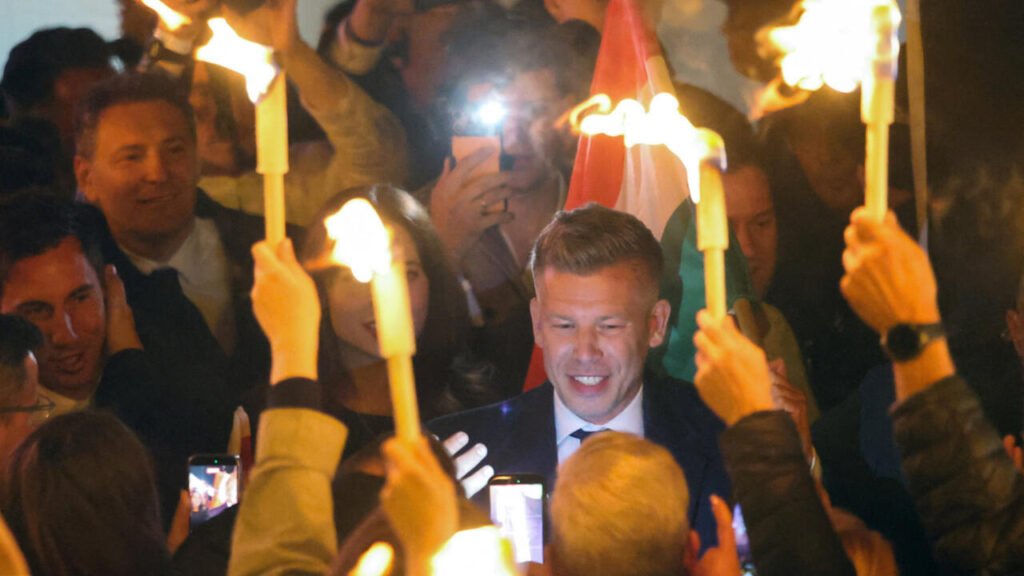
Operating within the same capitalist framework as his predecessor, Magyar will be structurally compelled to prioritize the demands of capital over the needs of the working class. Forced to implement austerity, he will lack the necessary fiscal resources to salvage the crumbling healthcare and education systems or meaningfully alleviate the cost-of-living crisis. While it took sixteen years for the electorate to fully turn on Orbán, Magyar’s honeymoon period will be drastically shorter.