

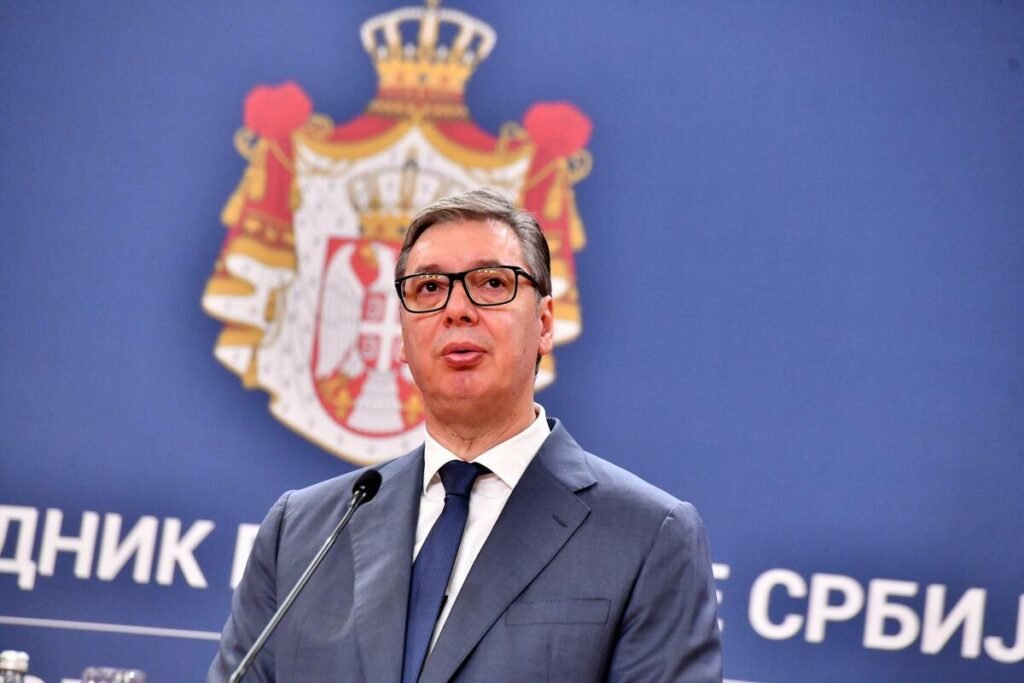
On June 27, 2026, Serbian President Aleksandar Vučić made a defining announcement that has set the stage for a dramatic political reshuffle. Speaking to supporters at the “Serbia, One Family” rally outside the National Assembly in Belgrade, held on the eve of the national and religious holiday Vidovdan, Vučić declared that he would step down from the presidency in a few more weeks. This decision to cut short his second and final presidential term, which was originally set to conclude in May 2027, is widely perceived as a calculated maneuver to maintain his grip on power.
The “Putin Maneuver” and the Government’s Strategic Agenda
Vučić’s transition plan is a highly calculated effort to reconfigure his power base while evading constitutional term limits—a strategy critics frequently compare to the political rotations seen in other autocratic systems. The ruling establishment’s agenda is multi-faceted, focusing heavily on immediate regime survival, consolidating authority, and ensuring long-term political dominance:
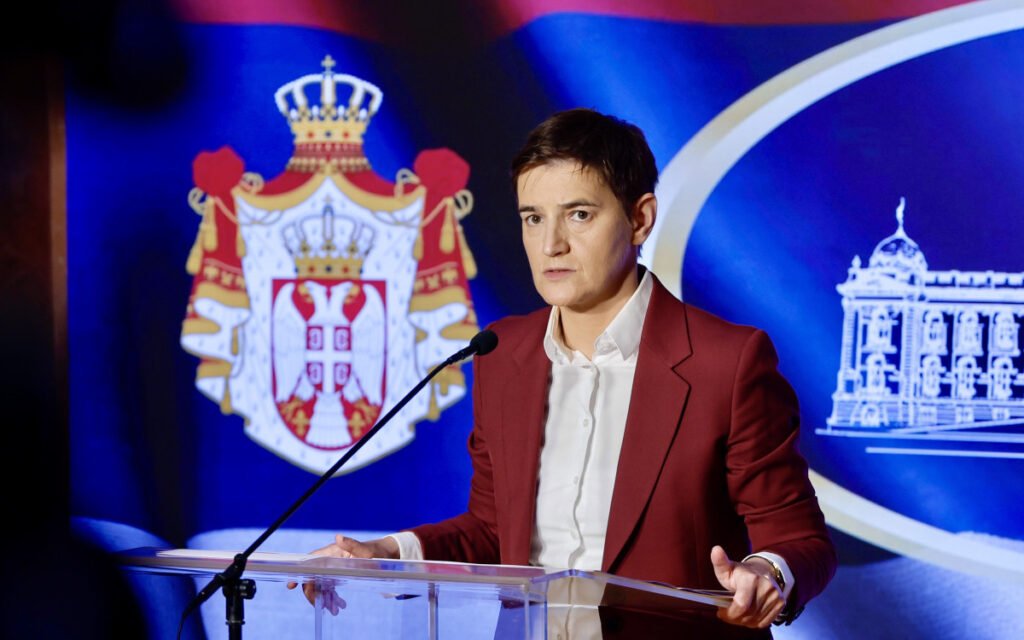
The Prime Ministerial Pivot: Political commentators and international observers anticipate that following his resignation, Vučić intends to pursue the role of Prime Minister. Upon his resignation, Parliamentary Speaker Ana Brnabić is slated to assume the role of acting president, and it is expected that she will swiftly nominate Vučić to lead the next government, allowing him to retain executive control.
The “United Serbia” Coalition: Vučić announced that he will campaign for the ruling Serbian Progressive Party (SNS) in the upcoming snap parliamentary elections, proposing that the party’s electoral list run under the unifying banner of “United Serbia.” This coalition serves a critical strategic purpose: it consolidates fragmented right-wing and centrist allies under one umbrella and allows Vučić to distribute the political burden. A coalition cabinet would enable him to deflect future criticism from Brussels—or domestic backlash regarding economic policies—onto his partners rather than bearing it alone.
Leveraging EXPO 2027: The SNS is looking toward EXPO 2027, scheduled to take place in Belgrade from May 15 to August 15, 2027, as its ultimate political asset. The government’s domestic agenda heavily relies on the prestige, massive economic influx, and infrastructural development associated with successfully hosting a world exhibition. The ruling party calculates that this will serve as a powerful public relations tool to revitalize public support, distribute patronage, and drive economic growth, ideally paving the way for further electoral victories immediately following the event’s conclusion.
A Multi-Vector Foreign Policy: Despite mounting international pressures, Vučić utilized his resignation speech to reaffirm his commitment to a delicate diplomatic balancing act. His agenda involves accelerating Serbia’s path toward European Union membership—which is essential for unfreezing critical economic development funds—while simultaneously preserving traditional, robust ties with China and Russia to maintain strategic leverage and ensure national energy security.
The Catalyst: Domestic Unrest and the Novi Sad Tragedy
Vučić’s strategic reshuffle is unfolding against a backdrop of unprecedented domestic unrest. For over a year and a half, Serbia has been gripped by sustained, youth-led anti-government protests.
The breaking point for public patience occurred on November 1, 2024, when a concrete canopy collapsed at a railway station in Novi Sad, tragically claiming the lives of 16 people. For the demonstrators, this disaster became a potent symbol of the systemic corruption, mismanagement of state construction projects, and severe negligence deeply entrenched within the ruling establishment.
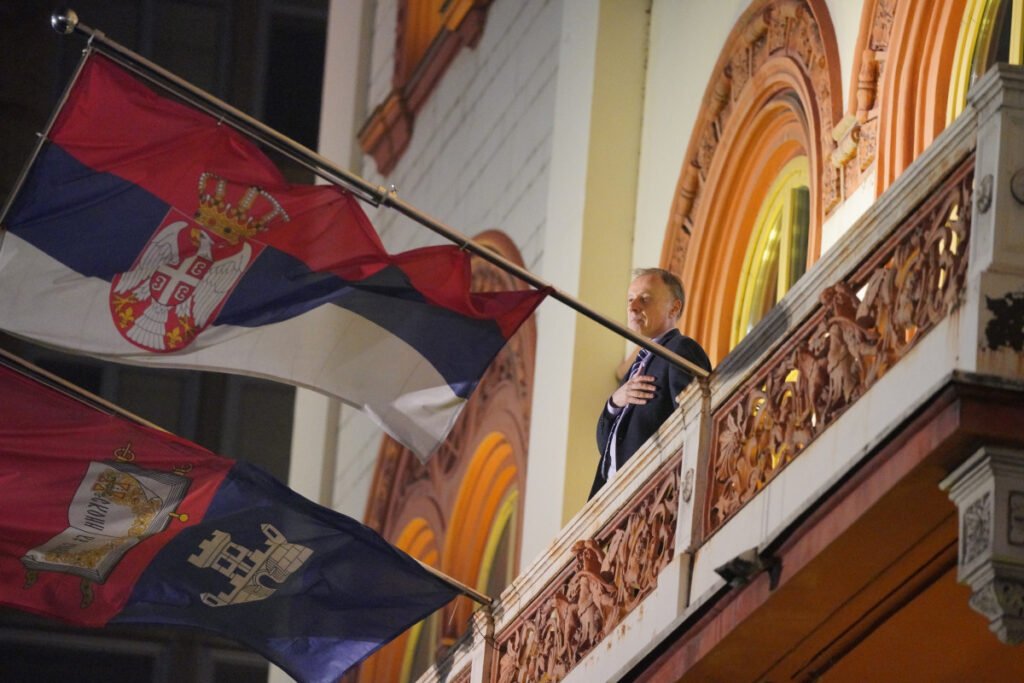
A Unifying Opposition Figure: The ongoing protests have found a rallying point in Vladan Đokić, the rector of the University of Belgrade. Unlike other academic leaders, Đokić supported the student movement from its inception, emerging as a potential political rival who could lead an opposition list or even run for the presidency.
A Polarized Electorate: This deepening societal divide is reflected in recent polling. According to a survey by the Faktor Plus agency, which the opposition considers sympathetic to the government, the ruling SNS maintains about 47 percent support, while the student protest movement commands nearly 31 percent.
Disputed Rally Attendance: The stark polarization of Serbian society was also evident during President Vučić’s June 27 address. The deep disparities in public perception extended even to the rally’s attendance figures; while the Interior Ministry estimated the crowd at over 200,000 people, the independent Archive of Public Gatherings reported a much smaller attendance of roughly 32,000.
The Geopolitical Landscape and International Pressures
While domestic protests threaten Vučić’s mandate from within, shifting geopolitical dynamics are increasingly isolating Belgrade on the European stage.
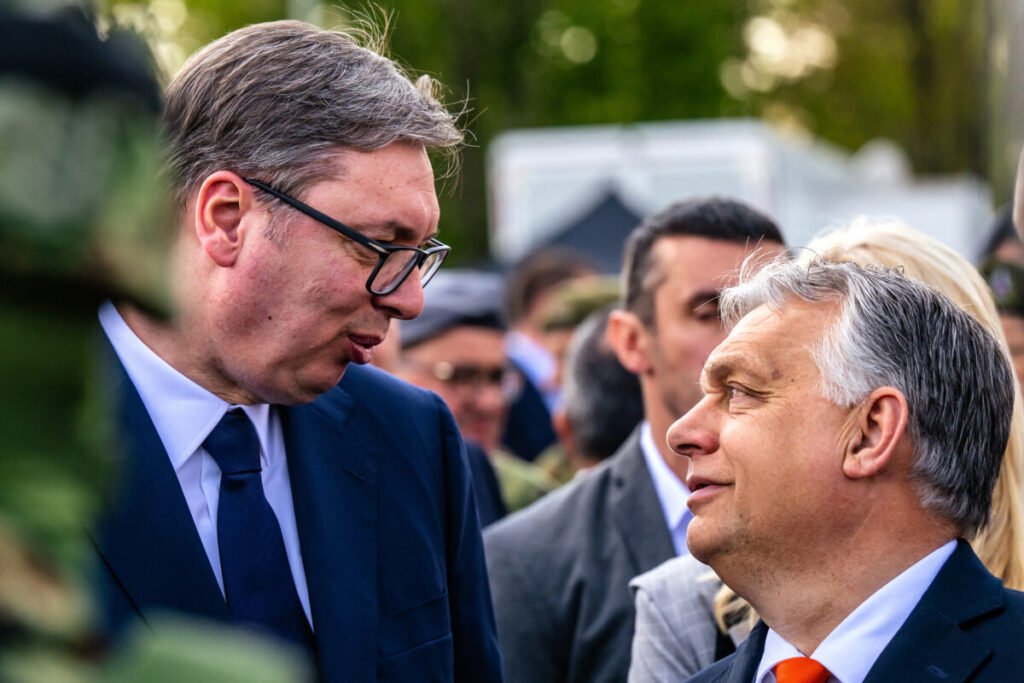
For years, Vučić was insulated from significant EU pressure by Hungarian Prime Minister Viktor Orbán. Orbán’s recent electoral defeat and the ensuing change of government in Hungary have stripped Vučić of a crucial political shield, effectively accelerating his timeline for a transfer of power and forcing him to proactively manage his political vulnerabilities.
Simultaneously, the European Commission recently penalized Serbia over controversial judicial reforms by freezing critical funds allocated under the EU Growth Plan. Voices within the EU are growing louder, demanding that Belgrade take concrete steps to improve its rule of law, root out organized crime, and align its foreign and security policies with the broader Union—including persistent demands to enact sanctions on Russia over its invasion of Ukraine.
The Electoral Horizon
As Aleksandar Vučić formally prepares to exit the presidency in the coming weeks, Serbia enters a volatile period of uncertainty. The upcoming snap elections will serve as a critical test of the ruling party’s resilience, its capacity for political rebranding, and its tactical maneuvering. It remains to be seen whether the government’s ambitious agenda of economic development and coalition-building can withstand the prolonged wave of civic grief and anger, or if the student-led opposition can truly coalesce into a formidable political alternative capable of ending Vučić’s decade-long dominance.