

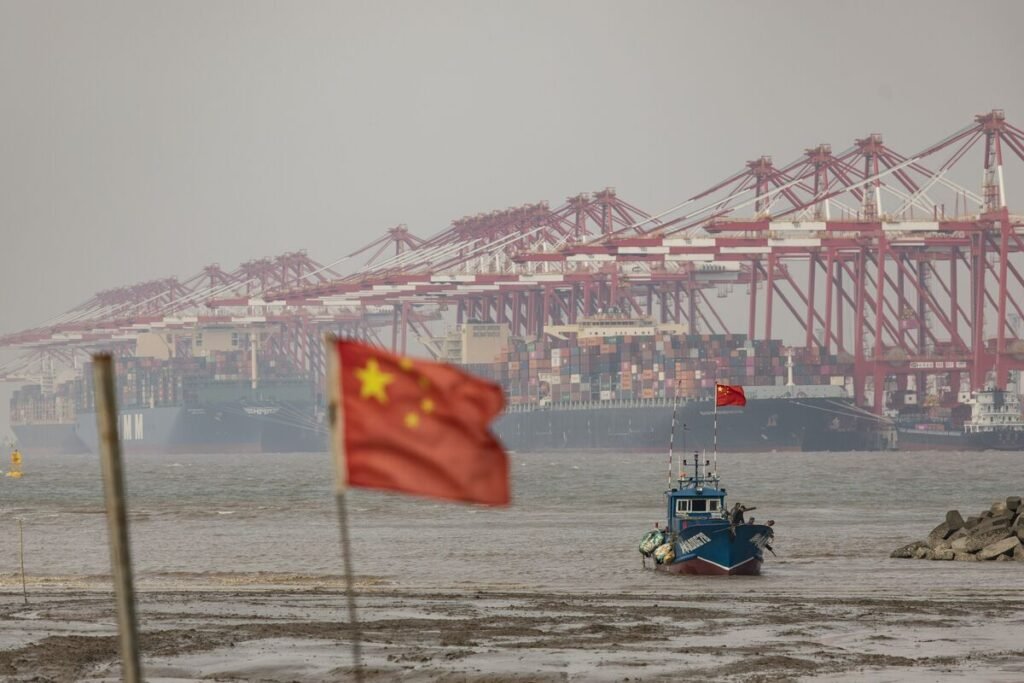
Recent disruptions in major global maritime arteries—most notably instances where massive container vessels have obstructed the Suez Canal—have served as a stark reminder of the fragility of global supply chains. For Beijing, these logistical bottlenecks emphasize a critical vulnerability: international commerce relies disproportionately on a handful of geographic chokepoints. In response, China has systematically accelerated the development of alternative transit networks. Rather than seeking to completely bypass Western markets or dismantle the existing economic order, Beijing’s objective is to establish structural redundancies. By ensuring that no single chokepoint—whether under local jurisdiction or Western naval supervision—can paralyze its trade, China is subtly reordering the economic geography of the Asia-Pacific.
The Traditional Paradigm: Geographic Chokepoints and Strategic Leverage
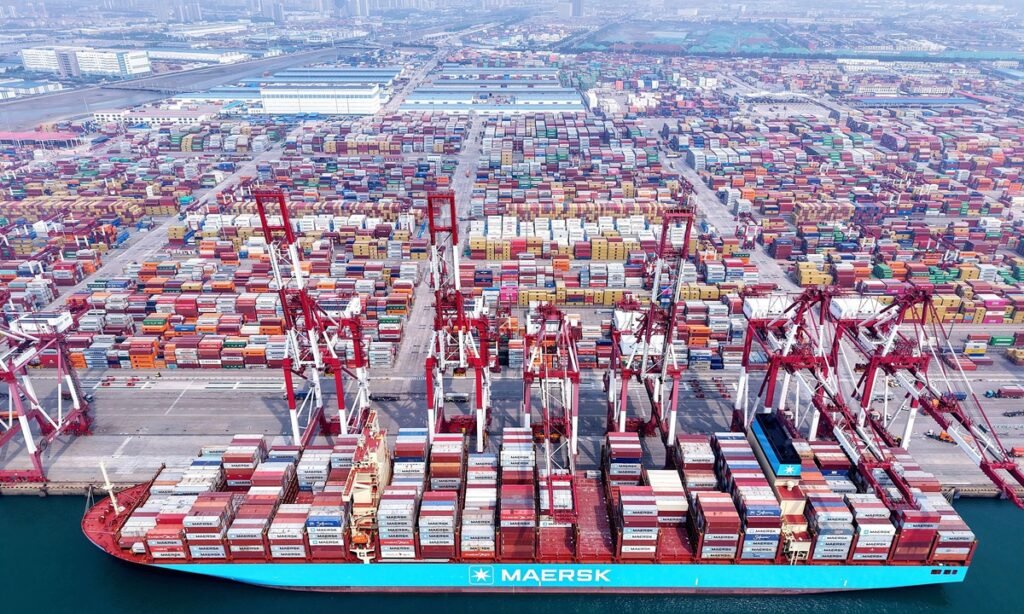
Historically, global trade has been defined by maritime routes, which handle the vast majority of international cargo. This flow is heavily concentrated through narrow passages such as the Suez Canal, the Panama Canal, and the Strait of Malacca. For decades, maintaining a dominant naval presence to secure these critical waterways has been a foundational element of traditional Western strategic advantage, enabling established powers to influence global commerce and ensure the economic alignment of emerging states.
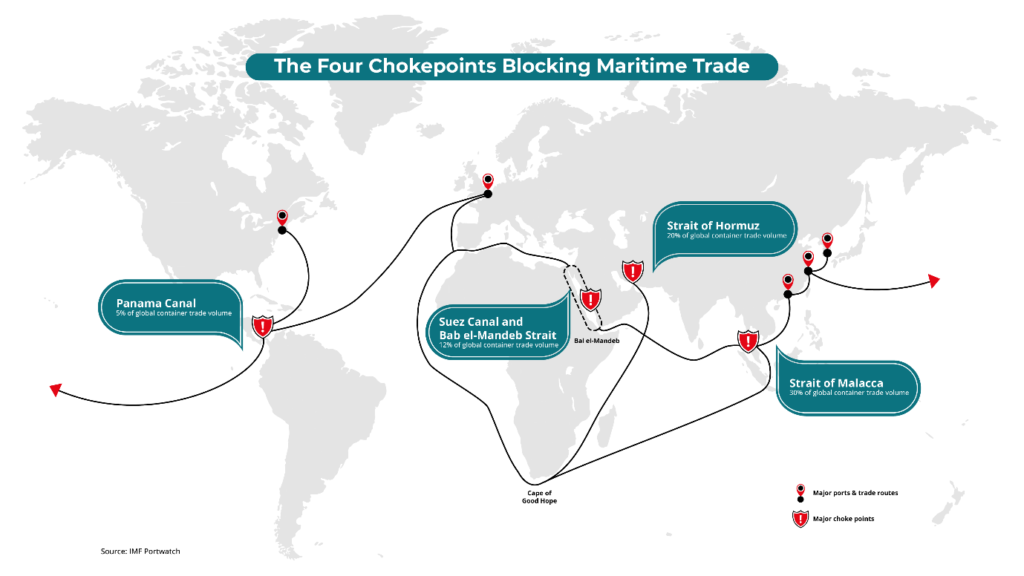
From Beijing’s perspective, reliance on these Western-supervised chokepoints represents an existential structural vulnerability rather than an ideological one. The prospect of a strategic blockade or restricted access during a geopolitical crisis poses a severe threat to China’s economic stability. Recognizing that this vulnerability cannot be resolved through diplomacy alone, China has committed to an infrastructural solution designed to fundamentally diversify its supply chains.
Dual Pathways to Redundancy: Central Asia and the Arctic
To mitigate these geographic risks, China is pursuing two complementary infrastructure strategies that significantly alter traditional transit times and routes.
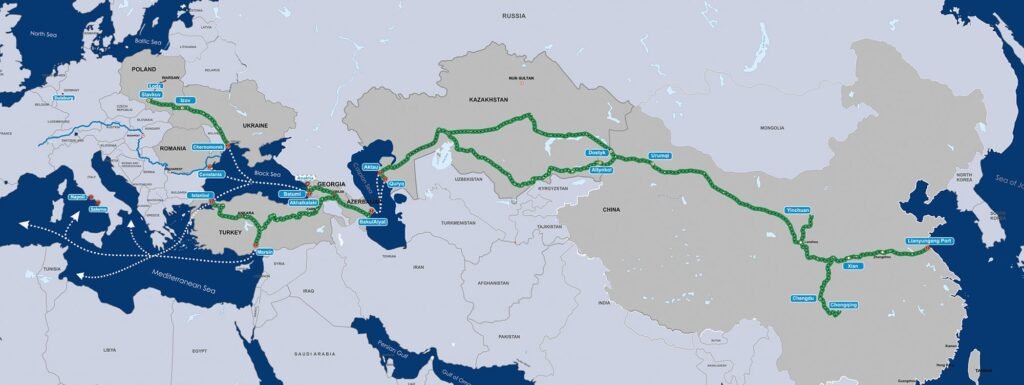
The first strategy is the Trans-Eurasian Overland Network. China has heavily invested in rail and logistics hubs, transforming central cities like Chongqing into critical nodes for Eurasian connectivity. A centerpiece of this effort is the Middle Corridor, formally known as the Trans-Caspian International Transport Route (TITR). According to reports from the World Economic Forum, this multimodal network connects China to Europe via Central Asia, the Caspian Sea, and the Caucasus. The Middle Corridor allows freight to traverse Chinese and partner territories, drastically reducing exposure to maritime chokepoints. Transit times are highly competitive; overland transport from China to Europe can be completed in roughly two to three weeks, compared to the month and a half required for traditional sea voyages. The corridor’s strategic weight is further enhanced by its dual role, as the same regional geography moving cargo containers is increasingly being utilized to transport energy resources and clean power from the Caspian region to European markets.
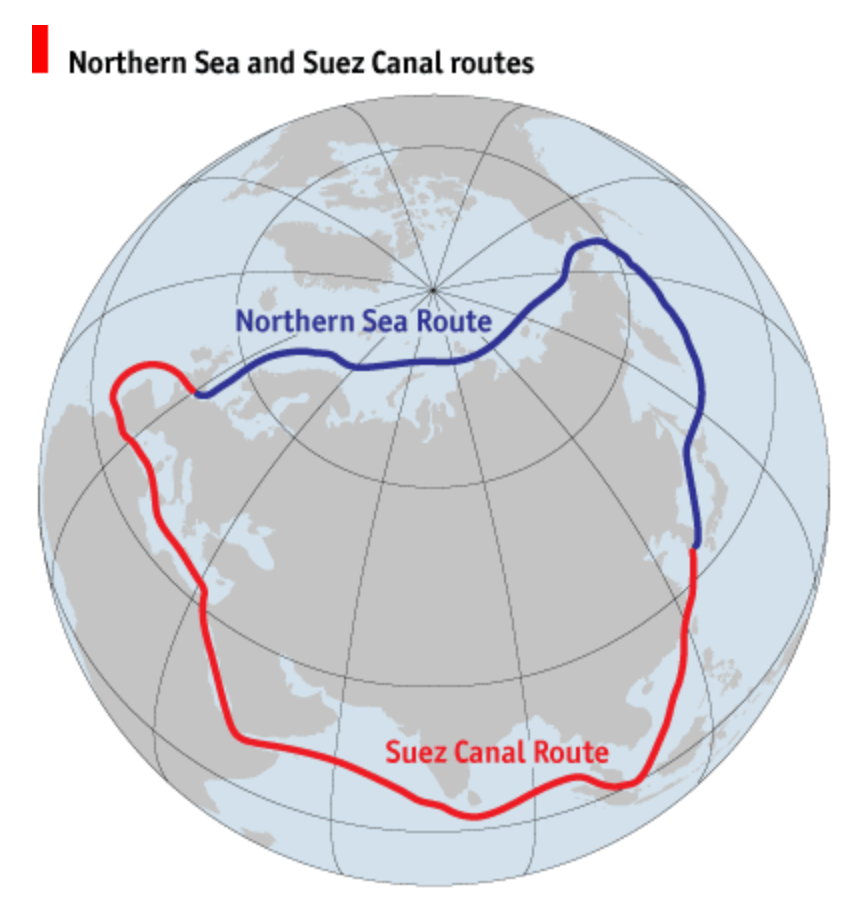
The second strategy relies on the Northern Sea Route, or the Arctic Corridor. Simultaneously, China is capitalizing on the seasonal opening of the Arctic Ocean—a direct consequence of retreating polar ice—to develop the Northern Sea Route. Research published by the South Asia Monitor indicates that this passage stretches from the Bering Strait along the Arctic coastline to Northern Europe. This Arctic shortcut reduces the maritime distance between East Asia and Western Europe from approximately 21,000 kilometers via the Suez Canal to roughly 12,800 kilometers. Vessels departing from Chinese ports can reach destinations like the United Kingdom in just 18 to 20 days. Beyond mere speed, this corridor offers diversification that is largely insulated from political instability in the Middle East and historical maritime vulnerabilities.
Optionality as Geoeconomic Power
The strategic philosophy underpinning these investments is optionality—the capacity to rely on multiple viable trade routes rather than a single, easily disrupted path.
China’s economy remains deeply intertwined with North American and European markets, and these new routes are not intended to foster economic autarky. Instead, they generate strategic redundancy. If maritime traffic through the Strait of Malacca or the Suez Canal is compromised, Chinese commerce can pivot to Central Asian rail networks or the Arctic passage.
This pursuit of redundancy inadvertently dilutes the leverage historically held by states controlling geographic chokepoints. Furthermore, it elevates the geopolitical bargaining power of transit nations. Countries such as Kazakhstan, Indonesia, and Pakistan are transitioning from peripheral markets into vital logistical hubs. As their territories become integral to new overland and multimodal corridors, these nations gain unprecedented leverage and economic integration.
Economic Realities and Long-Term Viability
Despite the strategic appeal of these alternative routes, significant operational and economic caveats remain. Currently, the competitiveness of overland rail networks relies heavily on extensive state subsidies and massive capital investments from Beijing. Furthermore, analysts from the Carnegie Endowment for International Peace caution that structural challenges, such as infrastructure gaps, the complexity of multiple customs regimes, and environmental issues like the receding water levels of the Caspian Sea, pose long-term risks to the Middle Corridor’s viability. Traditional maritime shipping remains the most cost-effective method for long-haul bulk commodities. Therefore, these alternative pathways are most effective for time-sensitive cargo and are expected to coexist with, rather than entirely replace, conventional sea routes.
Conclusion: A Reordered Asia-Pacific
China’s trade infrastructure strategy represents a gradual but profound reordering of the global economic architecture. By establishing viable North-South and transcontinental overland corridors, Beijing is fundamentally shifting the directional flow of international trade, which has long been dominated by East-West maritime routes. This transformation does not pose an immediate military threat to Western powers, nor does it abruptly end traditional maritime dominance. However, it systematically dismantles the automaticity of that dominance. By ensuring that geography can no longer be unilaterally weaponized to restrict its economic expansion, China is rewriting the structural rules of global commerce, altering the distribution of geopolitical leverage across the Asia-Pacific and beyond.