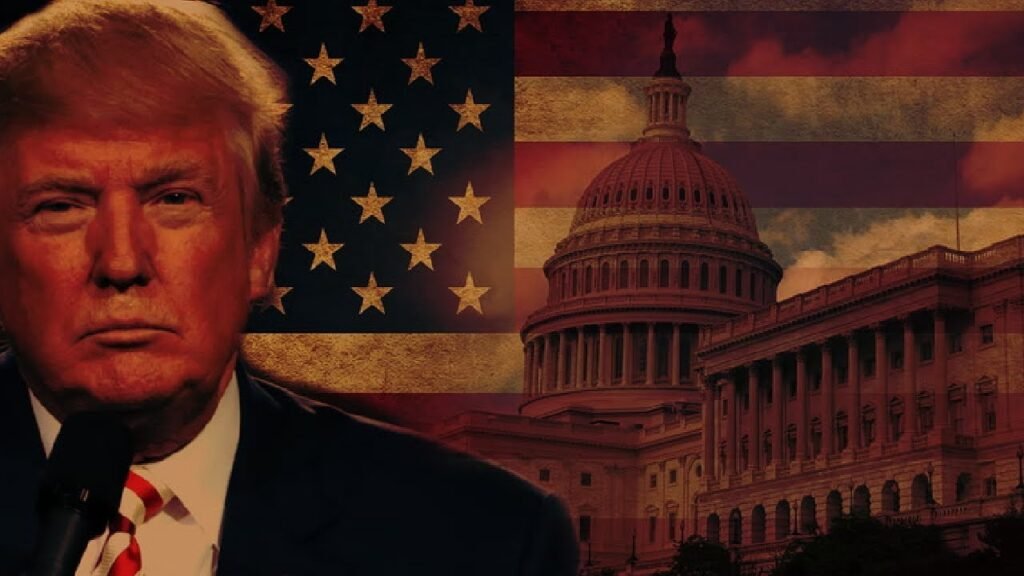

The 2026 midterm elections have profoundly reconfigured the structural foundations of American electoral politics. The Democratic Party’s successful campaign to secure control of both chambers of the United States Congress signifies a substantive repudiation of President Donald Trump’s administrative agenda. More critically, this electoral outcome demonstrates that the Republican Party can no longer rely on guaranteed dominance within historically conservative states. This paradigm shift guarantees a forthcoming era of legislative and executive friction in Washington, while simultaneously providing Democratic leadership with a vital strategic opening to dictate the national political narrative leading into the 2028 presidential election cycle.
Electoral Realignment and the Disruption of Conservative Strongholds
The unprecedented magnitude of this political realignment is most vividly illustrated by the expanded electoral map. States such as Kansas, Texas, Iowa, Ohio, Maine, Michigan, North Carolina, and South Carolina transitioned into fiercely contested battlegrounds, ultimately yielding Democratic Senate gains in seven of these jurisdictions. While these states possess vastly different socioeconomic architectures, their collective pivot indicates that public dissatisfaction with the current administration has metastasized far beyond conventional swing states, rendering supposedly impregnable Republican strongholds highly competitive.
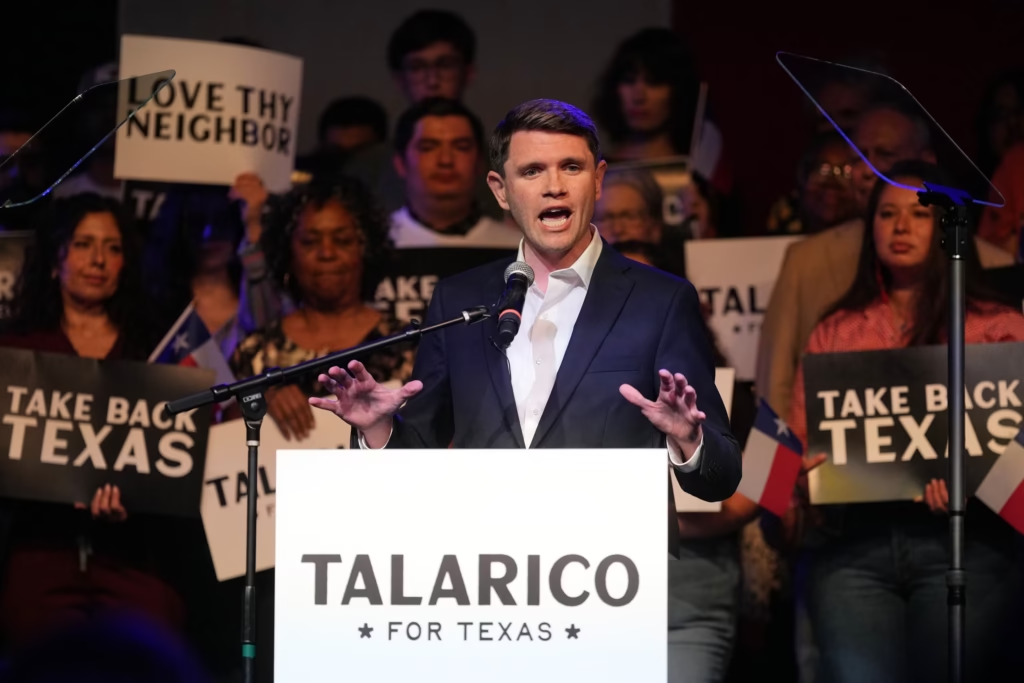
The State of Texas provides a particularly striking example of this phenomenon. James Talarico’s triumphant Senate campaign in a state historically viewed as inaccessible to statewide Democratic candidates underscores how rapid urbanization, shifting demographic profiles, and the aggressive mobilization of previously dormant voter blocs can dismantle entrenched partisan loyalties. However, Texas retains a deeply conservative foundation, leaving it an open question whether the Democratic apparatus can transform this momentary, environmentally favorable victory into a sustainable, long-term electoral coalition. Similarly, the election of a Democratic senator in Kansas shattered generational political orthodoxies. Rather than signaling a sudden ideological metamorphosis among the electorate, this outcome strongly suggests that historic partisan fidelity crumbles when profound economic frustration aligns with a pervasive erosion of public trust in government institutions.
This vulnerability extends into the American South, where rapid urbanization and an increasingly influential bloc of independent voters in North Carolina and South Carolina are actively eroding traditional conservative assumptions.
Economic Anxieties and Foreign Policy Pressures
The prevailing catalyst for this widespread electoral disruption was profound economic anxiety. Across the American Midwest, particularly in industrial and agricultural hubs like Iowa and Ohio, voters definitively prioritized material conditions over ideological allegiance. American households were heavily burdened by escalating living costs, volatile energy markets, pervasive housing insecurity, and overarching employment anxieties. These domestic economic pressures were severely exacerbated by the administration’s protectionist trade policies, most notably its heavy reliance on broad tariff applications. Furthermore, controversial budgetary allocations and the destabilizing consequences of foreign policy decisions—specifically the ongoing war with Iran—solidified the public perception of an executive branch that had grown fundamentally disconnected from the immediate, material priorities of the electorate.

The Dynamics of Divided Government
When the newly elected Congress officially convenes in January 2027, the institutional balance of power in Washington will undergo a dramatic transformation. The Democratic majority will assume commanding authority over the legislative agenda, federal budget negotiations, and sweeping congressional investigations, while their control of the Senate guarantees significant leverage over judicial confirmations and executive branch appointments. Despite this congressional dominance, the reality of a divided government means that the presidency retains formidable institutional authority. President Trump will continue to wield his executive veto and maintain substantial, unilateral control over the nation’s foreign policy apparatus. Consequently, congressional Democrats will be forced to meticulously balance aggressive political confrontation with the pragmatic necessities of basic governance, lest the federal government descend into a state of prolonged institutional paralysis.
Strategic Imperatives for the Democratic Coalition
The immediate strategic challenge for the Democratic Party lies in transitioning from an opposition movement into a capable governing coalition. A victory of this sweeping magnitude generates immense public expectations that cannot be fulfilled merely by obstructing the executive branch. If the Democratic leadership utilizes its congressional control exclusively for perpetual obstruction, it risks alienating the electorate and squandering a generational political mandate. The party must immediately articulate and execute a coherent, credible legislative agenda that directly mitigates the economic insecurities and social grievances that propelled them into power. Furthermore, leadership must skillfully mediate the growing ideological friction between the party’s moderate and progressive wings. The forthcoming 2028 presidential primary cycle must be leveraged as a forum for constructive, rigorous debate regarding the party’s ideological trajectory, rather than descending into destructive internal factionalism.
Transatlantic Implications and the Illusion of Permanence
From an international perspective, European capitals are viewing this new political equilibrium in Washington with cautious, measured expectations. The newly empowered Democratic Congress is highly likely to intensify its scrutiny over the administration’s handling of NATO commitments, international financial assistance, global trade relations, and the overarching trajectory of American foreign policy. Nevertheless, because the executive branch retains constitutional primacy over national security and diplomatic affairs, Democratic control of the legislature does not automatically alleviate European anxieties regarding American reliability, nor does it guarantee a swift restoration of traditional transatlantic cooperation.
Ultimately, the outcomes of the 2026 midterm elections serve as a definitive testament to the inherent unpredictability of democratic systems. Political power in Washington is demonstrated to be a temporary, conditional responsibility continuously subjected to rigorous public judgment, proving that no governing majority is permanent and no electoral stronghold is truly immune to the consequences of public dissatisfaction.