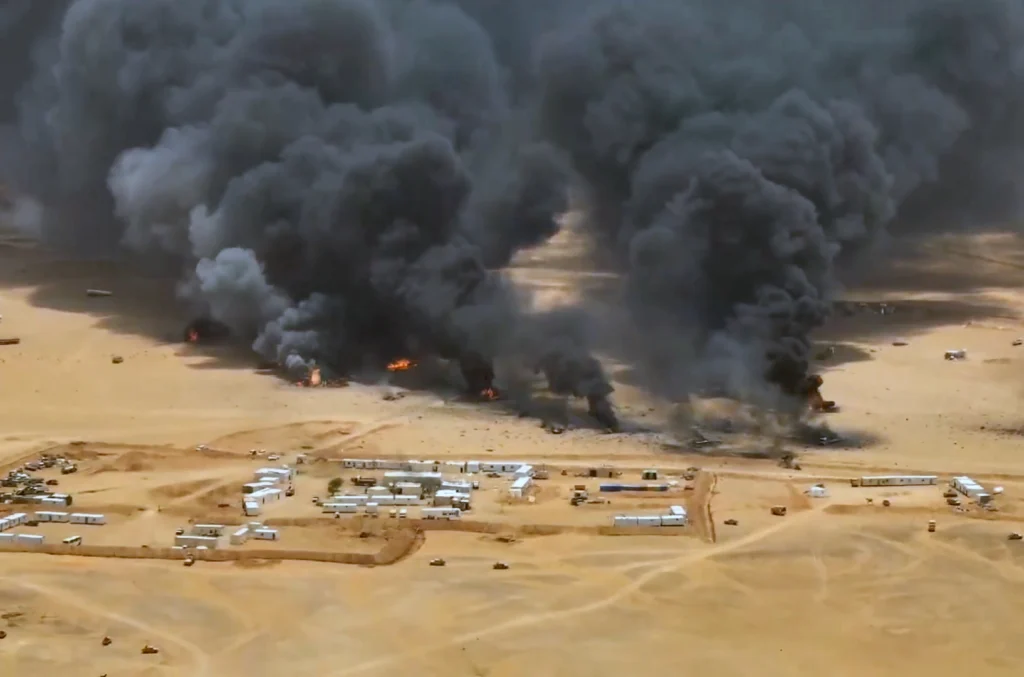

The protracted military confrontation between Yemen’s Houthi movement and the Saudi-led coalition has entered a perilous new phase, marked by direct threats to vital maritime and urban infrastructure across both nations. In a formal statement issued on Wednesday, November 25, 2026, Houthi military spokesperson Yahya Saree explicitly warned that Jeddah, Yanbu, and other Saudi commercial ports along the Red Sea coast would become legitimate military targets should Riyadh execute strikes against the Yemeni port of Hodeidah. Accompanying this ultimatum, the group urged port personnel, nearby civilian residents, and international shipping companies to immediately evacuate the designated zones and withdraw their vessels from Saudi waters.
This aggressive posturing emerged directly in the wake of a severe escalation targeting the Saudi capital. On Tuesday, Saudi authorities confirmed that a Houthi drone struck Riyadh’s tallest tower, injuring at least eleven individuals and prompting the Saudi-led coalition to vow a resolute military response. The incident underscored a rapidly intensifying cycle of retaliation, wherein both belligerents have demonstrated an increasing willingness to target high-value economic, commercial, and transportation hubs.

Coalition Counterstrikes and Expanded Military Operations
In direct response to the Houthi ultimatum and the aerial assault on Riyadh, the Saudi-led coalition swiftly initiated a series of retaliatory airstrikes. Following an evacuation warning issued to civilians by coalition spokesperson Major General Turki Al-Malki, allied forces announced that they had neutralized Houthi “operational capabilities” within the Hodeidah port complex, alongside the destruction of multiple military installations across Yemen’s northern Saada and Amran governorates. The operational tempo continued to accelerate into Thursday, November 26, when the coalition reported the destruction of fifty additional Houthi military targets across Sanaa, Hodeidah, and Saada, including a ballistic missile launch platform allegedly utilized in an attack on the Jazan refinery.
Simultaneously, the geographic scope of the aerial exchanges has broadened to encompass the kingdom’s eastern energy heartland. Saudi air defense systems recently intercepted four drones over Ras Tanura in the Eastern Province, the location of Saudi Aramco’s primary Gulf crude export terminal. This reciprocal and escalatory pattern—wherein coalition strikes framed as weapons-smuggling interdictions are met with expanded Houthi targeting envelopes—places commercial maritime traffic operating along the Saudi coastline at unprecedented risk.
The Humanitarian and Economic Imperative of Hodeidah
The strategic gravity of the current standoff is heavily anchored in the dual significance of Hodeidah.
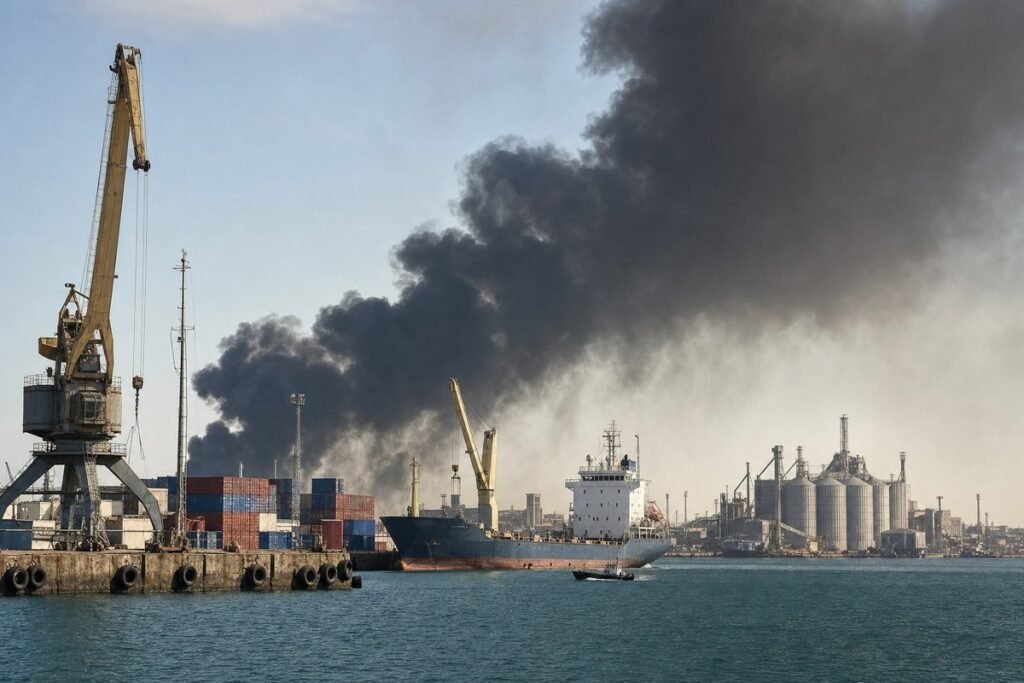
As the largest maritime gateway under Houthi control, the port serves as the primary artery for commercial imports—including essential foodstuffs, grain, and fuel—as well as international humanitarian relief destined for millions of civilians residing in northern Yemen. Given Yemen’s acute structural dependence on imported food supplies, any sustained military disruption to Hodeidah’s operational capacity threatens to trigger severe humanitarian repercussions that extend far beyond the immediate tactical battlefield.
Conversely, the Houthi threat to retaliate against Saudi Red Sea infrastructure carries profound macroeconomic implications for Riyadh and global trade. Since the effective closure of the Strait of Hormuz in early March 2026 amid the broader regional conflict involving Iran, Saudi Arabia has become heavily reliant on its western Red Sea ports, particularly Jeddah and Yanbu, to sustain vital imports and maintain non-oil export corridors. Any successful Houthi strikes against these facilities would not only disrupt the kingdom’s domestic supply chains but could also severely destabilize commercial navigation throughout the Red Sea basin.
The Bab el-Mandeb Chokepoint and Regional Spillover
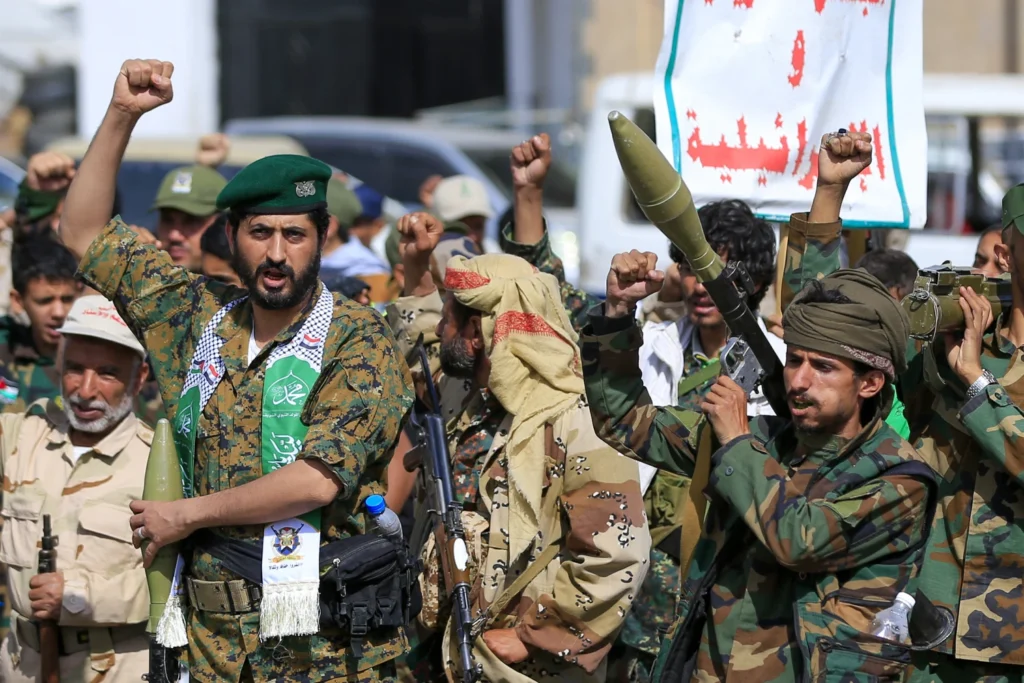
The latest round of hostilities represents the culmination of a steady military buildup that has intensified since September 2026, when Houthi forces launched a ground advance toward the Bab el-Mandeb Strait. Connecting the Red Sea to the Gulf of Aden and the broader Indian Ocean, this narrow maritime corridor serves as an indispensable chokepoint for global commerce. Prior to this autumn’s ground movements, the Houthis had already laid the groundwork for maritime escalation by announcing a ban on all shipping to and from Saudi ports in July 2026.
Since advancing toward the strait, the group has markedly increased the frequency and sophistication of its attacks against Saudi airports,
maritime terminals, and energy infrastructure, while Riyadh has countered with sustained aerial bombardments against Houthi strongholds inside Yemen. This growing preoccupation with strategic economic assets raises the distinct possibility that the bilateral conflict will further entangle international shipping lanes and regional energy networks.
Prospects for Escalation and Strategic Risks
Looking ahead, the most immediate danger lies in the solidification of an entrenched cycle of strikes and counter-strikes between Hodeidah and Saudi Arabia’s Red Sea ports. The coalition’s recent operations and the Houthis’ explicit refusal to retract their warnings indicate that neither side is currently prepared to de-escalate. Should military operations severely impair Hodeidah, the resulting bottleneck in essential supplies would deepen the humanitarian crisis across northern Yemen; conversely, direct attacks on Jeddah or Yanbu would trigger immediate alarm across international maritime insurance and commercial shipping sectors.
Ultimately, the proximity of these hostilities to the Bab el-Mandeb Strait ensures that the repercussions of this confrontation will not remain confined to Yemeni and Saudi territory. If the conflict expands directly into this vital maritime artery, the security risks will ripple across one of the world’s most critical trade routes, transforming a localized military exchange into a broader geopolitical crisis with severe humanitarian and economic consequences.