

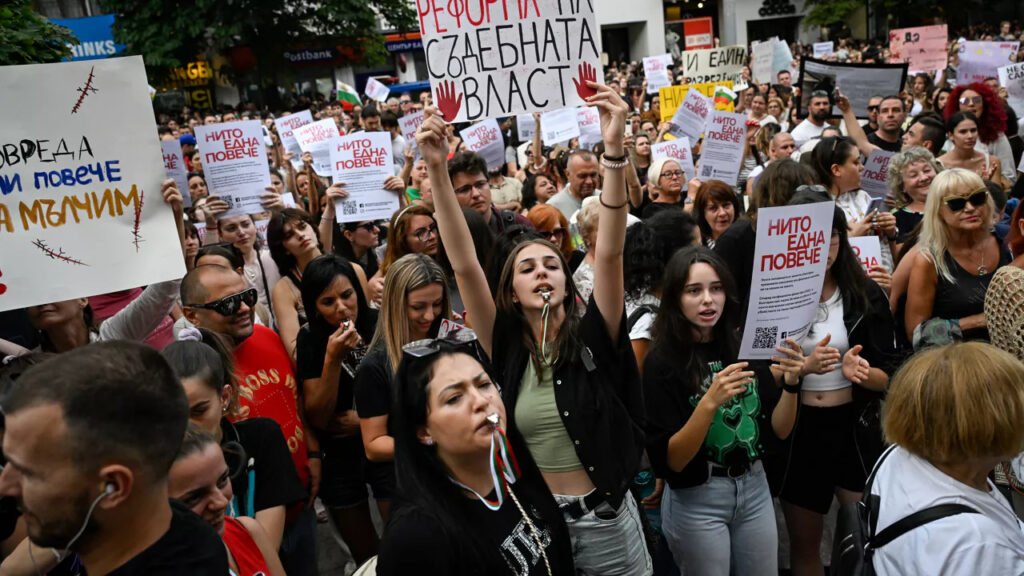
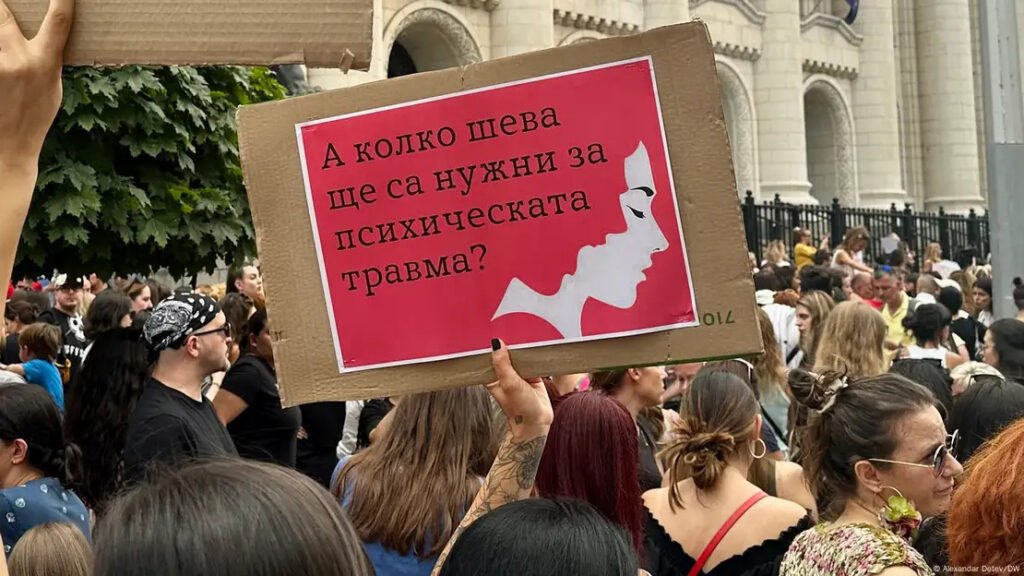
Bulgaria witnessed a significant public outcry over the rising tide of domestic violence, exposing deep-rooted societal issues and the failure of institutions to adequately protect victims. Sparked by the horrific assault of an 18-year-old girl, known as “D.” from Stara Zagora, the protests quickly spread across more than forty Bulgarian towns and cities. Thousands took to the streets in solidarity, demanding justice for victims and systemic reforms to address the epidemic of domestic violence.
Rising Against Violence: The Case of “D.”
The attack on “D.” highlighted the inadequacies of the Bulgarian legal and judicial systems in addressing gender-based violence. Despite suffering 21 cuts from a utility knife, a broken nose, and other severe injuries, the court initially classified her wounds as “minor,” prompting public outrage. This decision reflected a broader pattern of neglect by authorities in smaller towns, where violent criminals often operate with impunity, shielded by weak law enforcement and judicial oversight.
The brutality of the assault, coupled with the failure of the court to classify the injuries appropriately, galvanized the public. Protests called attention to similar cases where victims were ignored or inadequately protected by the state. In D.’s case, the perpetrator, Georgi Georgiev, had a prior criminal record and was on probation for another violent offense at the time of the attack. His lenient treatment by the legal system became a focal point for the demonstrations, as many feared a recurrence of such cases.
Systemic Failures and Legal Reform
Bulgaria’s struggles with domestic violence are not new. Feminist organizations and human rights activists have long called for stronger protections for victims, including reforms to the legal system and more robust enforcement of laws designed to prevent gender-based violence. In 2022, a survey revealed that 36% of Bulgarian women between the ages of 18 and 29 had experienced physical or sexual violence by a partner, nearly twice the rate of other Eastern European countries.
In response to the protests, lawmakers began revising laws surrounding domestic violence. These revisions included changes to the Protection Against Domestic Violence Act, which expanded protections for more victims and aimed to prevent further contact between abusers and their victims. However, many activists argue that these measures are still insufficient, particularly in addressing nonphysical forms of violence, such as psychological and economic abuse. The lack of sufficient shelters and support services for victims also remains a pressing concern.
While legislative changes are underway, they have faced opposition from conservative and far-right political factions, including the Socialist Party and Revival Party. These groups have criticized the inclusion of protections for same-sex couples, further complicating efforts to address domestic violence comprehensively.
Patriarchal Resistance and Political Struggles
The anti-gender rhetoric that has permeated Bulgarian political discourse presents another significant barrier to change. Since 2018, when Bulgaria refused to ratify the Istanbul Convention—an international treaty aimed at preventing violence against women—opposition to what has been dubbed “gender ideology” has gained traction. Conservative and far-right parties, along with religious groups, have propagated conspiracy theories about gender norms, stoking fears of Western liberalism undermining “traditional Bulgarian values.” This resistance has hampered efforts to address gender-based violence, with many politicians leveraging these fears for political gain. The term “gender ideology” has become a slur in Bulgarian public life, used to vilify any efforts toward gender equality or LGBTQ+ rights. This toxic environment has made it difficult for progressive policies to gain traction and for activists to address the systemic nature of domestic violence.
Moving Beyond the Protests
The protests across Bulgaria, while significant, highlight the long road ahead. Feminist organizations have called for more than just harsher sentences for perpetrators; they seek broader reforms, including comprehensive sex education in schools and better access to social services for victims. Addressing the systemic nature of domestic violence requires a deeper understanding of how social inequalities, poverty, and entrenched patriarchal norms exacerbate the issue.
The movement has brought attention to the failure of police and judicial authorities to protect victims, but much remains to be done. Victims of domestic violence often face dismissive or even hostile treatment from law enforcement, as seen in D.’s case. The widespread distrust of the police and judiciary was further emphasized by comparisons to the public outrage in France following the police killing of Nahel Merzouk, which sparked mass protests.
A Long Battle for Gender Equality
The wave of protests in Bulgaria marks a turning point in the country’s fight against domestic violence, but the struggle is far from over. Patriarchal attitudes remain deeply entrenched, reinforced by political parties that resist change and exploit fear of gender equality for their own gain. Nevertheless, the growing public awareness and solidarity seen in recent months provide hope for a new chapter in the fight for gender equality.
While Bulgaria has yet to fully recover from the social and economic dislocation caused by its post-socialist transition, feminist organizations have been working tirelessly to support victims and advocate for change. These efforts are beginning to bear fruit, but the journey toward true gender equality and the eradication of domestic violence will require sustained activism, legal reform, and cultural shifts that challenge the country’s patriarchal norms.
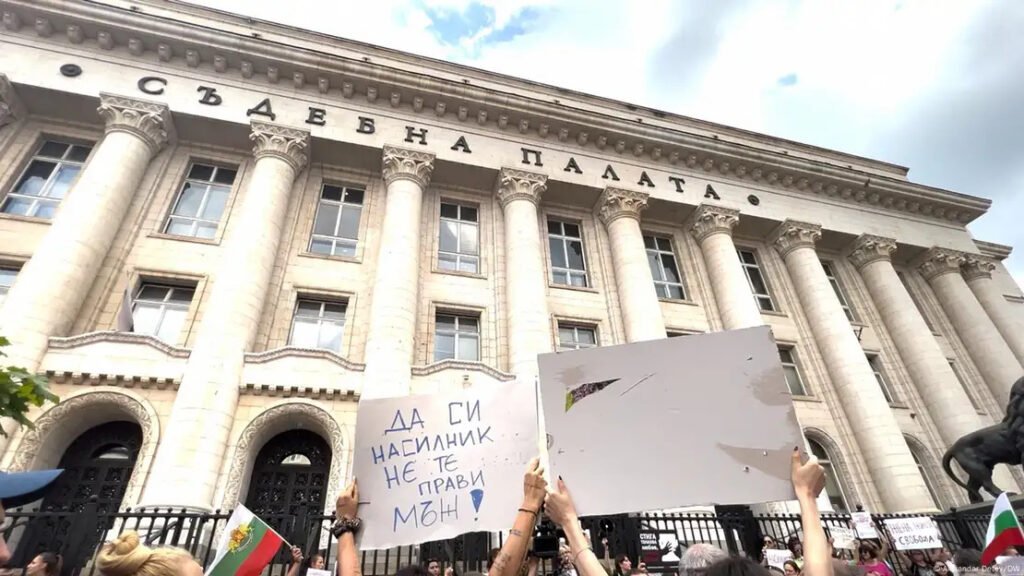
The protests in Bulgaria reflect a society grappling with deep-rooted issues of misogyny, violence, and institutional failure. While recent legislative reforms are a step in the right direction, much more needs to be done to protect women and ensure that domestic violence is taken seriously. The fight for gender equality in Bulgaria is not just a legal battle; it is a cultural and social one, requiring widespread changes in how the country addresses violence, social inequality, and human rights. As Bulgaria moves forward, the recent mobilizations offer a glimmer of hope that real change may be possible, but the road ahead remains long and challenging.