
Escalating Crisis in Israel: Netanyahu’s Policies Under Fire Amid Hostage Negotiations and Public Outcry
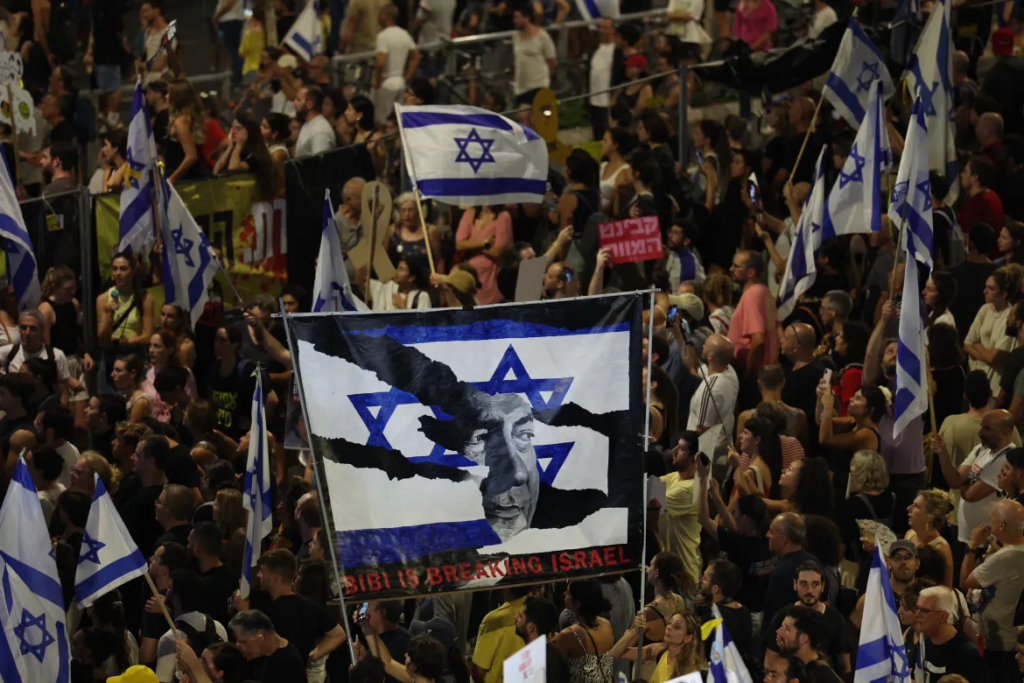
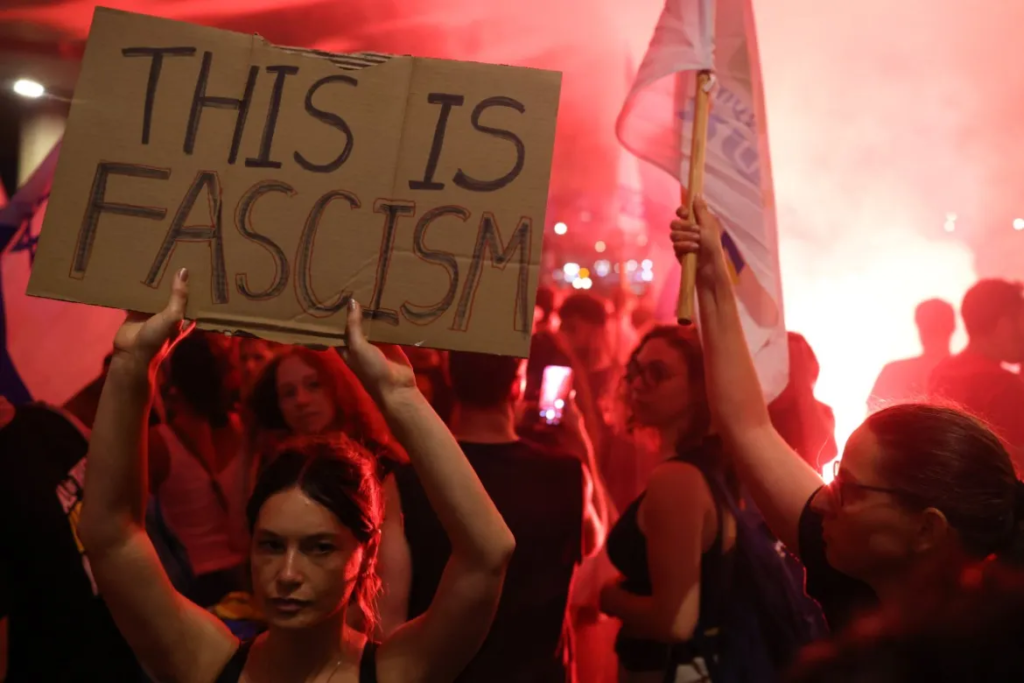
With Israel engulfed in a wave of public anger, Prime Minister Benjamin Netanyahu is facing unprecedented scrutiny over his handling of negotiations with Hamas to secure the release of Israeli hostages. The recent tragic deaths of six hostages, including one American citizen, have intensified public dissatisfaction with Netanyahu’s approach, as his insistence on particular conditions appears to be stalling negotiations. As protests gain momentum across Israel, there is a growing call for Netanyahu’s resignation, and questions are mounting regarding his motives and priorities in this ongoing crisis.
Controversial Demands and Breakdown of Negotiations
The hostage deaths have placed a harsh spotlight on Netanyahu’s negotiation tactics, especially his demand for permanent Israeli control over the Philadelphi corridor—a narrow border area between Gaza and Egypt. This demand has consistently disrupted mediation efforts, with senior officials and mediators from various countries expressing frustration. According to sources close to the negotiations, the insistence on controlling this strip has become the main barrier to a cease-fire and hostage deal, drawing criticism even from members of Netanyahu’s own government.
Defense Minister Yoav Gallant, a key figure within Netanyahu’s Likud party, has openly clashed with the Prime Minister over these demands, warning that such conditions complicate the negotiations and potentially endanger hostages still held by Hamas. Gallant has emphasized that Israel’s core security interests do not require control of the Philadelphi corridor, but Netanyahu’s refusal to adjust his stance has only deepened rifts within his administration and raised doubts about his willingness to prioritize a deal over political gain.
A Groundswell of Public Dissent
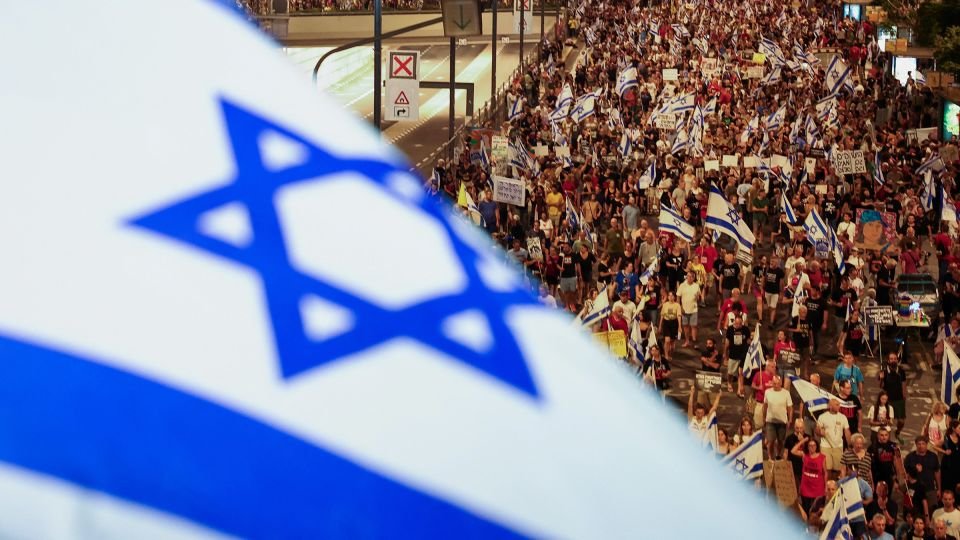
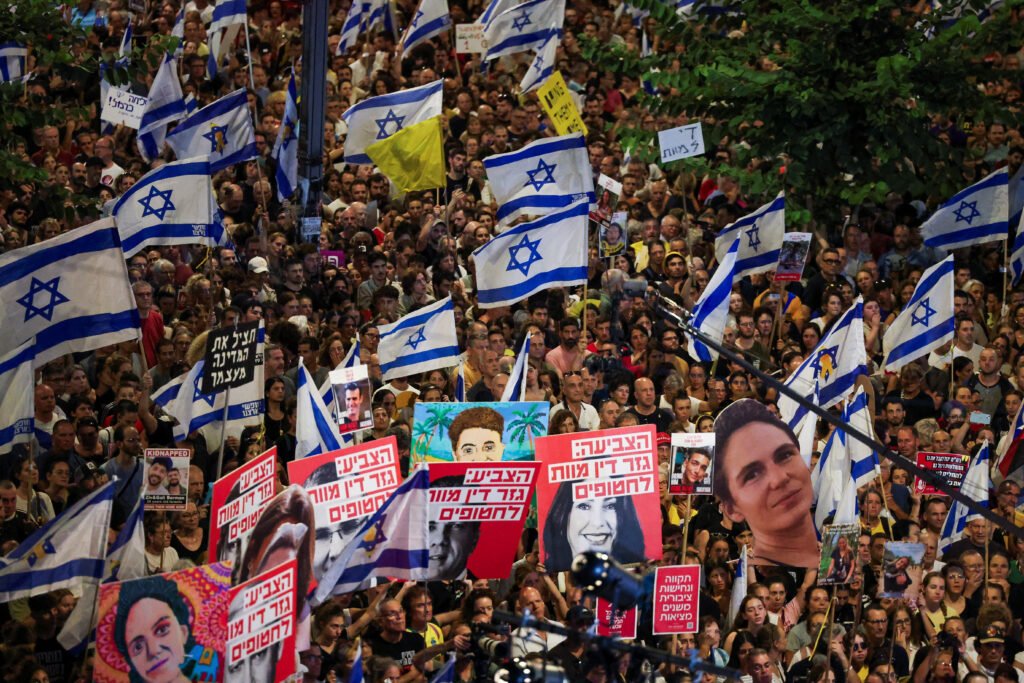
The families of the hostages have become central voices in the public protest against Netanyahu, arguing that his actions are obstructing opportunities for their loved ones’ safe return. Led by the Hostage Families Forum, families of the victims have condemned Netanyahu’s approach as prioritizing political maneuvering over human lives. This backlash has sparked widespread demonstrations, with a symbolic march of families carrying empty coffins to represent the lives lost, and demanding immediate action to bring back the remaining captives.
In an unprecedented move, Histadrut, Israel’s national trade union federation, called a general strike, supported by various labor groups and sectors, effectively freezing large parts of the nation’s economy. Key figures in Israel’s business community also voiced their discontent, cautioning that continued failure to secure a deal could have long-term economic and social repercussions. As protests intensify, Netanyahu’s leadership is facing an extraordinary test, with significant portions of the public and industry leaders calling for a change in approach.
International Frustration and Diplomatic Implications
The United States, one of Israel’s closest allies, has also shown signs of frustration with Netanyahu’s position. President Joe Biden’s administration has reportedly conveyed disappointment with Netanyahu’s unwillingness to compromise on the Philadelphi corridor demand. U.S. diplomats involved in the talks have indicated that prolonged delays are beginning to strain U.S.-Israel relations, with concerns that Netanyahu’s tactics may be undermining American efforts to mediate a resolution. Egypt and Qatar, both acting as mediators, have similarly voiced their disapproval of Netanyahu’s approach, viewing his demands as obstacles to peace.
Netanyahu’s response to Biden’s critique has only escalated tensions, with the Prime Minister defending his stance by arguing that Hamas is the true impediment to any cease-fire or hostage deal. This exchange has amplified the perception that Netanyahu’s conditions are stalling the peace process, further isolating him both domestically and internationally. Mediators and international observers are increasingly skeptical about Netanyahu’s commitment to resolving the crisis, as his conditions are seen as a political maneuver rather than a genuine security requirement.
Mounting Pressure Within Israel’s Leadership
Internally, the crisis is generating fractures within Israel’s ruling coalition, with senior officials and advisors questioning Netanyahu’s approach. Key cabinet members, including Gallant, have criticized Netanyahu’s fixation on the Philadelphi corridor, viewing it as a nonessential demand that risks further escalation with Hamas. Reports from recent security cabinet meetings reveal heated exchanges, with Gallant reportedly pressing Netanyahu to prioritize the hostages’ return over territorial control. This internal discord has led some to speculate that Netanyahu’s stance may be motivated by political survival rather than national security.
According to insiders, Netanyahu’s refusal to compromise has sparked widespread dissatisfaction among high-level officials, some of whom believe that his strategy is jeopardizing Israel’s stability and global reputation. Netanyahu’s determination to hold onto his coalition appears to be influencing his decisions, prompting public and political figures alike to question his ability to lead effectively.

A Turning Point for Israeli Leadership
With mounting discontent among citizens, officials, and international allies, Israel’s handling of the hostage crisis represents a pivotal moment in its political trajectory. The growing backlash against Netanyahu’s tactics has intensified calls for new leadership, with segments of the Israeli public increasingly vocal in their demands for accountability and a shift in policy. Media outlets across the political spectrum have joined the criticism, publishing editorials urging Netanyahu to step down in light of his failure to secure a deal.
As Israel navigates this period of profound uncertainty, Netanyahu’s political future hangs in the balance. The hostages’ deaths have amplified concerns about the broader implications of his leadership, with public opinion steadily shifting toward a desire for change. This crisis, coupled with earlier protests against judicial reforms, has highlighted the fractures within Israeli society, underscoring a moment of reckoning for the nation’s political establishment.
A Nation in Crisis, Searching for Change
The events surrounding the hostage negotiations and Gaza conflict reveal deep-seated issues within Israel’s current leadership, marking a significant crossroads. Netanyahu’s policies have ignited widespread disillusionment, galvanizing a diverse coalition of citizens, labor unions, and political leaders to demand a new direction. As protests grow and diplomatic pressure mounts, the coming weeks may determine not only the fate of Netanyahu’s administration but the future of Israel’s national priorities. The Israeli public’s call for peace and accountability signals a potential shift, as the nation stands at a critical juncture, poised for change.