

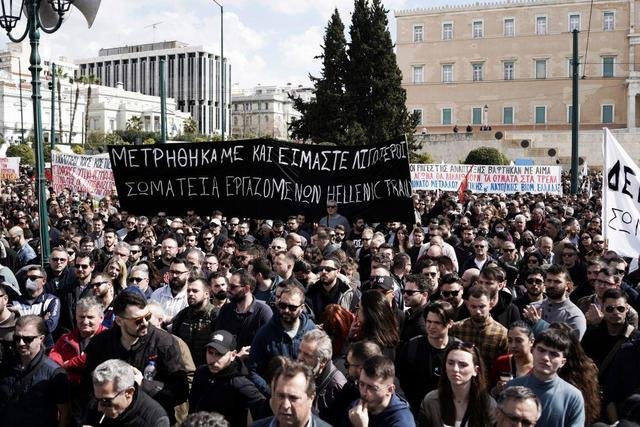
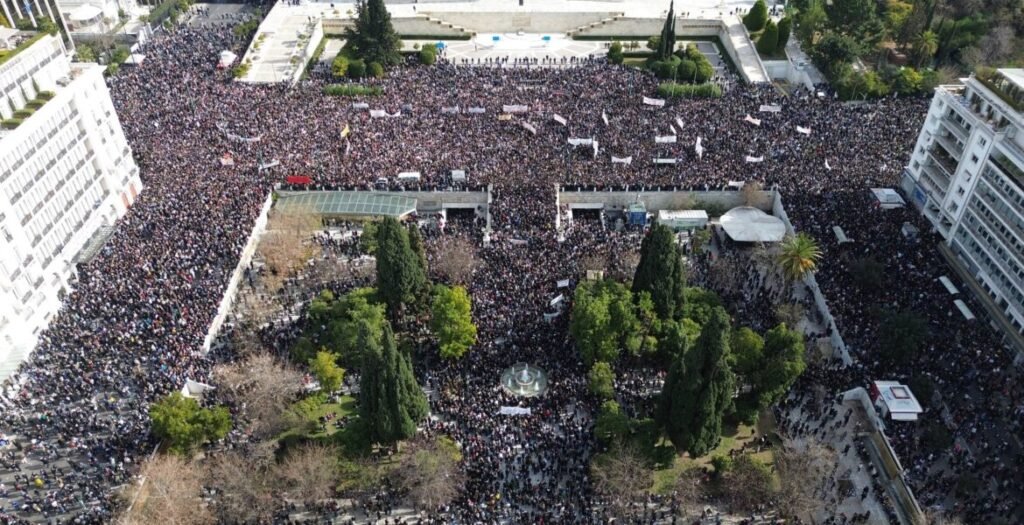
On Friday, January 26, Greece witnessed one of the largest mass mobilizations in its modern history. In over 260 cities and towns across the country, as well as in 125 cities abroad, millions of people took to the streets in what can only be described as a historic general strike. In Athens alone, over a million people gathered, while Thessaloniki saw crowds exceeding 300,000, with hundreds of thousands more protesting across the rest of the country.
Unlike previous 24-hour general strikes, which often had limited participation, this strike was truly universal. The entire economic life of Greece came to a halt, reminiscent of the pandemic lockdowns of 2020-21. Yet, this time, it was not government-imposed restrictions but the spontaneous action of the working class that paralyzed the nation.
This movement was not driven by top-down trade union calls—most of which were weak or non-existent. Instead, it was the overwhelming willingness of workers and the poor to mobilize that made this strike so powerful. Their determination even led small and medium-sized businesses to shut down, either in solidarity or out of sheer fear of standing against the tide of mass action.
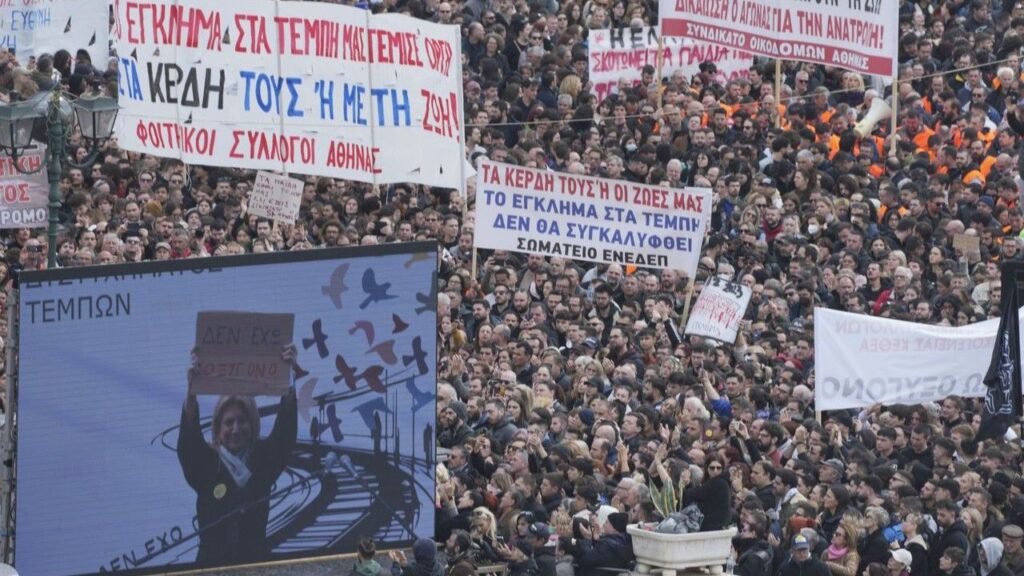
The scale of this mobilization surpasses even the most intense moments of Greece’s anti-austerity movement from 2010 to 2015. In fact, it could only be compared to the massive spontaneous demonstrations of July 24, 1974, when the Greek people celebrated the fall of the military dictatorship.
The Meaning of This Historic Mobilization
The significance of January 26 goes far beyond the size of the protests. This was not simply a demonstration—it was an assertion of working-class power. For the first time in years, the Greek masses stepped decisively onto the political stage, making it clear that they alone—not the government, not the ruling class—will shape the country’s future.
This movement has completely destabilized the government of Prime Minister Kyriakos Mitsotakis and exposed the fragility of his ruling New Democracy (ND) party. The masses are not simply protesting government policies; they are challenging the entire capitalist system that has ruled Greece for decades.
For years, political analysts claimed that Greece had undergone a “conservative shift”, pointing to the electoral defeats of SYRIZA and the continued dominance of ND. But the events of January 26 shattered this illusion. The supposed “passivity” of the Greek working class was nothing more than a temporary retreat, caused by the betrayals of reformist parties and trade union bureaucrats. Now, the people have returned to the streets with even greater force than before.
What’s more, this mobilization was not driven by economic demands. The protesters were not striking for higher wages or lower prices but for justice—justice for the victims of the Tempi train disaster, justice for all those who have suffered under the corrupt and repressive Greek state. Their willingness to risk their jobs and safety to confront the regime speaks to the depth of anger building within Greek society.
State Repression and Provocation
Faced with an unstoppable mass movement, the government responded with violence, provocation, and repression. Barely two hours into the Athens demonstration, while relatives of the Tempi train disaster victims were still addressing the crowd, the state launched a calculated police assault to break up the gathering.
Eyewitnesses and independent media reports confirm that small groups of hooded provocateurs—widely believed to be linked to the police—infiltrated the protest, smashing bricks with sledgehammers and throwing Molotov cocktails at the riot police. This served as the pretext for an immediate, brutal police attack on peaceful demonstrators. The photojournalist Orestis Panayiotou was struck in the head by police violence, while dozens of other protesters were injured. Riot police launched a chemical assault, firing tear gas and flash-bang grenades into the densely packed crowd, turning the protest into a chaotic battlefield.
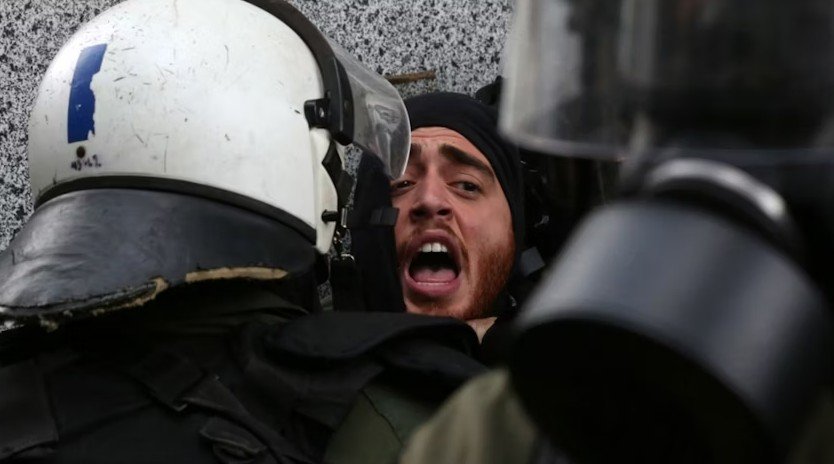

Despite this extreme violence, the people refused to retreat. In Athens and Thessaloniki, protesters physically confronted provocateurs, unmasking them and forcing them to flee. Others stood their ground for hours, enduring the police attacks with a level of discipline and courage that reflects a profound shift in consciousness.
Even after multiple rounds of violent dispersals, tens of thousands of young people regrouped near Syntagma Square. In a remarkable show of defiance, they raised their hands in the air, signaling to both the police and the world that they were unarmed and peaceful—but unyielding. It took the Greek police eight hours of sustained repression—including the use of their infamous armored water cannon, “Ajax”—to finally clear the streets. But by then, the political message had been delivered: this movement will not be intimidated.
A Government in Panic
The scale of this mobilization has thrown the Mitsotakis government into crisis. For weeks, ND officials have oscillated between attacking the protests as “destabilizing” and pretending to be defenders of the people’s right to demonstrate.
On the evening of January 28, a government spokesperson absurdly congratulated the police for their “responsible” conduct—despite overwhelming evidence of brutality. Meanwhile, pro-government media outlets like SKAI TV struggled to contain their panic, alternating between acknowledging the historic significance of the rallies and desperately trying to downplay their political impact.
However, no amount of media spin can erase the central demand that emerged from the protests: “Resign!”
Initially, protesters simply chanted “Murderers!”, referring to the government’s responsibility for the Tempi disaster. But as the rallies progressed, the sheer size of the movement—and the government’s repressive response—led to the spontaneous emergence of a new slogan: “Resign!”
This was the moment when the movement stopped being just about justice for Tempi and became a direct challenge to the Mitsotakis regime itself.
What Comes Next? Escalation or Containment?
The key question now is whether this movement will escalate or be defused. The ruling class would oust Mitsotakis immediately if they had a stable replacement—but they do not. The far-right parties (Greek Solution, Victory, Voice of Reason) lack the broad support needed to govern. The center-left parties (PASOK, SYRIZA, New Left) have been thoroughly discredited and lack the strength to form a viable alternative.
This means the Greek capitalist class has no choice but to keep Mitsotakis in power—for now. They will continue to ignore the political demands of the working class while hoping that the movement will burn out. Meanwhile, the trade union and parliamentary opposition leaders are doing everything they can to prevent real escalation. The General Confederation of Greek Workers (GSEE) only called a 24-hour general strike on February 28, a full month after the historic protests.
Even the Greek Communist Party (KKE), despite its radical rhetoric, has failed to call for a sustained strike movement. Instead, it has focused on isolated mobilizations that, while significant, do not challenge the government’s grip on power.
If the demand for “Resign!” is to become reality, the movement must escalate beyond one-day strikes and symbolic protests. The working class must:
- Organize for a 48-hour general strike as the next step.
- Elect workplace and neighborhood struggle committees to coordinate resistance.
- Reject reliance on parliamentary maneuvers and trade union bureaucracies.
The power to bring down the government lies not in the hands of the politicians—but in the hands of the people who filled the streets on January 26.
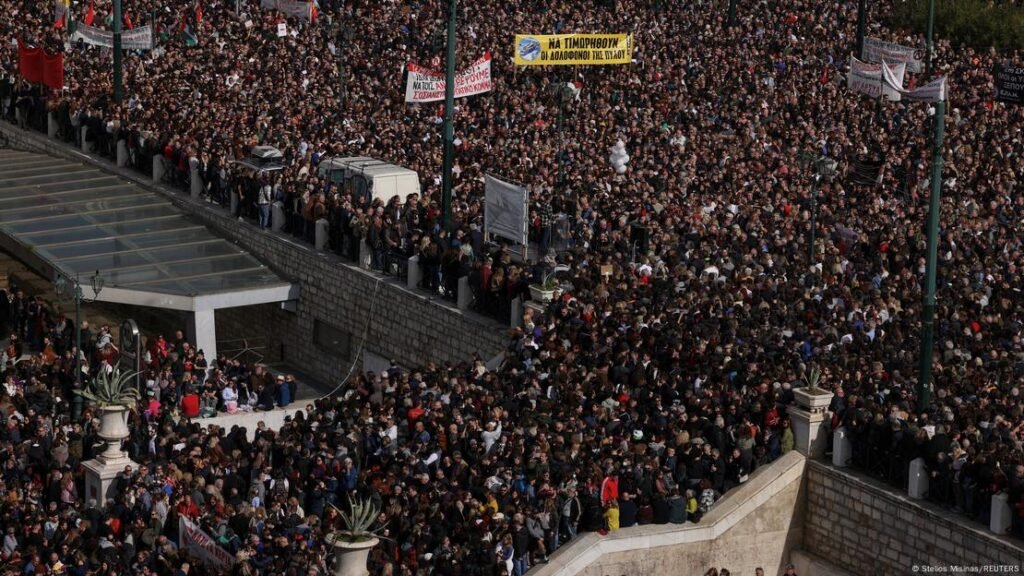
Greece has entered a new phase of struggle. The mobilization of January 26 proved that the working class, when united, holds immense power. The question is whether this power will be used to bring down the Mitsotakis regime—or whether it will be dissipated into controlled opposition and symbolic protests.
The choice now belongs to the movement itself. Will it retreat, or will it advance? The future of Greece depends on the answer.