

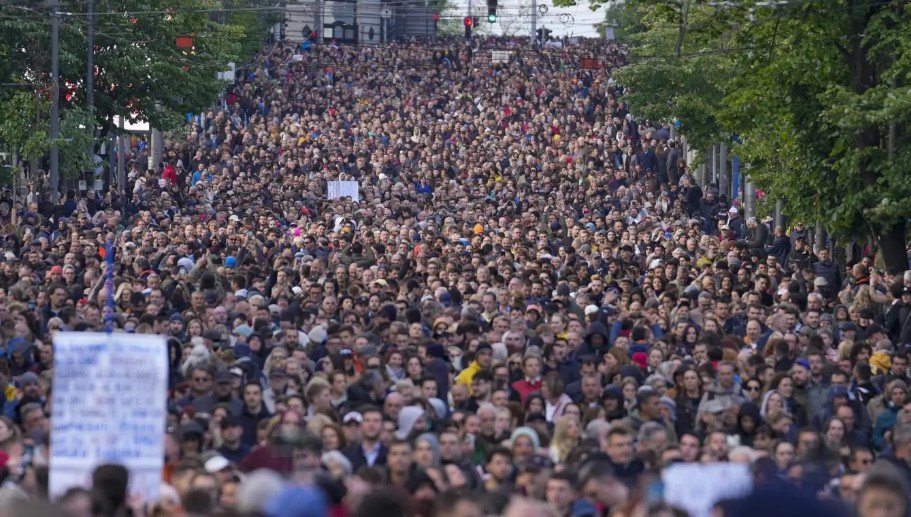
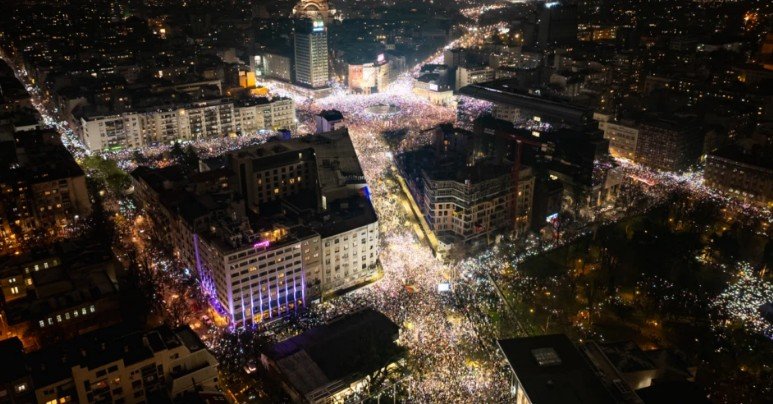
On 15 March 2025, the streets of Belgrade overflowed with demonstrators in what was likely the largest protest in Serbia’s modern history. Official estimates recorded approximately 300,000 people, though many believe the true number to be even higher. The protest was the culmination of months of student-led organizing, sparked by a deadly infrastructure collapse and fuelled by years of public frustration with an increasingly authoritarian and corrupt regime under President Aleksandar Vučić. Students, activists, and citizens from all corners of Serbia made their way to the capital. Villages and towns welcomed their local marchers with applause and solidarity. Upon arrival in Belgrade, they were hosted by fellow students, with thousands of mattresses prepared in dormitories and private homes.
The protest spread across two symbolic sites—Slavija Square and the National Assembly. From dawn to dusk, rivers of people flowed through the city. They marched with determination, chanting slogans like “Pump it up!”, which has become a rallying cry of the movement. The demonstration’s centerpiece was a 15-minute silence, honoring the 15 lives lost during the 1 November 2024 collapse of a newly renovated train station roof in Novi Sad—an incident directly linked to state negligence and endemic corruption.
A Regime in Crisis
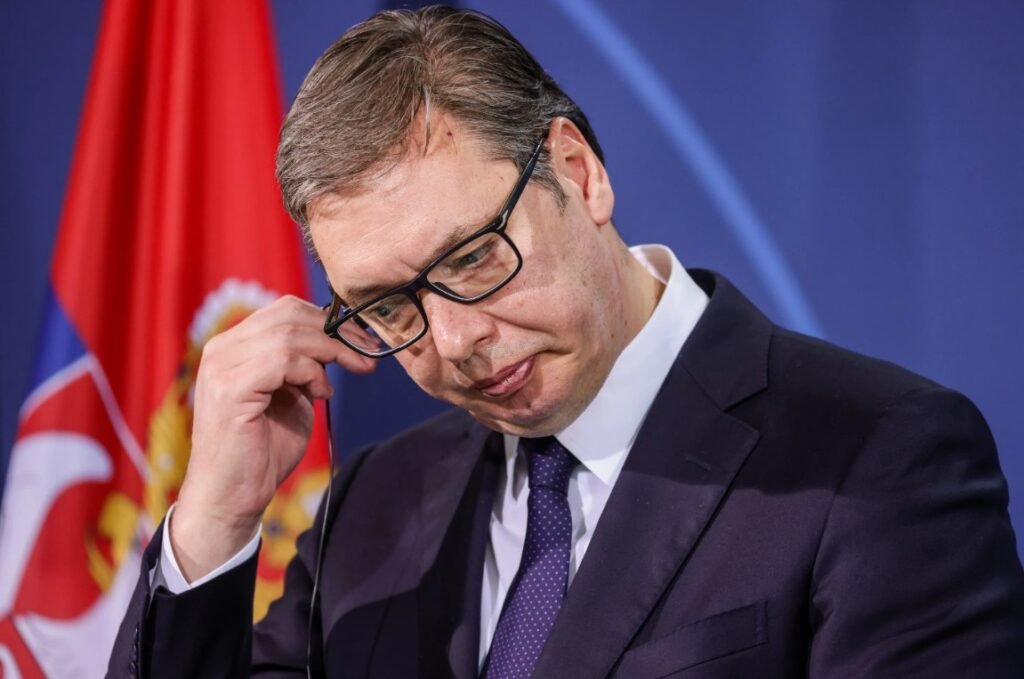
The Vučić administration, long criticized for its authoritarianism, nepotism, and ties to organized crime, responded to the growing protest movement with paranoia and provocation. In the weeks leading up to 15 March, the government orchestrated a series of repressive actions:
- The creation of a pro-government encampment near Parliament, falsely presented as a student counter-demonstration.
- The bussing in of underprivileged individuals, criminal affiliates, and even Serbs from northern Kosovo—many reportedly against their will.
- The surveillance and arrest of opposition activists, based on illegally recorded conversations.
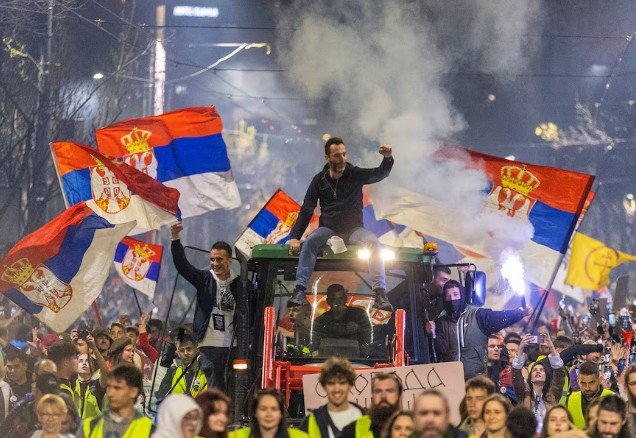
This authoritarian display reached a disturbing climax during the protest itself. In the middle of the silence for the victims, chaos broke out in one section of the crowd. Video footage shows attendees suddenly panicking and scattering. Witnesses reported loud, unfamiliar noises and tremors, fueling strong suspicion that sonic crowd control weapons may have been used—at the most peaceful and solemn moment of the protest.
Tensions escalated further when masked provocateurs near the encampment began throwing rocks. Fearing the situation could spiral into bloodshed, the student organizers made the difficult decision to end the protest early, choosing de-escalation over confrontation.

After the Protest: A Movement Endures
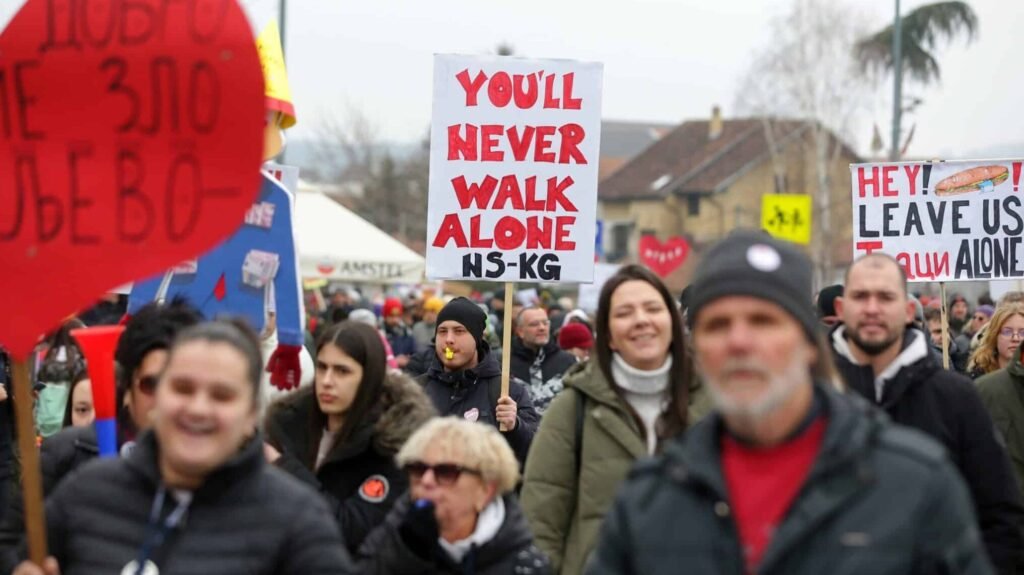
Though the protest concluded earlier than planned, its impact was undeniable. Across the country, returning student demonstrators were welcomed as heroes. In Niš, receptions were held in their honor. In Obrenovac, citizens pelted local officials with eggs in protest of their support for Vučić’s encampment.
However, one question loomed large: Why has Vučić not stepped down? The scale of the protest—possibly involving more than 5% of the nation’s population in a single city—would be sufficient to collapse many governments. The answer lies not in the absence of outrage, but in the lack of centralized leadership capable of translating public anger into sustained political pressure.
The Movement’s Dilemma: Organization and Direction
The student movement has become the moral center of resistance, admired for its courage and self-discipline. Yet it lacks a national leadership structure and clear political coordination. On 15 March, protest locations were changed several times at the last minute, reflecting organizational weaknesses. Though the movement has embraced direct democracy through student plenums, the absence of an elected, accountable leadership body has created confusion and missed opportunities.
For over three months, students have demanded transparency and justice regarding the Novi Sad station collapse. Despite admirable persistence, their core demands remain unmet. The regime, though clearly shaken, remains firmly in place.
What is missing is a strategic escalation—one that can only be led by an organized political force. Students are respected across Serbia and have the legitimacy to lead, but they must now evolve from protest organizers into political actors capable of shaping a broader national movement.
To do so, they should:
- Establish a national leadership council, elected from local plenums.
- Coordinate with workers’ unions, many of which are already striking in education, transport, and public services.
- Develop a political programme that unites social, economic, and democratic demands.
- Call for a general strike, leveraging the working class’s strategic role in the economy.
A Rising Worker Movement
Signs of deeper unrest are already visible. Strikes have broken out across multiple sectors:
- Teachers and educators
- Judiciary workers
- Employees at Nikola Tesla Airport, the Post Office, GSP Belgrade, and Elektroprivreda Srbije
These workplace actions point to the growing confidence of the working class, which—if organized—could tip the balance of power. The student movement, through its calls for mass assemblies and a general strike, is already pointing in the right direction. But those calls must now become concrete organizing efforts.
Beyond Vučić: A System in Decay
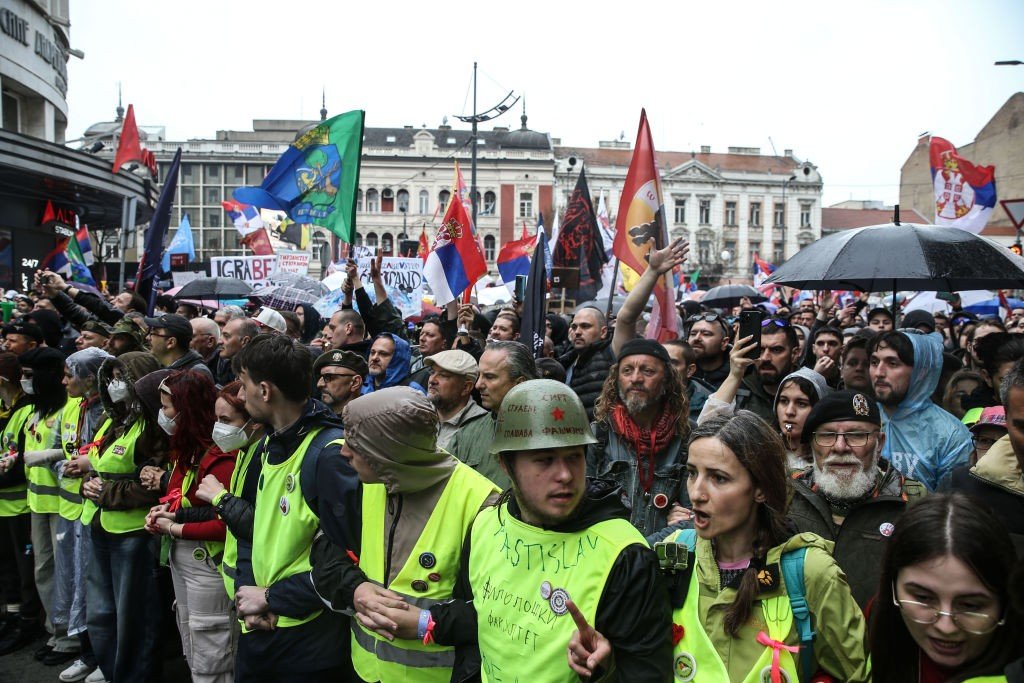
The protest movement is not merely a rejection of one man. It is a revolt against an entire system:
- One that sells national assets to foreign powers.
- One where public infrastructure collapses due to crony contracts.
- One that treats its citizens with contempt and rules through manipulation, fear, and force.
Vučić has handed over Serbian resources to global interests—from oil and infrastructure to lithium and airports. In return, he receives international legitimacy and domestic impunity. Both East and West, from Russia to the U.S. and EU, have found a reliable partner in Vučić—a fact that explains the international silence surrounding his repression.
But the students of Serbia have defied both local tyranny and global complicity. Their resistance, though isolated, is genuine, democratic, and fiercely independent. They have no foreign backers. No EU flags wave at their marches. Their demands are their own.
The student-led uprising in Serbia is among the most significant movements of its kind in recent memory. Like the student protests of 1968 or the Chilean uprisings of recent years, it has the potential to reshape the nation. But its success hinges on one crucial factor: whether it can transition from spontaneous revolt to organized resistance—from protest to power.
This is no longer simply about removing Vučić. It is about rebuilding a society—on principles of justice, transparency, public control, and solidarity. It is about replacing a system of foreign-controlled oligarchy with a people-led, democratic alternative.
If the students and workers of Serbia succeed in this mission, they will not only liberate themselves but inspire others across the world living under similar conditions of repression and exploitation.