

Only a few weeks ago, at the prestigious Munich Security Conference, U.S. Vice President JD Vance bluntly declared what many European leaders had long feared but few dared to say aloud: the United States no longer intends to underwrite Europe’s defence. This unambiguous message sent shockwaves through the European political establishment. What followed was a frantic cascade of closed-door meetings, emergency summits, and hastily assembled “coalitions of the willing,” as Europe’s ruling classes scrambled to confront a world in which they could no longer rely on American military protection.
For more than seven decades, Europe enjoyed the privileges of being a junior partner to U.S. imperialism. Washington’s military umbrella allowed European nations to prioritise economic development, social spending, and post-war reconstruction while leaving the burdens of global policing to their transatlantic benefactor. But that era has come to an abrupt close.
As Europe’s political elites are now discovering, their hollow declarations of “strategic autonomy” are far out of step with the grim realities of their economic decay, military impotence, and political fragmentation. Their panicked manoeuvres reveal not strength, but profound weakness.
From Subordinate Allies to Fragmented Pretenders
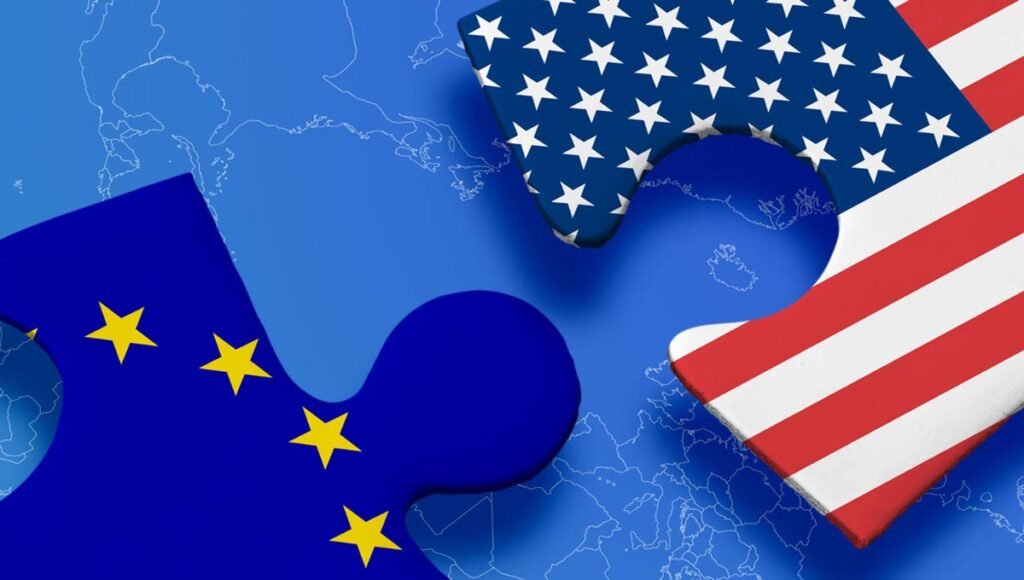
For decades, European capitalists basked in the relative stability provided by U.S. hegemony. The Cold War settlement allowed them to rebuild shattered economies, expand social welfare systems, and engage in global trade without fear of military retaliation from rivals. Europe functioned essentially as a safe economic rear base for U.S. imperialism, helping contain Soviet influence without having to shoulder significant military burdens itself.
However, under the new reality shaped by Donald Trump’s presidency, U.S. strategic thinking has shifted dramatically. Confronted by relative decline, Washington is recalibrating its focus away from Europe and towards the Indo-Pacific, where it perceives China as its principal adversary. Trump’s transactional approach to foreign policy makes no room for outdated sentimental alliances. To him, Europe is a drain on U.S. resources—ungrateful clients who have failed to pay their share of imperial protection.
As a result, Europe finds itself alarmingly exposed. The cosy dependency on the U.S. has left European states militarily hollowed out, economically sclerotic, and politically fragmented.
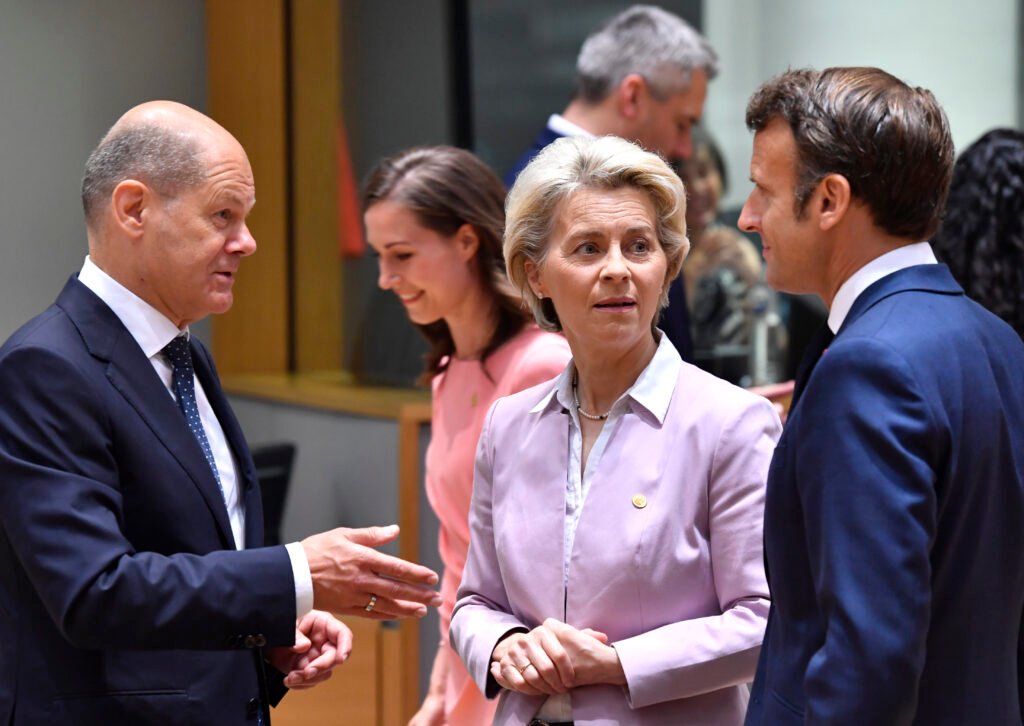
No unified European ruling class exists; instead, there is a collection of rival national bourgeoisies with divergent interests. The fantasy of “European strategic sovereignty” collapses upon inspection.
Aging infrastructures, declining productivity, a fragmented defence industry, and chronic underinvestment plague the continent. While leaders like von der Leyen, Macron, and Scholz grandstand about building a “European pillar” of NATO, their proposals rest on economic quicksand and political discord.
Ukraine: The Failure of Europe’s Proxy War
The debacle in Ukraine epitomises Europe’s impotence. European imperialists poured billions of euros into the Kyiv regime, hoping to bleed Russia dry and revitalise their own waning imperial relevance. But the outcome has been catastrophic.
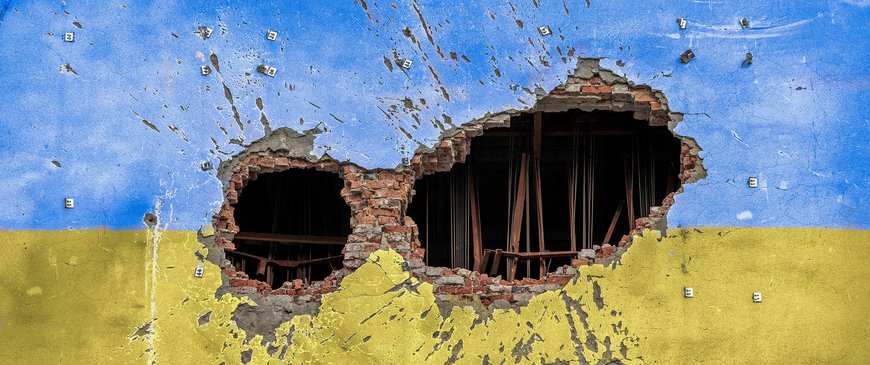
Russia’s victory is now indisputable. Ukraine’s counteroffensives have failed miserably, its manpower is exhausted, and its territory continues to shrink. European powers—who once believed they could outlast Russia economically and militarily—now face their own strategic exhaustion.
Ambitious pledges of military aid, such as Kaja Kallas’s bombastic promise of €50 billion, were reduced to a pitiful €5 billion amid internal squabbling. Even that modest figure could not be secured, with Hungary’s veto derailing the entire package. Dreams of confiscating Russian assets have gone nowhere, as European banks fret over the legal and financial risks.
Meanwhile, Europe’s delusional plans to deploy a “peacekeeping force” in Ukraine have collapsed under their own contradictions.
Initially marketed as a serious deterrent, the idea degenerated into proposals for an impotent force of a few thousand troops stationed far from active combat zones—nothing more than a symbolic fig leaf for failure.
What is clear is this: without U.S. support, Europe’s military adventurism is toothless. Even worse, the war in Ukraine has exposed Europe as a battlefield between imperial powers, not an autonomous actor. The Ukrainians themselves have been reduced to cannon fodder in a conflict orchestrated by competing imperialist interests.
“Rearming Europe”: Propaganda vs. Reality
The European Commission’s “Readiness 2030” initiative, led by von der Leyen, is the centrepiece of the continent’s militarisation narrative. Ostensibly promising €800 billion in defence spending, the initiative was trumpeted as proof that Europe was finally taking responsibility for its own security.
Yet, behind the inflated headlines lies a grim reality of recycled funds, empty promises, and debt-fuelled desperation. Much of the €800 billion figure consists of pre-allocated funds from the COVID-19 recovery package, merely rebranded for military use. A significant portion involves loans through the SAFE (Security Action for Europe) programme, forcing debt-ridden countries such as Italy and Spain to borrow yet more in order to rearm.
Rather than genuine collective rearmament, what emerges is a scattershot of national programmes, each shaped by parochial self-interest and historical mistrust. France dreams of using the rearmament drive to strengthen its own defence industry at the expense of U.S. firms. Germany eyes the opportunity to reindustrialise under the pretext of security needs.
Eastern European states, meanwhile, scramble for second-hand American equipment, deepening their subservience to Washington.
The fragmented nature of Europe’s arms production further complicates matters. Unlike the integrated military-industrial complex of the United States, Europe’s defence manufacturers compete rather than cooperate. The continent remains dependent on U.S. military technology, particularly in critical areas such as fighter jets and missile defence systems.
Trump’s blunt declaration that U.S. allies will only receive downgraded versions of the next-generation F-47 fighter jets underscores Europe’s subordinate position. Even as they seek to rearm, European militaries remain tethered to the leash of American imperialism.
Germany’s Gamble: Ambition Amid Crisis
Among Europe’s powers, Germany stands alone in its aggressive commitment to military expansion. Chancellor Merz has unveiled plans for unprecedented levels of defence spending, exceeding €1 trillion over the next decade.
Germany’s strategy is to leverage its stronger fiscal position, derived from years of austerity, to modernise its military and rebuild its industrial base. However, this path is fraught with danger. Rising debts and a hollowed-out manufacturing sector pose significant risks. German capitalism—once the engine of Europe—now finds itself grappling with structural stagnation and the loss of cheap Russian energy supplies.
Far from fostering European unity, Germany’s approach risks deepening the fractures within the European Union. Berlin’s nationalist “Germany First” doctrine has already alienated its neighbours, further fragmenting the European project.
Manufacturing the Russian Menace
To justify its militarisation, Europe has manufactured a bogeyman in the form of Russia. Yet, the notion of an imminent Russian invasion of the European Union is a fabricated myth.
Russia, while rapidly rebuilding its military capabilities, shows no interest in a suicidal war with NATO. Instead, it focuses on consolidating its gains in Ukraine and expanding its influence in regions where Western power is receding, notably Africa and parts of Eastern Europe.
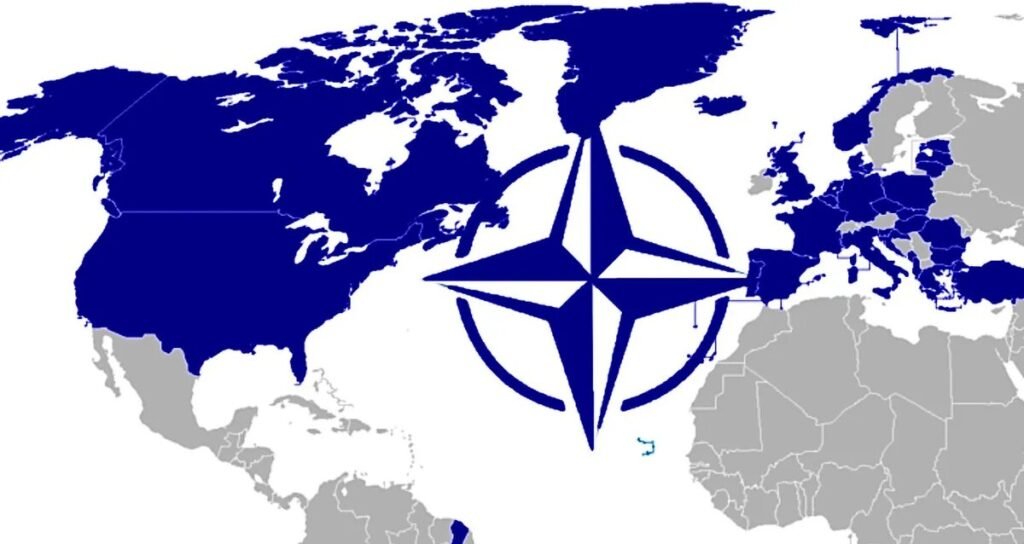
The real fear haunting European imperialists is not Russian tanks rolling through Warsaw, but the erosion of Atlanticist unity and the emergence of alternative power blocs. Countries like Hungary and Slovakia openly question the wisdom of anti-Russian hysteria. Russia’s successful challenge to Western dominance emboldens nationalist currents across the continent and threatens to splinter NATO’s fragile unity.
War Abroad Means War at Home
What is beyond doubt is that the costs of Europe’s militaristic ambitions will be paid by its working class. The pivot from “butter” to “guns” requires the gutting of social services, pension reforms, public health cuts, and mass privatisations. NATO Secretary-General Mark Rutte has been forthright: if Europe is to meet its defence spending targets, it must cannibalise its welfare states. The Financial Times openly advocates dismantling Europe’s social model to fund militarism, a stark departure from post-war orthodoxy. Across the continent, working-class communities are being asked to sacrifice their livelihoods for imperial ambitions that serve only the ruling elite.
The Labour Party in Britain, led by Keir Starmer, has already embraced this trajectory, enthusiastically pushing austerity in tandem with militarisation. Trade union bureaucracies and much of the so-called left have capitulated to this agenda, offering little more than passive complicity.
The Revolutionary Path Forward
For Europe’s working masses, the question is existential: will we fight for our interests, or continue subsidising our rulers’ imperial fantasies?
Workers must resist the false dichotomy of militarism or decline. The crisis of European capitalism cannot be solved by rearmament or geopolitical aggression. It demands systemic change. It demands that we tear ourselves free from the interests of our own imperialist bourgeoisie and build an internationalist, socialist alternative.
Our main enemy is not abroad but at home. It is the ruling class that plunders public services, wages imperialist wars, and demands our sacrifices. The path forward lies in mass mobilisation against austerity, against militarism, and against the capitalist system that produces both.
The choice before us is clear: war and poverty, or struggle and liberation.