

The mass mobilisations that erupted across Balochistan from late 2023 mark a decisive turning point in the decades-long struggle against national oppression. For generations, the Baloch people have endured colonial plunder, enforced disappearances, economic marginalisation, and brutal military repression. Historically, resistance was dominated by isolated armed struggle — heroic but detached from the broader population.
Today, a new force has emerged: the spontaneous uprising of the masses — students, workers, women, and families of the disappeared — pointing towards a mass revolutionary movement. This development lays bare both the historic limitations of guerrilla tactics and the urgent necessity for revolutionary leadership.
The Roots of Colonial Exploitation
The oppression of Balochistan is deeply rooted in the colonial history of South Asia. Throughout the 19th century, British imperialism divided and subordinated the Baloch territories to its own strategic interests. After the partition of India, Balochistan was forcibly annexed into Pakistan in 1948, despite widespread opposition among the Baloch people.
Since then, Balochistan has been treated as an internal colony. Its immense natural resources — natural gas, gold, copper, and its geostrategic coastline — have been ruthlessly plundered by the Pakistani state in collaboration with multinational corporations. While Islamabad and Rawalpindi amassed wealth and built industrial centres elsewhere, the Baloch people were condemned to poverty, neglect, and political marginalisation.
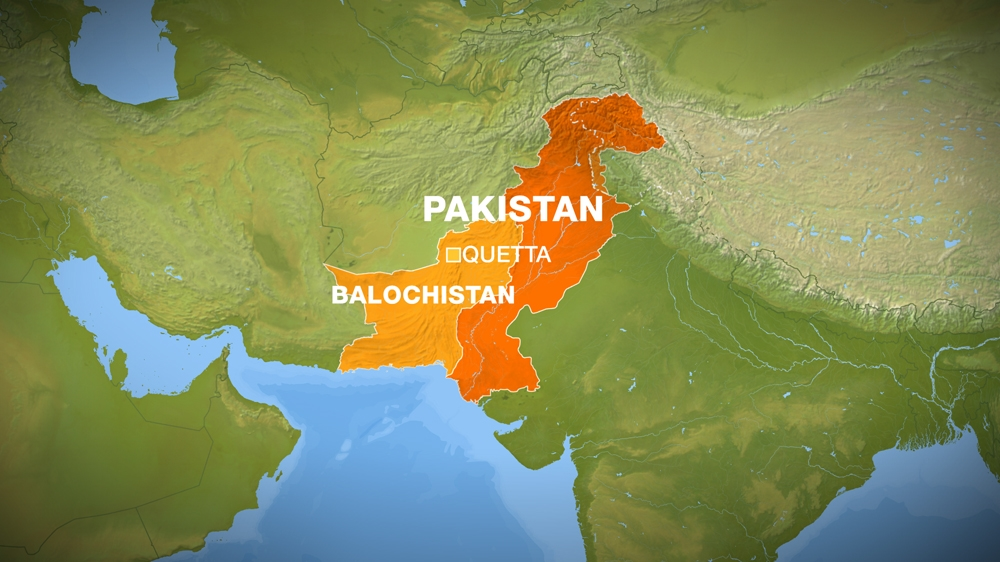
Each attempt at resistance — 1948, 1958, 1962, 1973, and the early 2000s — was met with brutal military force. Time and again, the aspirations of the Baloch masses were betrayed by bourgeois tribal elites, while their heroic sacrifices went unanswered by genuine political transformation.
The Rise and Crisis of Guerrilla Warfare
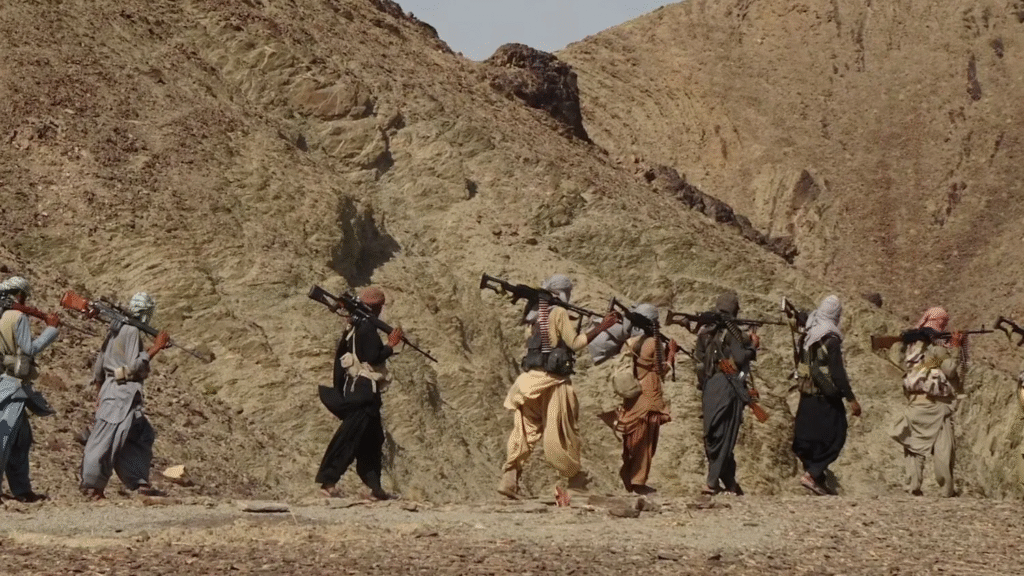
In the face of relentless military repression, enforced disappearances, and betrayals by bourgeois nationalist politicians, sections of the Baloch youth turned to guerrilla warfare, especially after the early 2000s. Organisations such as the Baloch Liberation Army (BLA), the Baloch Liberation Front (BLF), and others carried out daring attacks against the Pakistani military and state apparatus. These guerrilla fighters displayed extraordinary courage under horrific conditions. Their actions symbolised the undying spirit of Baloch resistance. However, guerrilla warfare by its very nature has inherent limitations when isolated from the mass of the working class.
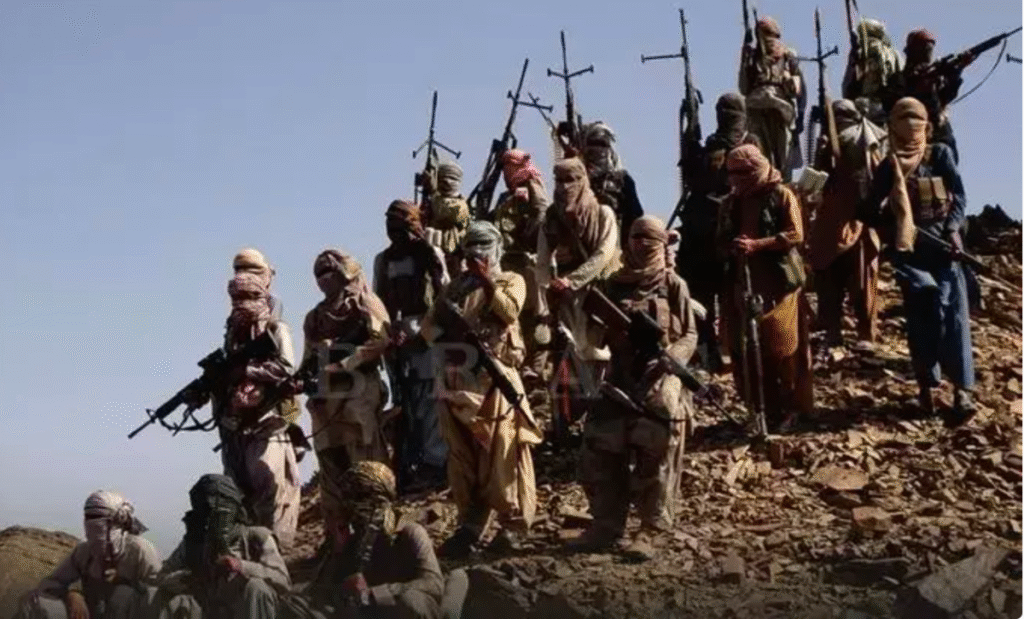
Operating in small, clandestine units, often based in remote mountain areas, the guerrilla groups remained largely disconnected from the urban working class, the rural poor, and broader society. Without a clear revolutionary political programme linking national liberation to social emancipation, the guerrilla campaigns — though valiant — became militarily isolated and politically stagnant. Moreover, tribal structures, personal rivalries, and factionalism often fragmented the movement, further weakening its capacity to present a united front.
Without the conscious mobilisation of millions — workers, peasants, students, and women — no national struggle, no matter how heroic, can succeed against a modern capitalist-imperialist state.
The Mass Uprising of 2023–24: A New Revolutionary Potential
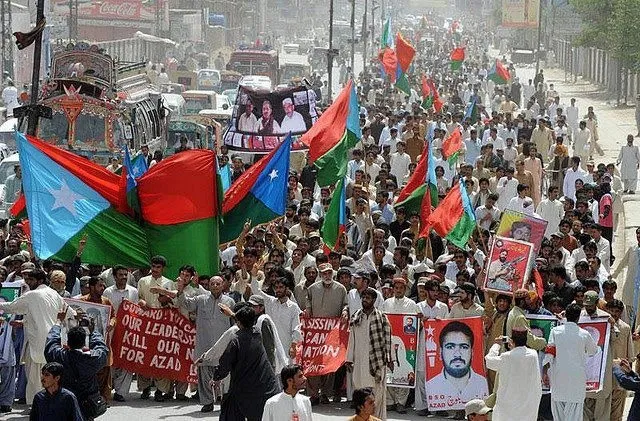
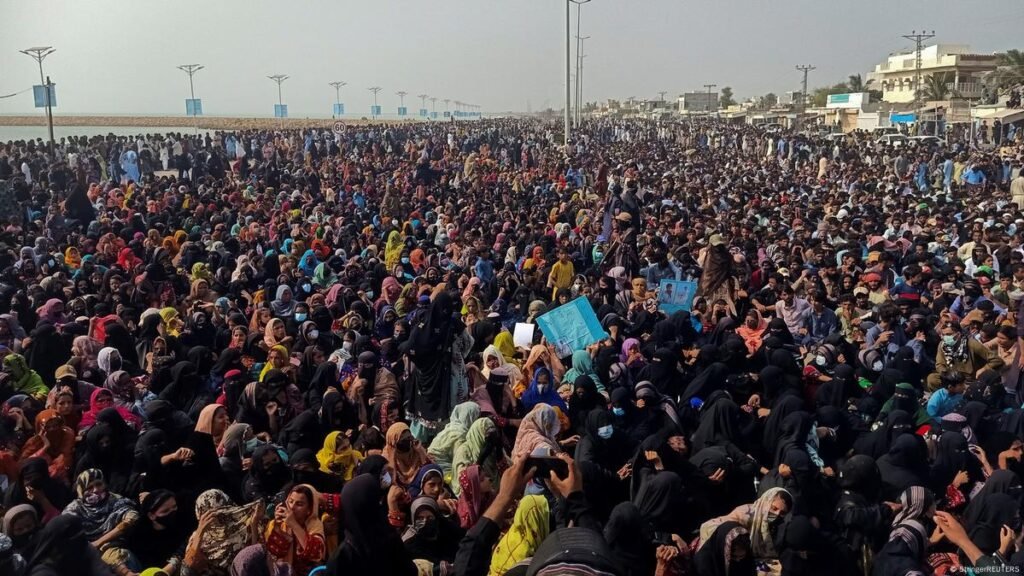
The end of 2023 witnessed a historic breakthrough in the Baloch struggle. Sparked by the enforced disappearances and extrajudicial killings of Baloch youth, mass protests erupted across the Makran coast, Gwadar, Turbat, Quetta, and other key regions.What distinguished these protests from previous movements was their mass character. For the first time in decades, large sections of society — workers, students, women, teachers, and the families of the disappeared — took to the streets in sustained mobilisation. Sit-ins, marches, strikes, and demonstrations brought thousands into open political confrontation with the Pakistani state.
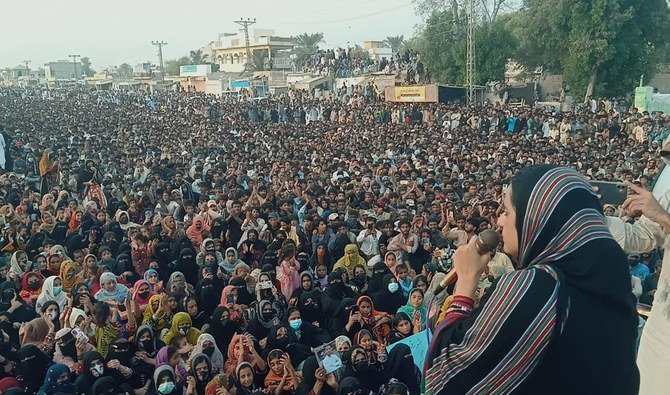
Women played a particularly heroic role. Defying cultural restrictions and facing brutal repression, they led protests, organised sit-ins, and gave voice to the demands of the oppressed. Students, previously fragmented, united across campuses and towns, linking their struggles to the broader fight against state violence.
This uprising marked a historic turning point: the reawakening of the working class and oppressed masses as the primary force of the Baloch national liberation struggle. It revealed the immense revolutionary potential that lies within the Baloch society — a force far greater than any isolated guerrilla detachment could ever mobilise.
However, this mass revolutionary energy urgently requires conscious leadership and clear political direction, or else it risks being dissipated, co-opted, or repressed once again.
Imperialist Exploitation and the CPEC Trap
While the Pakistani ruling class claims that projects like the China-Pakistan Economic Corridor (CPEC) will bring “development” to Balochistan, in reality, CPEC represents a new phase of imperialist plunder, enforced through militarisation and repression.
Under CPEC, billions of dollars’ worth of infrastructure projects — highways, railroads, energy pipelines, and the Gwadar deep-sea port — are being constructed primarily to serve the interests of Chinese capital and the Pakistani military elite. The local Baloch population is systematically excluded from any meaningful benefit. Entire communities have been displaced, agricultural land has been seized, and fishermen have been barred from their traditional livelihoods around Gwadar.
The Pakistani military has transformed vast swathes of Balochistan into militarised zones, with checkpoints, fortified compounds, and surveillance networks protecting imperialist investments, not the local population. Meanwhile, the ordinary Baloch people suffer increasing poverty, unemployment, and social exclusion.
CPEC, in reality, is not a development project but a massive mechanism for deepening the exploitation of Balochistan’s resources for the benefit of global capital — Chinese, Gulf, and Western alike — and their local proxies.
The oppression of Balochistan cannot be separated from its economic subjugation under imperialism. Genuine liberation demands the complete overthrow not only of the Pakistani military elite but also of the imperialist system that sustains it.
The Crisis of Leadership
Despite the courage and sacrifice shown by the Baloch masses, the uprising faces a profound and urgent problem: the absence of revolutionary leadership armed with a clear socialist programme.
The traditional nationalist parties — once viewed as standard-bearers of the Baloch cause — have long discredited themselves. Opportunism, parliamentary cretinism, and corruption have corroded their ranks. Instead of leading a genuine fight for liberation, they have repeatedly compromised with the Pakistani state, entered into rotten electoral alliances, and subordinated national aspirations to personal and tribal interests.
On the other hand, while guerrilla organisations like the BLA and BLF have displayed immense bravery, they suffer from severe political limitations. In the absence of a mass revolutionary programme, they have remained trapped in a narrow military strategy — isolated from the working class, fragmented by factionalism, and increasingly vulnerable to imperialist manipulation.
Some sections of the Baloch leadership have even begun appealing to Western imperialist powers, hoping for international support. This is a fatal mistake. The history of the oppressed across the world teaches that imperialism never liberates — it dominates, divides, and destroys.
Without a revolutionary leadership rooted in Marxism — one that unites the struggle for national liberation with the struggle for socialist revolution — the movement risks either bloody repression or political betrayal.
The masses are ready to fight. What is needed is a leadership worthy of their sacrifice.
National Liberation through Socialist Revolution
Marxists unconditionally defend the right of oppressed nations, including the Baloch, to self-determination — up to and including the right to secession. However, they also emphasise that true liberation cannot be achieved within the framework of capitalism.
A so-called “independent” Balochistan under capitalist rule would not be truly free. It would be economically dependent on imperialist powers, subject to the dictates of multinational corporations, and vulnerable to the same forms of exploitation and inequality that plague the region today.
National oppression is inseparable from capitalist exploitation. Therefore, the struggle for national liberation must be fused with the struggle for socialist revolution.
Only the working class — the most consistently revolutionary class in society — can carry the struggle through to the end. By leading the rural poor, students, and oppressed masses, the Baloch working class can overthrow both the national oppressors and the capitalist system that sustains them.
The goal must not simply be an independent capitalist state, but a workers’ state — a socialist Balochistan — that would nationalise key industries, seize imperialist assets, and plan the economy democratically to meet the needs of the people, not the profits of a few.
Furthermore, a socialist Balochistan would only be secure within a broader federation of free, voluntary socialist republics across South Asia — uniting the workers and oppressed peoples of Pakistan, India, Afghanistan, Iran, and beyond.
Mass Action and Armed Defence
The mass uprising has revealed the real power of the oppressed Baloch people. But for this potential to be transformed into revolutionary victory, a clear and coordinated strategy must be developed.
The struggle must not rely solely on guerrilla warfare or isolated armed actions. These tactics, while sometimes necessary for defence, cannot substitute for the conscious, organised mobilisation of the working class and oppressed masses.
Workers’ councils (soviets) should be established in every town, village, workplace, and campus to democratically coordinate protests, strikes, and resistance activities. Defence committees should be formed to organise the self-defence of the people against military repression and death squads.
Mass strikes, general shutdowns, occupations of strategic infrastructure, and direct action against the symbols of imperialist exploitation must be planned and coordinated by these revolutionary organs.
The guerrilla forces must be integrated into this broader strategy — serving as the armed wing of the mass movement rather than acting independently. Armed resistance must be subordinated to the overall political goal: the revolutionary overthrow of the Pakistani capitalist state and the establishment of workers’ power.
Through such methods, the movement can move beyond spontaneous protests and guerrilla actions towards the conscious seizure of political power.
The International Dimension: A Beacon for the Oppressed
The Baloch struggle does not exist in isolation. It is intimately connected to the broader revolutionary struggles unfolding across South Asia and the world.
Workers and oppressed peoples in Pakistan, India, Afghanistan, Iran, and beyond share the same fundamental enemies: capitalism, imperialism, and national oppression. The brutal exploitation faced by Baloch workers mirrors the suffering of Punjabi, Sindhi, Pashtun, Kashmiri, and Bengali workers under the capitalist regimes of the region.
The uprising of the Baloch people represents not only a cry for justice but a powerful declaration of revolutionary potential. Against overwhelming odds, the oppressed masses have shown tremendous courage, resilience, and determination in confronting a brutal military-state backed by imperialist interests.