

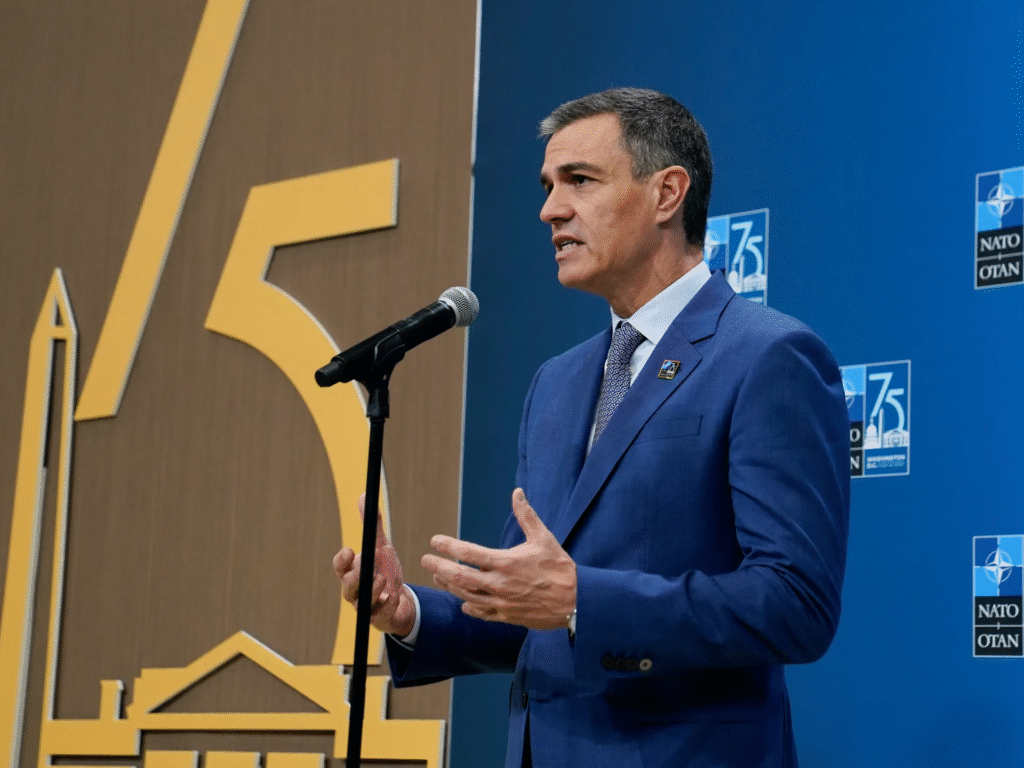
Spain Against the Tide: Sánchez Resists NATO’s March Toward Militarism
Amid the crescendo of transatlantic militarism, Spain has emerged as an unexpected dissenter. Prime Minister Pedro Sánchez’s firm refusal to endorse NATO’s proposed 5% GDP military spending target marks a rare moment of open resistance to the bloc’s strategic direction. His stand, while diplomatically costly, reflects a broader political calculus: Spain’s commitment to social welfare, strategic autonomy, and an alternative vision of security rooted not in weaponry, but in public investment and sovereignty.
Trump’s NATO: Rearmament or Extortion?
Since reclaiming the U.S. presidency, Donald Trump has wasted no time reasserting his long-standing demand for increased European defense spending.
NATO Secretary General Mark Rutte, formerly the Dutch prime minister, has rallied behind this agenda by drafting a proposal that seeks to bind member states to a 3.5% military and 1.5% “security” spending quota — thinly veiled terms for hitting Trump’s headline 5% target.
This proposal comes with immense political pressure. Member states are being told that failure to meet these targets could jeopardize American protection under the NATO umbrella. For countries like Spain, which currently spends only 1.3% of GDP on defense — the lowest among NATO allies — the shift would represent a radical transformation of both fiscal and political priorities.
But Sánchez has drawn a red line. In a letter to Rutte ahead of the June summit, he declared the proposed spending target “incompatible with our Welfare State” and warned that it would force Spain into either punishing tax increases or devastating cuts to public services. “As a sovereign ally,” Sánchez concluded, “we choose not to [make these sacrifices].”
Domestic Strains and Strategic Calculations
Sánchez’s defiance cannot be understood without grasping his fragile domestic position. Besieged by a corruption scandal implicating senior PSOE figures and reliant on a complex parliamentary coalition — which includes leftist Sumar, the Basque EH Bildu, and Catalan ERC — Sánchez’s margin for maneuver is shrinking. Even a modest increase in defense spending, like the €10.4 billion package pushed through in April, required delicate rhetorical framing and strategic ambiguity.
That package, designed to meet the original 2% NATO threshold, was padded with civilian “security” allocations — like emergency response and telecommunications — to dampen leftist criticism. But even that compromise frayed internal alliances. The contract with an Israeli firm to supply ammunition triggered uproar, particularly given Sánchez’s vocal criticism of Israel’s war in Gaza. Though the contract was cancelled, the episode exposed a deep contradiction: condemning Israeli aggression while funding its military-industrial complex.
Sánchez’s broader political strategy has relied on balancing coalition tensions while maintaining credibility within the EU mainstream. In the early years of his premiership, he was a leading voice behind the post-pandemic “NextGeneration” EU stimulus, championing state-led investment in green transition and digitalisation. That approach reflected a Southern European bloc that believed in leveraging EU structures for social progress. But as Trump’s return reshapes NATO, Sánchez now finds himself increasingly isolated.
A Europe at Odds with Itself
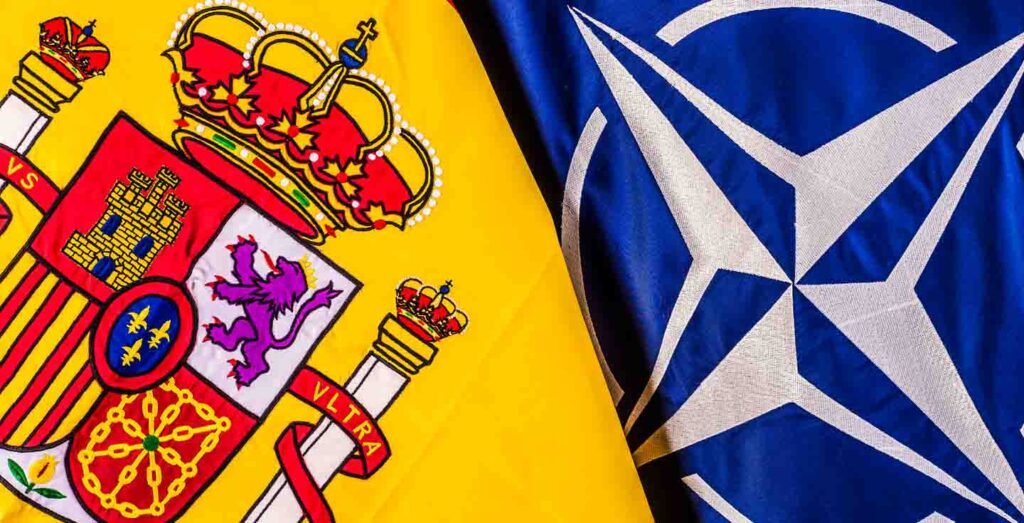
The EU’s posture has dramatically shifted. France, Germany, and Poland now lead a bloc pushing for a rearmed Europe — but one still structurally dependent on U.S. military infrastructure. The talk of “strategic autonomy” is largely performative: the EU lacks its own intelligence, nuclear deterrent, and naval command capabilities. What remains is rearmament justified by rhetoric — without genuine independence.
Spain’s refusal to follow suit is principled, but also pragmatic. Sánchez warned that forcing rearmament through debt-financed national budgets — as envisaged under the European Commission’s €800 billion “ReArm Europe” plan — would both weaken EU cohesion and erode public trust. He criticized the diversion of capital toward U.S. arms manufacturers, arguing it undermines Europe’s industrial base while draining resources from sectors with higher economic multipliers, such as education and healthcare.
Spain’s coalition partner Sumar and factions within it, like Izquierda Unida and Podemos, have raised stronger objections. They view the 5% target as a Trojan horse for militarism, austerity, and foreign dependency. The tension is growing, especially as the spending hikes are being pushed without full parliamentary votes, using repurposed NextGeneration EU funds originally intended for climate and social goals.
Sovereignty or Subordination?
While other European governments are manoeuvring to soften Rutte’s proposal — extending the timeline or diluting the annual targets — only Spain has refused the 5% commitment outright. U.S. Secretary of State Marco Rubio and NATO leadership have intensified pressure, hoping to isolate and coerce Spain into compliance. Yet Sánchez, seeing both domestic risk and international fatigue with U.S. dictates, has held firm.
He argues for a different conception of security — one that includes civil resilience, digital infrastructure, and energy sovereignty. Though this is partially a rhetorical shield for politically tolerable compromises, it also reflects a serious alternative: security rooted in solidarity, not militarism.
The Cost of Conscience
There is a cost to this stance. Spain may face diplomatic backlash, economic retaliation (including potential tariffs), or even internal destabilisation. Yet Sánchez is betting that the Spanish public — and perhaps a broader European constituency — will recognize the dangers of military Keynesianism and rally behind a defense of social democracy.
His stand is not merely about one spending line in a national budget. It is a defense of sovereignty against a militarist logic that threatens to dominate European politics. In resisting the pressure to militarise, Spain reminds NATO that not all allies define security through the lens of escalation.
At a time when even the progressive wings of European politics have been drawn into the orbit of war economies, Sánchez’s dissent marks a rare and necessary rupture. Whether it sparks broader resistance or remains a lone voice remains to be seen — but it is a voice worth listening to.