
Brazil Between Two Powers: Navigating U.S. Aggression and Chinese Expansion
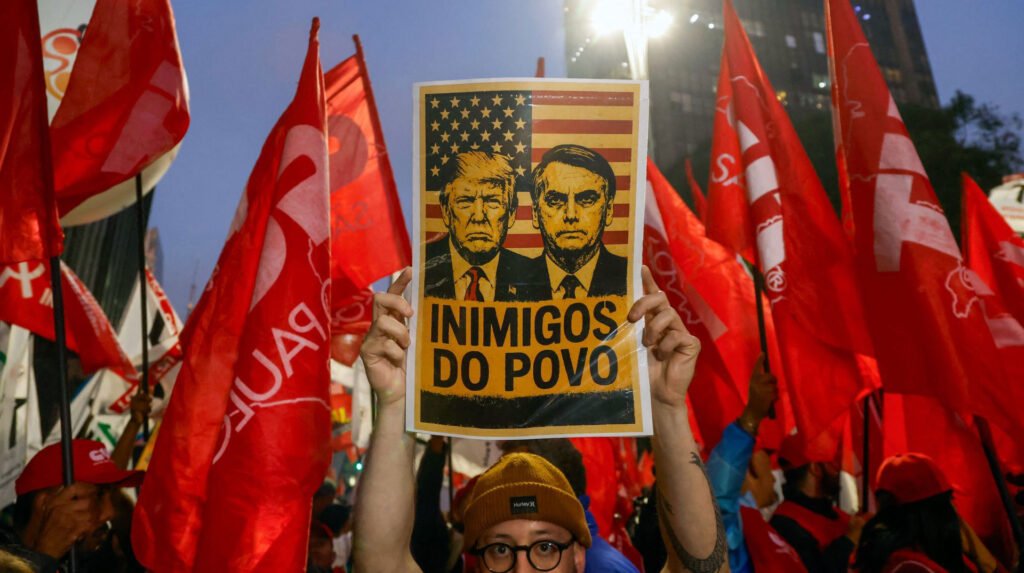
Brazil today finds itself at the center of an intensifying geopolitical and economic confrontation, largely shaped by the competing interests of the United States and China. The country is not merely caught in the crossfire of a trade dispute, but is being subjected to strategic pressures that threaten its sovereignty, economic autonomy, and the material interests of its working class. Recent decisions by the United States—particularly the imposition of aggressive tariffs—signal a new phase in imperialist interference in Latin America. At the same time, China’s growing economic footprint has brought new opportunities, but also new dependencies.
This context presents Brazilian workers with a dual challenge: to resist U.S. imperialist aggression while also avoiding subservience to Chinese capital. The path forward demands a clear policy of class independence, aimed at reclaiming national sovereignty and building the forces necessary for the socialist transformation of Brazilian society.
A Historical Echo: From 1964 to the Present
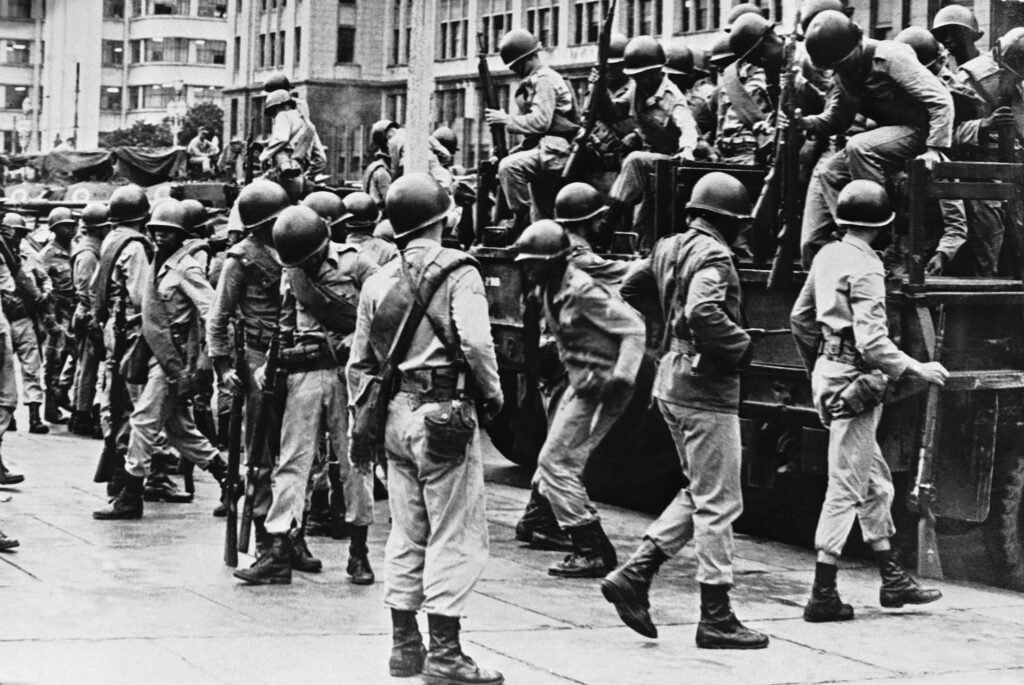
The current escalation in American aggression toward Brazil draws uncomfortable parallels with the U.S.-backed 1964 military coup, which marked a decisive moment in Brazil’s subordination to imperialist interests. That coup suppressed a rising tide of popular mobilisation and truncated a democratic mandate, aligning Brazil firmly with U.S. political and economic objectives for decades to follow.
Despite formal democratisation in the 1980s and subsequent constitutional reforms, Brazil’s economic structure remained dependent on global capital, with U.S. interests playing a dominant role. This framework persisted even through the political transitions of the 2000s. However, the landscape began to shift significantly in the 2010s, when Chinese investment surged into Brazil, altering the country’s economic alliances and introducing a new dimension to its dependency.
U.S. Tariffs and Their Strategic Intent
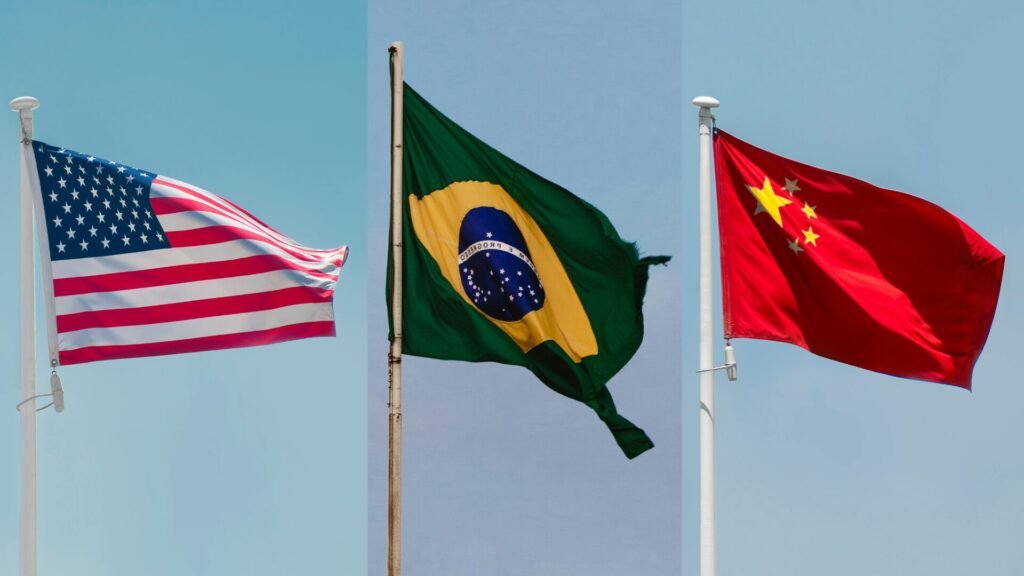
The recent imposition of a 50% tariff by the United States—its highest rate globally—on Brazilian exports marks a serious escalation in bilateral tensions. While President Trump justifies these measures as a defense of American industry or retaliation for alleged Brazilian regulatory overreach on digital platforms, the underlying objective is clear: to curb China’s rising influence in Brazil by destabilising its economic relations.
This move is not merely a reaction to trade imbalances but a calculated strategy aimed at reshaping Brazil’s international alignment. By targeting sectors heavily intertwined with Chinese capital, the U.S. seeks to isolate China economically and politically in Latin America—using Brazil as a battleground.
China’s Expanding Footprint in Brazil
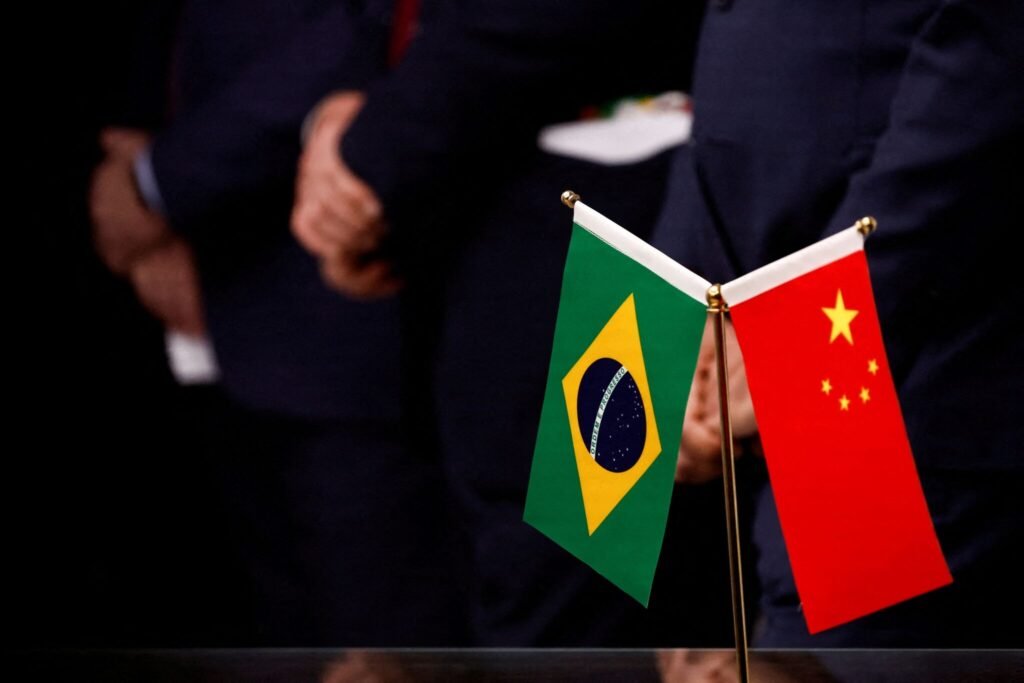
Since the early 2000s, Chinese capital has gradually gained a significant presence in Brazil across a wide range of sectors—from telecommunications and agribusiness to logistics, energy, and transportation infrastructure. Chinese companies, including Huawei, BYD, COFCO, State Grid, and CRRC, have invested billions of dollars in ports, factories, rail networks, and renewable energy projects.
Strategic agreements, such as the multi-billion-dollar contracts signed during President Lula’s state visits to China, have deepened these ties. Initiatives such as the Bioceanic Railway, which aims to connect Brazil’s Atlantic coast to the Pacific via Peru, signify China’s ambition to reshape regional trade routes—undermining long-standing U.S. control over logistics in the Americas.
China’s economic engagement with Brazil has been framed as a partnership of equals within the Global South. However, the reality is more complex. Chinese investments are profit-driven and closely aligned with China’s strategic interest in securing supply chains, raw materials, and new consumer markets. In many cases, the terms of these investments—whether in agriculture, energy, or technology—favour Chinese capital while subordinating Brazilian production to external control.
The Illusion of Sovereignty Through Multipolarity
Some sections of Brazil’s political class view China’s rise as an opportunity to diversify foreign relations and escape U.S. hegemony. While this perspective is understandable in the context of longstanding American interference, it risks replacing one dependency with another.
China is not a neutral economic partner. It is an imperialist power in its own right, competing for influence and resources on a global scale. The aggressive expansion of Chinese capital in Brazil replicates many of the same exploitative dynamics historically associated with Western imperialism—albeit with a different rhetoric. This is evident in labour practices at Chinese-owned factories, in land acquisitions for agribusiness, and in infrastructure projects that prioritise export logistics over domestic development.
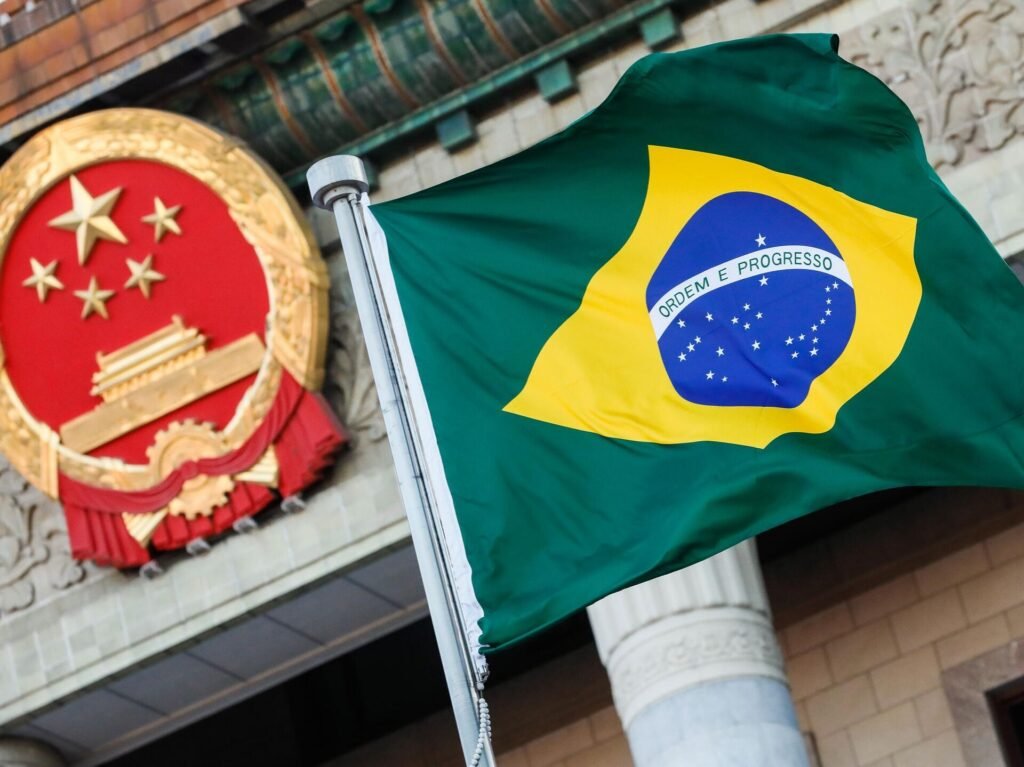
Brazilian Capital’s Complicity and the Limits of Bourgeois Sovereignty
Brazil’s bourgeoisie, regardless of its alignment—whether with Washington or Beijing—has shown itself unwilling and unable to defend genuine national sovereignty. Time and again, the country’s ruling class has chosen accommodation with imperialist powers over independent development, prioritising access to foreign capital and market stability over long-term national interests.
Successive governments, including the current administration, have oscillated between strategic partnerships without challenging the underlying structure of dependence. While President Lula has publicly resisted U.S. pressure, particularly in the face of trade aggression and political interference, his administration’s deepening ties with China reflect a continued policy of aligning with global capital rather than pursuing economic self-determination.
The Task Before the Working Class
Amid these growing contradictions, the Brazilian working class faces a critical task: to reject both American and Chinese imperialism and assert its own political and economic agency. This requires building a movement rooted in class independence—one that refuses to be co-opted by the bourgeois parties and institutions that manage these dependencies on behalf of foreign capital.
The struggle for national sovereignty must be inextricably linked with the struggle for socialism. Only through democratic control of the economy by the working class can Brazil chart a course toward true independence, equitable development, and social justice. This means challenging the economic logic of austerity and external debt, reversing the privatisations of strategic industries, and rejecting trade agreements that lock the country into exploitative global value chains.
Neither Washington Nor Beijing—But Workers’ Power
Brazil’s position in the new global order is one of increased vulnerability—but also of opportunity. The inter-imperialist rivalry between the United States and China creates cracks in the global capitalist system that can be exploited by a politically conscious and organised working class.
It is not through diplomatic balancing acts or new trade agreements that Brazil will secure its future, but through a decisive break with the structures of imperialist domination—old or new. The road to sovereignty does not lie in becoming a client state of a rising power but in building a society where the needs of the many outweigh the profits of the few. In that struggle, the working class is not merely a passive observer, but the decisive force for transformation.