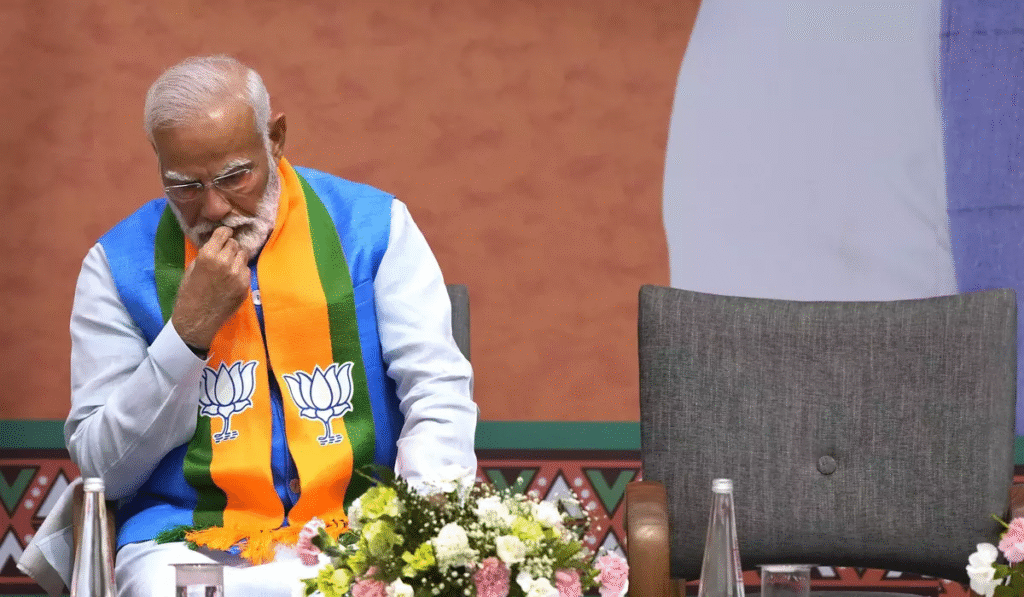

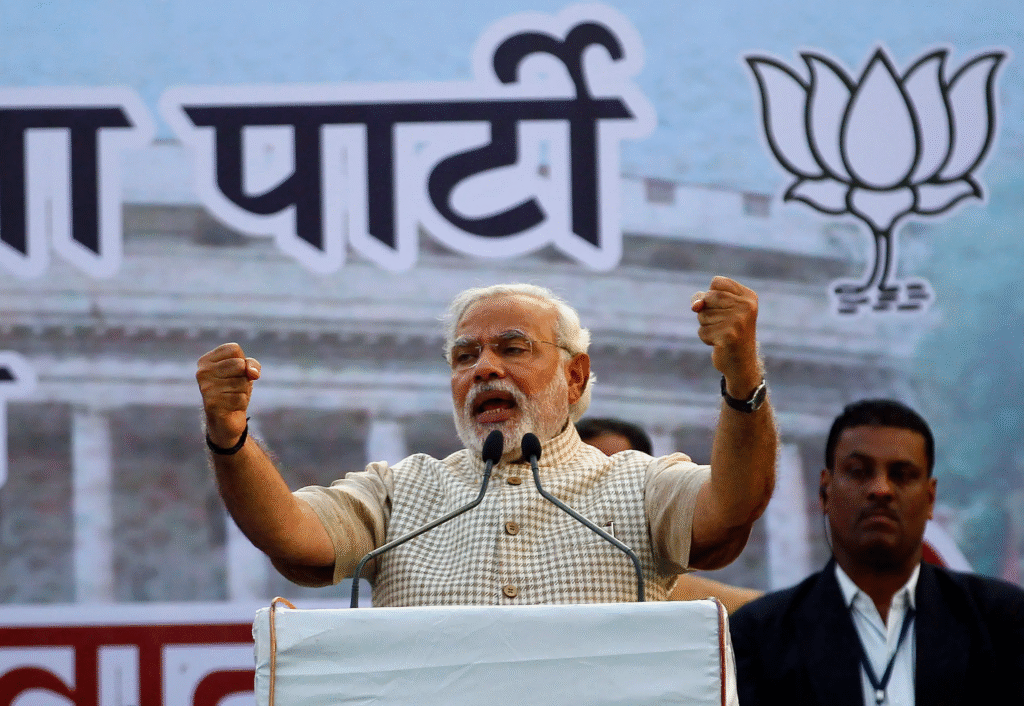
For over a decade, India has projected itself as a rising global power—an emerging Asian giant set to rival China, assert regional leadership, and challenge the West’s long-standing hegemony. Central to this narrative has been Prime Minister Narendra Modi, whose government has actively marketed itself as steering India towards greater global stature. But recent developments—particularly under the disruptive return of Donald Trump to the U.S. presidency—have punctured this carefully constructed illusion. India’s foreign policy, once touted as bold and independent, now appears increasingly reactive, compromised, and vulnerable to external pressure.
The “Asian Century” and the Mirage of Indian Strength
The term “Asian Century” has been widely embraced by global analysts, referring to the economic ascent of China and India. Both countries, over the past three decades, have been among the fastest-growing economies in the world. Yet while China now accounts for over a quarter of global manufacturing output, India lags behind with a modest share of under 3 percent. The contrast is stark, despite India’s fifth-place rank in global manufacturing.
This imbalance is not merely economic. China has taken an assertive position on the world stage—shaping multilateral institutions, challenging Western narratives, and proposing alternatives to the existing order. India, under Modi’s rule, has often attempted to follow a similar path rhetorically, but without the economic or geopolitical leverage to match its ambitions.
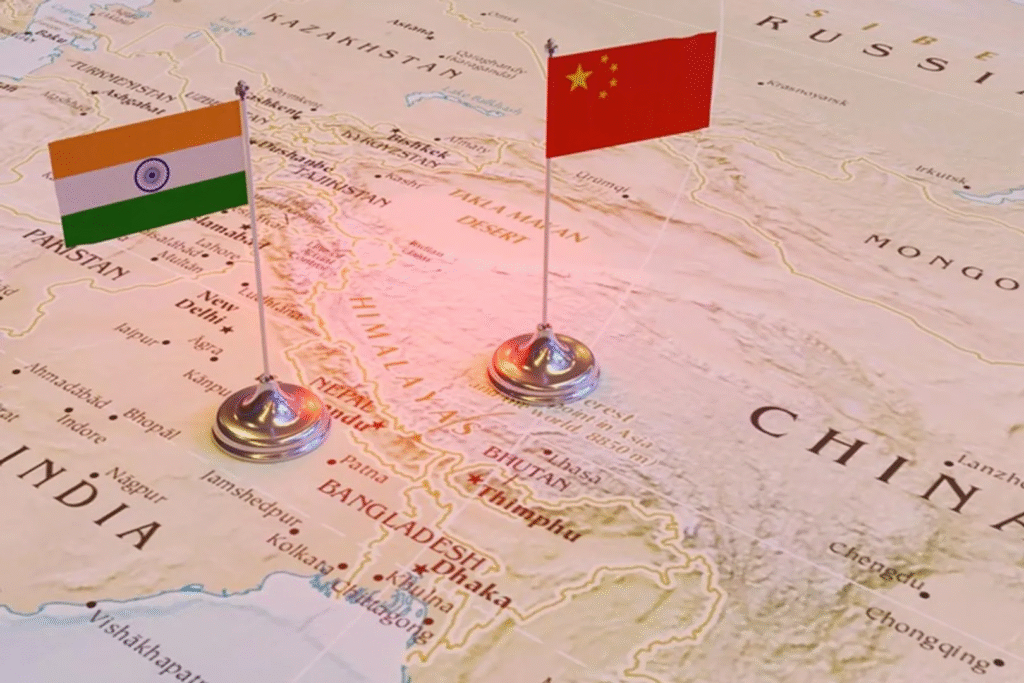
This discrepancy became glaringly visible amid a rapidly transforming global landscape. Armed conflicts, economic downturns, and protectionist policies have undermined global stability. The United States has led the way with trade wars and unilateral sanctions, disrupting the global economic fabric. In this context, India’s diplomatic posture has revealed itself to be reactive rather than strategic, more image-driven than structurally resilient.
Trump’s Tariffs and the Exposure of Indian Vulnerability
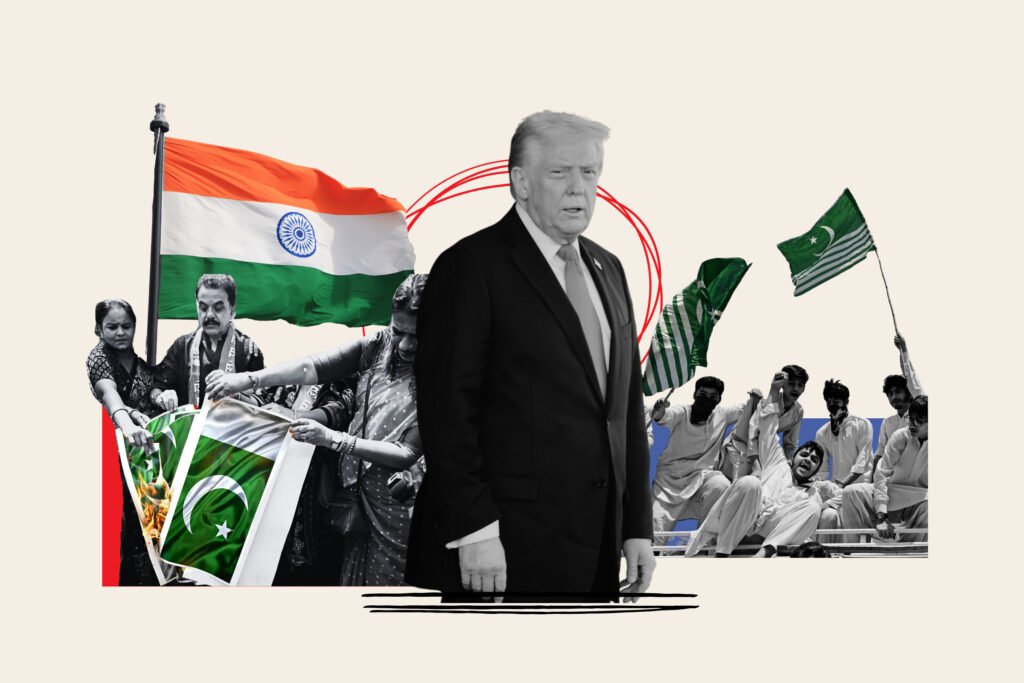
The turning point came with Donald Trump’s re-election and his renewed assault on global trade. In May 2025, Trump unilaterally announced a ceasefire between India and Pakistan—allegedly brokered by the U.S.—even before New Delhi acknowledged any such agreement. This deeply embarrassed the Modi government, which has long rejected third-party involvement in bilateral disputes with Pakistan. While the Indian side rushed to deny any U.S. mediation, Pakistan’s leadership openly praised Trump and even nominated him for the Nobel Peace Prize, citing his diplomatic role in de-escalating tensions. This episode not only challenged India’s diplomatic credibility but also exposed the limits of its sovereignty under international pressure. The Indian opposition, meanwhile, criticized the Modi government for compromising on long-held foreign policy positions and failing to maintain transparency.
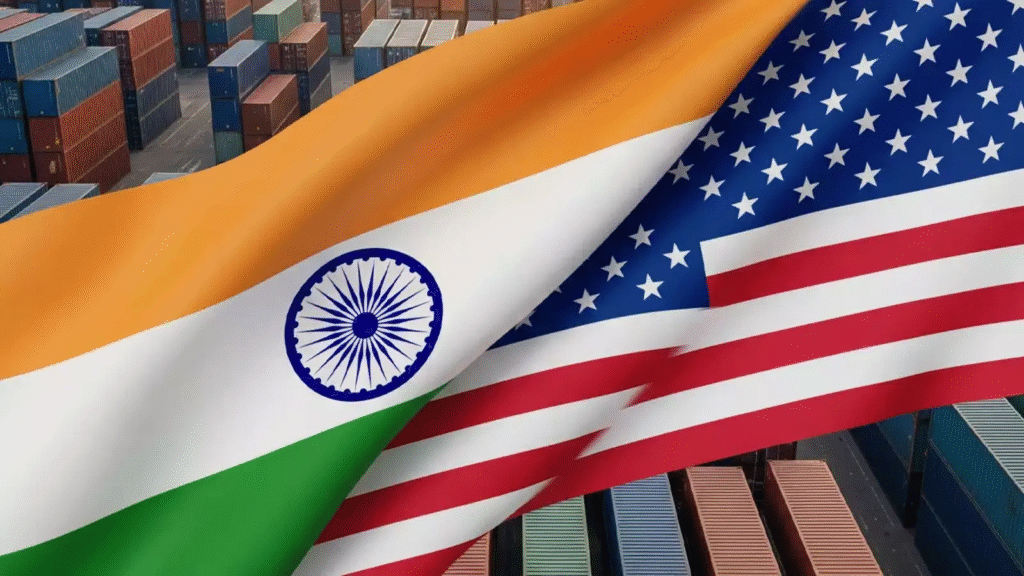
What followed was even more damaging. The Trump administration imposed a sweeping 50 percent tariff on Indian exports, citing India’s continued purchases of Russian oil as tacit support for Moscow’s war against Ukraine. The Indian government’s muted reaction drew criticism from across the political spectrum. Despite India’s status as the U.S.’s largest trading partner and one of the few nations with a trade surplus with Washington, the Modi government responded with little more than rhetoric. India’s economy is deeply tied to the U.S. market, which accounts for nearly a fifth of its total exports. Trade in goods and services between the two countries hit over $212 billion in 2024, with India exporting electronics, pharmaceuticals, and petroleum products, among others. The tariffs, therefore, represented not just a diplomatic slight but a direct economic threat.
The H-1B Blow and Technocratic Complacency
As if the tariffs were not enough, Trump soon targeted Indian professionals by raising the H-1B visa fee fiftyfold to $100,000. Given that over 70 percent of these skilled visas go to Indian workers, the move was a calculated strike. It jeopardized hundreds of thousands of livelihoods and sent shockwaves through India’s tech sector and middle class.
India’s reaction remained characteristically subdued. Commerce Minister Piyush Goyal offered a vague comment about U.S. “fear” of Indian talent. Modi, for his part, deflected criticism by vaguely identifying “dependence on foreign powers” as India’s main challenge.
Yet, despite the nationalist posturing, this episode underscored the structural vulnerabilities of India’s global workforce. If displaced, India will struggle to absorb the returning high-skilled workers, revealing a domestic ecosystem unprepared for such a sudden influx.
Economic Disruption at Home
The foreign policy failures have had direct consequences on India’s economy, particularly in labor-intensive and export-oriented sectors. The Trump tariffs have triggered factory closures in the leather industry and have begun to affect other key sectors such as textiles, agriculture, and electronics.
From April to June, employment in the informal manufacturing sector dropped by over 9 percent. In the Ambur-Ranipet leather belt, more than 50 of the 300 factories shut their doors. Experts warn that hundreds of thousands of jobs are at risk. India’s strategic silence in the face of these developments is both puzzling and alarming.
The China Factor: A Flip-Flop in Strategy
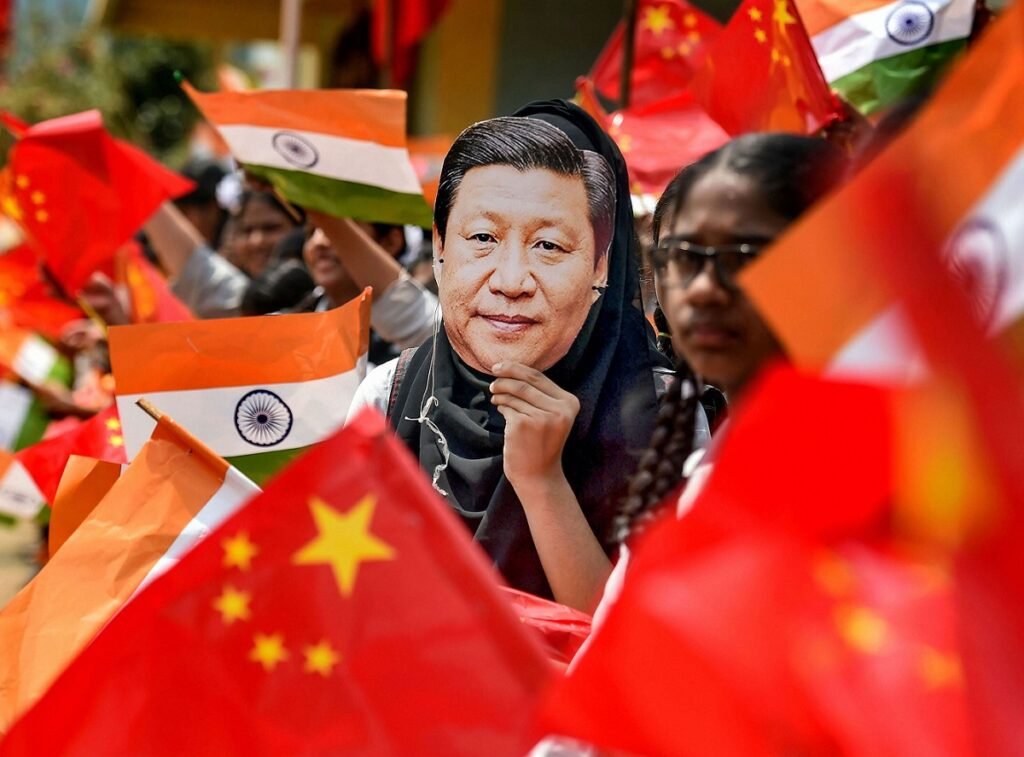
India’s response to China also reflects this pattern of inconsistency. The two countries have a long and fraught history, punctuated by the 1962 war and recurring border tensions, such as the 2020 stand-off along the Line of Actual Control (LAC). That confrontation led to a populist outburst in India—banning Chinese apps and pushing for an economic boycott. The Modi government capitalized on the nationalist sentiment.
Yet, despite the tough talk, trade with China surged to over $113 billion in 2024–25, widening India’s trade deficit even further.
Trump’s hostile tariffs appear to have softened New Delhi’s approach to Beijing. In a marked shift, Indian state media began broadcasting China’s military parades. Modi himself refrained from attending, but the symbolic gesture was not lost. Discussions began about relaxing Chinese investment restrictions in sectors like renewable energy and manufacturing—sectors that are vital for India’s future.
The Illusion of Strategic Autonomy
This shift has prompted a reevaluation of India’s foreign policy assumptions. Longtime proponents of Indo-U.S. strategic alignment are now urging a policy reset. Pro-government figures insist on India’s “sovereignty,” but their narrative rings hollow in the face of clear subordination to foreign pressure.
While China accelerates efforts to reform global institutions and assert itself as a pole of power, India’s position remains uncertain. Caught between nationalist rhetoric and diplomatic passivity, Modi’s foreign policy has failed to secure the autonomy it claims to champion.
The Collapse of the Modi Doctrine
India’s foreign policy under Narendra Modi was long celebrated as bold, assertive, and globally ambitious. Yet recent events have laid bare its foundational weaknesses. The overreliance on symbolism, combined with a reluctance to confront geopolitical realities, has rendered India reactive and indecisive.
The Trump administration’s actions—unilateral declarations, economic penalties, and immigration crackdowns—have exposed India’s limited capacity to defend its interests on the world stage. With its domestic economy shaken and its diplomatic credibility under question, India must now face a hard truth: symbolic nationalism cannot substitute for substantive strategy.
As the global order reshapes itself around new power dynamics, India must rethink its role—not through chest-thumping declarations, but through thoughtful, sovereign policymaking rooted in social and economic justice.