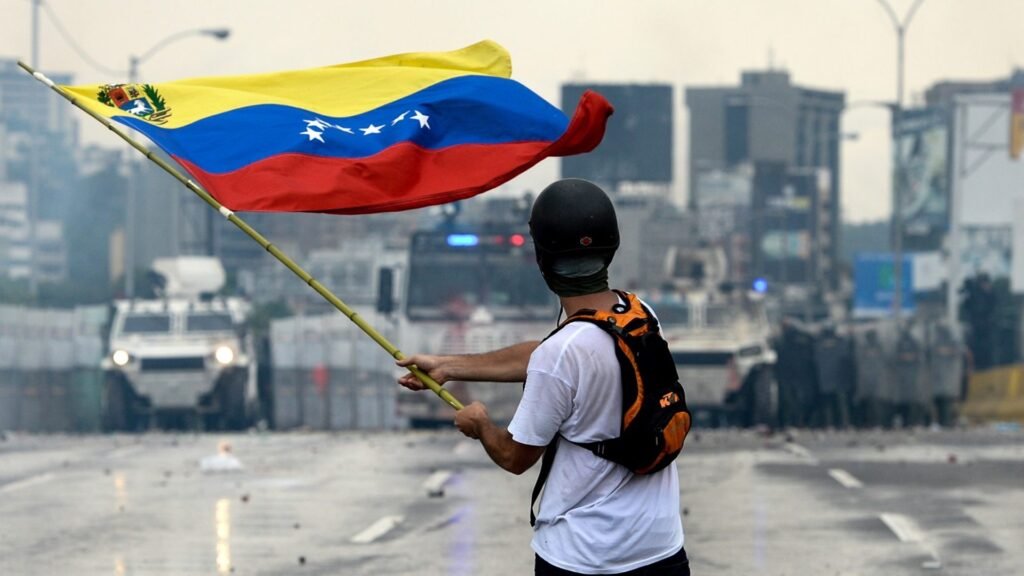
The recent U.S. military escalation in the Caribbean represents a dangerous intensification of imperialist aggression, targeting Venezuela and now increasingly extending its reach toward neighboring states. This multifaceted operation, launched under the pretext of counter-narcotics enforcement, reveals Washington’s broader objective: reasserting its dominance over Latin America amid the growing presence of China and Russia in the region.
A Thin Veil of Justification: The “War on Drugs”
Beginning in late August, the U.S. significantly ramped up its military presence in the Caribbean, deploying an array of naval vessels, fighter jets, and advanced surveillance equipment. The justification, publicly offered by the Trump administration, centers around combating drug trafficking networks purportedly tied to the Maduro government in Venezuela. However, data from U.S. government agencies consistently indicate that the majority of narcotics entering the U.S. do so via the Pacific route and through Mexico—not Venezuela.
Washington’s narrative further unravels when one considers that Venezuela is not a producer of cocaine. The major sources of production lie in Colombia, Peru, and Bolivia. The claim that Venezuela is facilitating fentanyl smuggling from China is also unsubstantiated. In reality, the overwhelming flow of fentanyl enters through Mexico. Thus, the anti-drug rationale is less an honest explanation and more a strategic cover for an aggressive and politically motivated agenda.
The Military Build-Up and Provocations
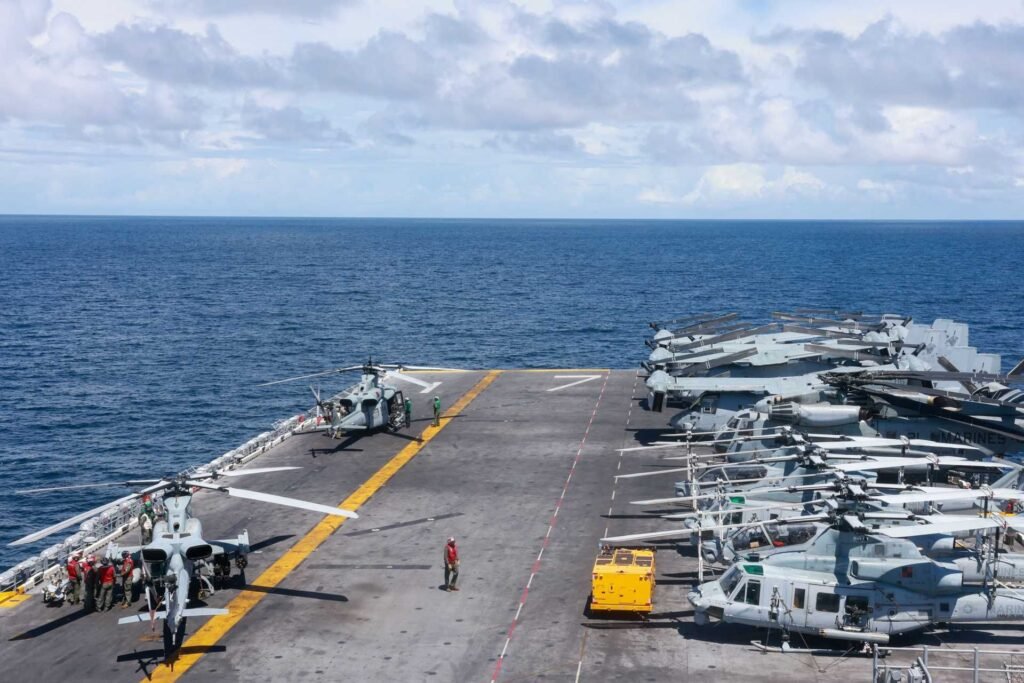
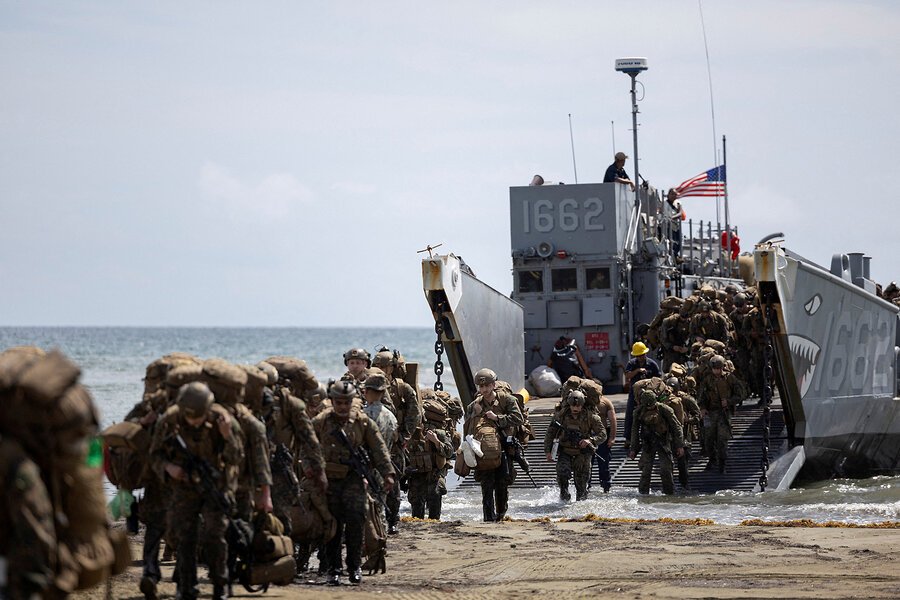
U.S. forces now deployed in the Caribbean include guided-missile destroyers, a nuclear-powered submarine, amphibious assault ships, and stealth fighter aircraft stationed in Puerto Rico. Most alarmingly, the USS Gerald R. Ford—the Navy’s most advanced nuclear aircraft carrier—has been redirected toward the region. This platform alone carries more fighter jets than the entire Venezuelan air force.
The provocative nature of these deployments has been underscored by high-profile flyovers involving B-1B and B-52 bombers, with transponders deliberately left active to maximize visibility. Joint military exercises have been conducted in close proximity to Venezuela, including in Trinidad and Tobago, a mere 11 kilometers from Venezuelan shores. These actions reflect a clear attempt to intimidate and provoke, rather than protect.
Simultaneously, U.S. forces have carried out lethal strikes on small vessels in the Caribbean, reportedly resulting in over 60 deaths. These attacks have been broadcast on social media with no transparency regarding the intelligence used or the targets involved.
From Negotiation to Hostility
Earlier in the year, negotiations were underway between Washington and Caracas. Through intermediaries, agreements were reached: Venezuela resumed accepting deportees from the U.S., released several American detainees, and even saw the partial renewal of Chevron’s operational license. These gestures suggested a tentative thaw.
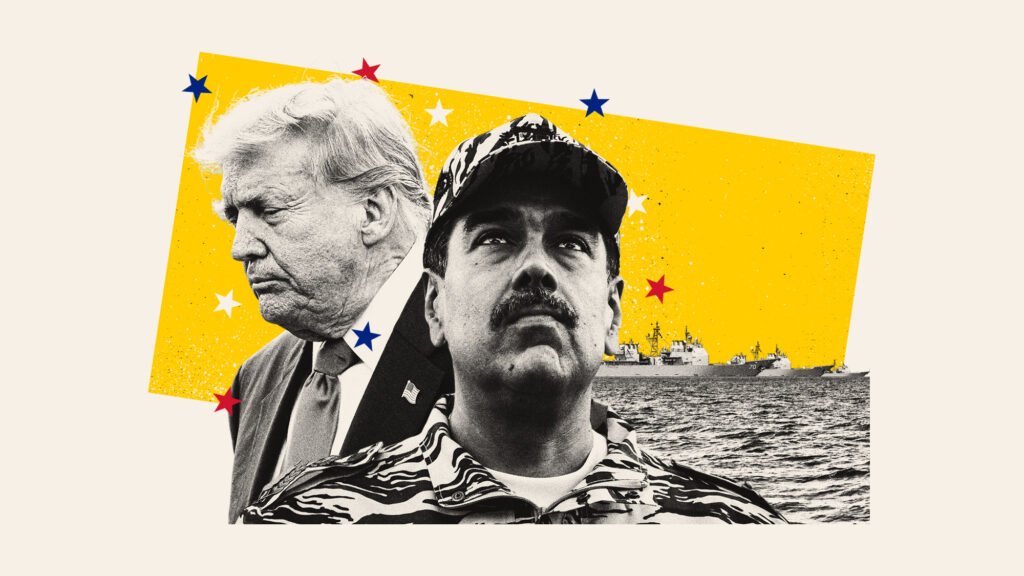
However, the tide swiftly turned. Richard Grenell, the U.S. envoy involved in these negotiations, was withdrawn, and President Trump dramatically escalated hostilities. Maduro was accused of leading a narco-terrorist regime, and the bounty on his head was raised to $50 million. Simultaneously, the CIA was given carte blanche to conduct covert operations in Venezuela, and several factions in Washington began agitating more forcefully for regime change.
The Role of Domestic Politics and the Florida Lobby
The hardline stance is not without domestic political motivation. Trump, having seen his popularity decline—particularly among Latino voters—has been swayed by the influential Miami-based exile lobby. These groups, especially anti-Castro Cubans and Venezuelan opposition figures, have long advocated aggressive policies against leftist regimes in the region.
Key Republican lawmakers, such as Marco Rubio and others representing South Florida, have amplified calls for military intervention. Their strategic importance in securing congressional votes has allowed them to exert disproportionate influence over U.S. foreign policy in Latin America. Their objective is clear: the destruction of the Cuban and Venezuelan governments.
In this context, Trump’s actions—such as the cancellation of the humanitarian parole program protecting hundreds of thousands of migrants from deportation—appear designed to appease these groups and reinforce his credentials as a strongman on foreign policy.
Washington’s Regional Reassertion: Latin America as a “Backyard” Once More
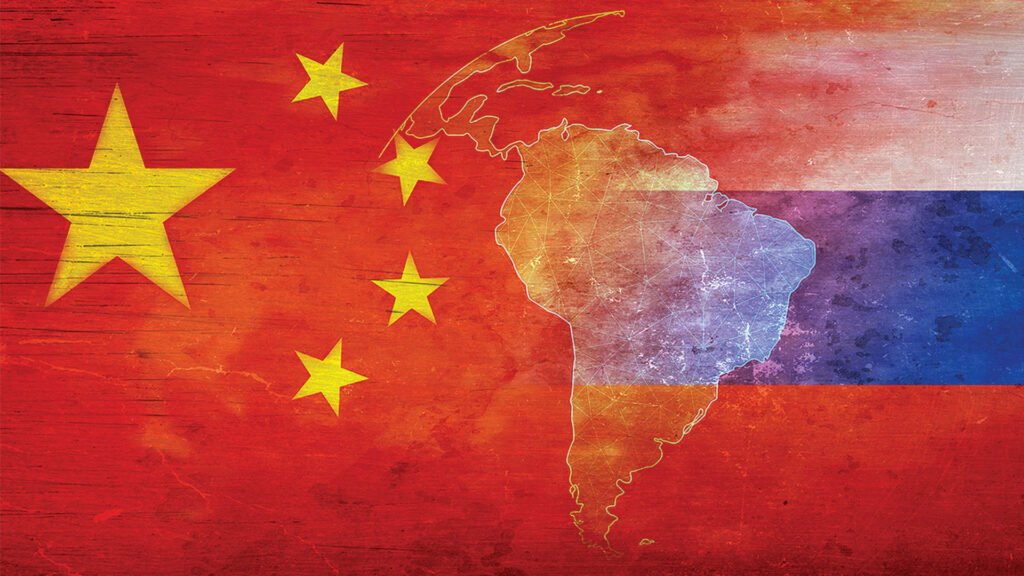
The aggression toward Venezuela must be seen as part of a broader geopolitical strategy. As Chinese economic influence continues to expand across Latin America through trade, infrastructure, and loans, the U.S. seeks to counter this encroachment by reaffirming its traditional dominance in the region.
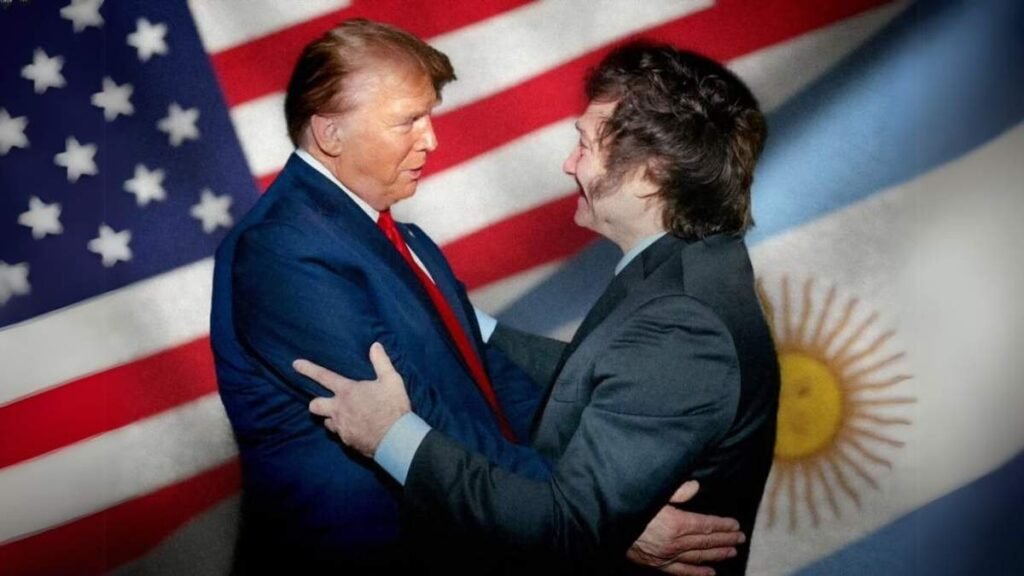
Recent actions against countries such as Panama, Brazil, and Colombia reveal the contours of this campaign. Washington has applied pressure to limit Chinese investment, slapped tariffs on Brazil, and revoked visas of Colombian officials seen as insufficiently cooperative. In contrast, nations like Argentina under Javier Milei are being rewarded with generous loans in exchange for their alignment with U.S. interests and rejection of Chinese engagement.
This posture closely mirrors the Monroe Doctrine, which originally sought to exclude European influence from the Western Hemisphere. Today, a revised version seeks to isolate China and Russia. The message is simple: Latin America is America’s domain, and any foreign presence that threatens that monopoly must be eliminated.
China’s Expanding Footprint—and Its Limits
China, meanwhile, has become a critical economic player across the region. Its trade with Latin America now exceeds $500 billion annually, and it has invested in infrastructure, mining, and energy sectors. Dozens of countries have joined the Belt and Road Initiative, while Chinese companies have secured port, railway, and digital contracts across the continent.
Nonetheless, China is not a benevolent actor. Its investments are driven by imperialist motives—resource extraction, market expansion, and strategic positioning. China has no hesitation in supporting repressive regimes, including the right-wing government of Ecuador and the authoritarian leadership in El Salvador.
In Peru, Beijing has poured billions into infrastructure despite the country’s recent coup and subsequent repression of indigenous protests. China’s silence—or tacit support—during such crises underscores its economic priorities over human rights or democratic values.
Venezuela: A Battleground for Imperialism
The Maduro government remains in the crosshairs of U.S. imperialism, not because of its human rights record, but because it resists U.S. control and maintains economic and military ties with China, Russia, and Iran. Washington’s goal is not democracy—it is domination.
While the Venezuelan regime today bears little resemblance to the grassroots Bolivarianism of the Chávez era, it continues to resist foreign exploitation. The opposition, led by figures like María Corina Machado, champions neoliberal “shock therapy” policies. If installed, such a government would likely resort to widespread repression to implement the austerity measures demanded by the IMF and U.S. corporations.
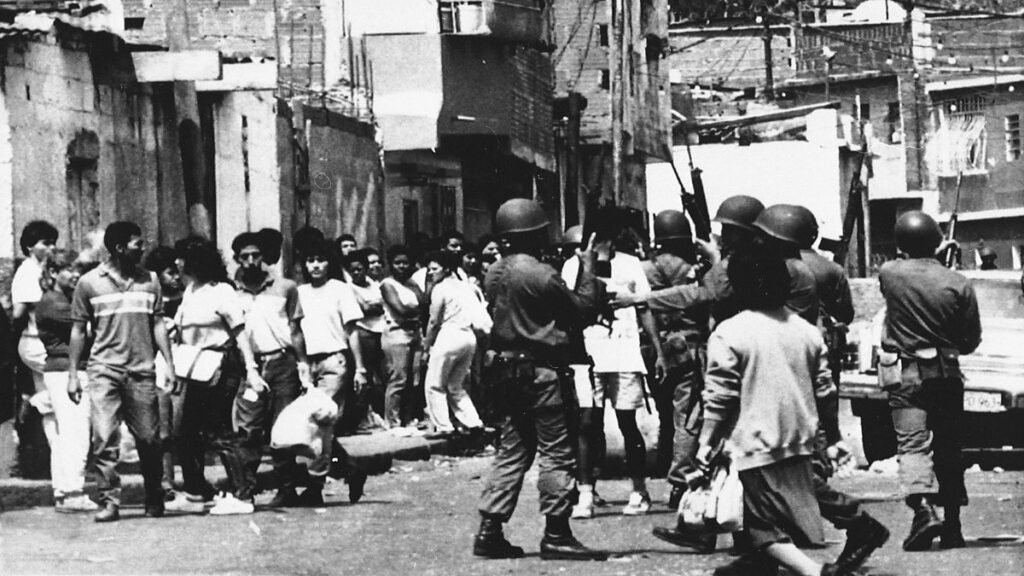
The past offers a warning. In 1989, a similar neoliberal program sparked the Caracazo uprising—an explosion of popular fury that was met with brutal military force and resulted in hundreds of deaths. A return to such policies under a U.S.-backed administration would almost certainly provoke renewed conflict.
The Path Forward: Anti-Imperialist Solidarity
The position of socialists and anti-imperialists must be unequivocal. U.S. aggression must be opposed regardless of one’s view of the Maduro government. The primary task is to resist foreign intervention and defend the sovereignty of oppressed nations.
True liberation for the Venezuelan people—and for Latin America more broadly—will not come through U.S. warships or Chinese capital. It must come from the workers and poor themselves: through the building of democratic movements, the expropriation of foreign and local oligarchic interests, and the construction of a system that prioritizes healthcare, education, housing, and dignity for all.
Latin America has endured centuries of exploitation. Now, it stands once again at a critical juncture. Whether it succumbs to the old cycle of domination or charts a path toward self-determination will depend on the strength of its people—and their ability to resist the machinations of imperialism in all its forms.