
For years, the ascendant far-right movements across Europe have constructed their political identities around the concept of national sovereignty. By draping themselves in national flags and utilizing a vocabulary centered entirely on placing their own countries first, these factions promised to rigorously defend domestic interests and cultural identity above all else. However, the ongoing military offensives conducted by the United States and Israel in Gaza, Lebanon, and Iran have thoroughly dismantled this nationalist facade. Just as the conflict has shattered the domestic American illusion that Donald Trump’s political faction is somehow less militaristic or imperialistic than the liberal establishment, it has simultaneously revealed that Europe’s self-proclaimed sovereigntists eagerly abandon their independence the moment Washington or Tel Aviv demands their loyalty.

The Material Cost of Complicity
This war has not only resulted in an abhorrent death toll but is actively destabilizing the entire Middle East, generating severe secondary crises that directly impact the European continent. European citizens are currently enduring skyrocketing energy prices and escalating economic instability. Furthermore, a continent already grappling with the fallout from the war in Ukraine is now facing the cascading consequences of a second major conflict in its immediate geopolitical vicinity. Despite broad, documented public opposition to this war across Europe, the far right has completely ignored the preferences and material well-being of its own citizens, choosing instead to obediently fall into line behind foreign imperialist aggression.
Case Studies in Servility: Italy, the Netherlands, Britain, and Spain
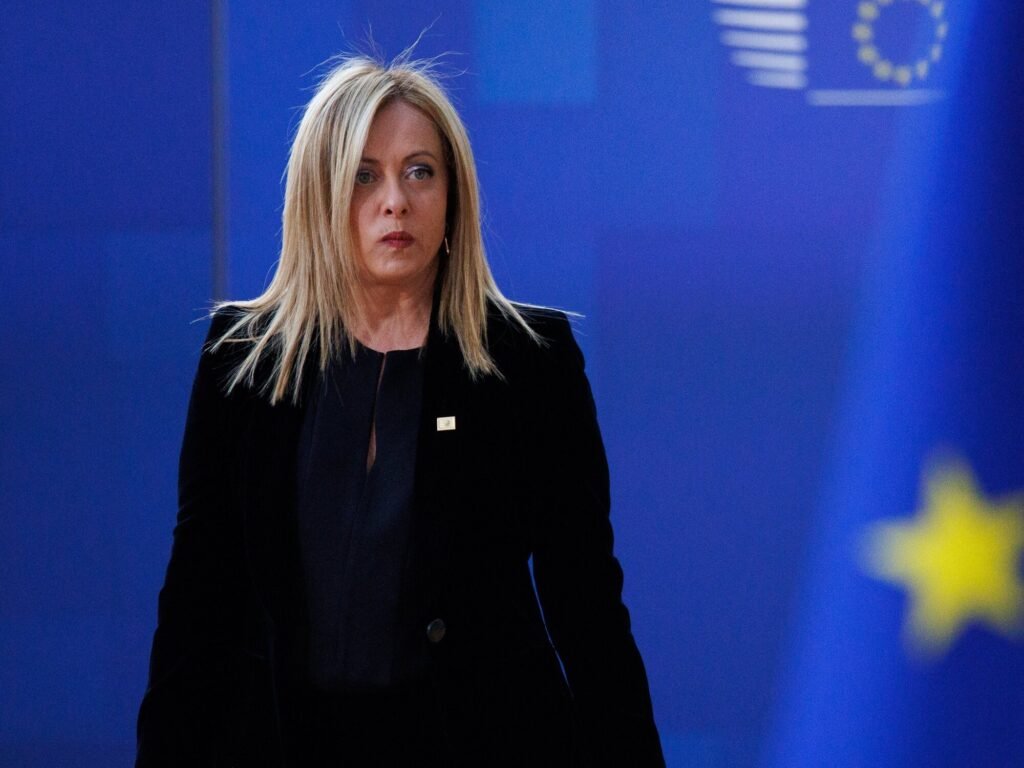
The subservience of these supposedly nationalist factions frequently borders on the absurd. In Italy, Defense Minister Guido Crosetto of Giorgia Meloni’s Fratelli d’Italia party was stranded in Dubai when the conflict erupted, admitting he had not been informed by the United States of the impending attack. This humiliating scenario highlighted a government obsessed with national prestige being kept entirely in the dark regarding a regional war whose timing was dictated by foreign powers. Despite this blatant disregard for Italian sovereignty, Meloni’s administration subsequently authorized the use of US military bases on Italian soil to support the war effort, hiding behind cosmetic distinctions regarding the limits of their logistical assistance. Concurrently, the Italian parliament passed contentious legislation equating various criticisms of Israel with antisemitism.
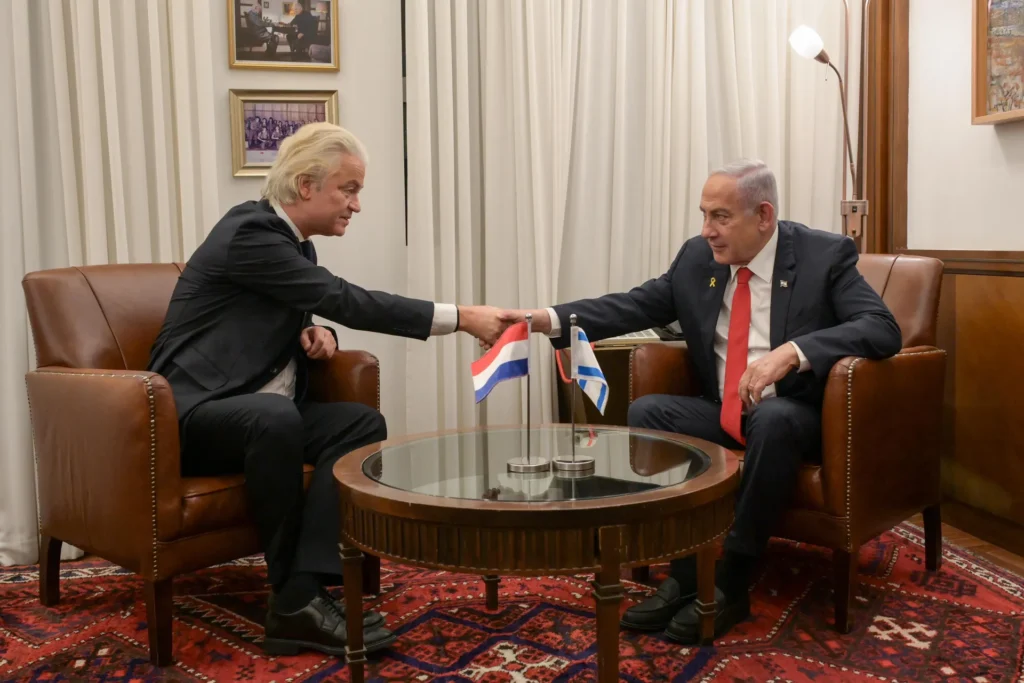
This total capitulation marks a tragic departure from Italy’s Cold War-era foreign policy, which maintained genuine diplomatic sovereignty through active dialogue and cooperation with Middle Eastern actors, including Palestine and Iran. This pattern of capitulation is replicated by far-right figures across the continent. In the Netherlands, Geert Wilders praised Israeli Prime Minister Benjamin Netanyahu for bombing Tehran, absurdly suggesting he deserved a Nobel Peace Prize, while viciously attacking his own government for failing to support the US and Israel with sufficient speed and dedication. In Britain, Nigel Farage condemned Prime Minister Keir Starmer for his brief initial hesitancy, arguing that without complete subservience to the US, the UK would be rendered “defenceless”. Similarly, Santiago Abascal of Spain’s ultranationalist Vox party criticized his own national government for daring to hinder the bombings and provoking Donald Trump’s anger. Consistently, the very politicians who claim to put their nations first are the most eager to betray their citizens’ interests to appease foreign leaders.
Convergence with the Liberal Establishment
Furthermore, this geopolitical crisis has illuminated the steadily narrowing gap between Europe’s far right and the liberal-conservative establishment that controls the European Union’s institutions. European Commission President Ursula von der Leyen has consistently condemned Iranian retaliatory measures as “reckless” and “unjustifiable,” while deliberately ignoring and failing to condemn the initial US-Israeli strikes that provoked them. She has even cynically framed the destruction as offering “renewed hope” for the Iranian populace. This exposes a profound moral double standard: EU institutions eagerly wielded the rhetoric of “attacker and attacked” and the sanctity of international law during Russia’s invasion of Ukraine, yet have completely abandoned those legal and moral frameworks regarding the violence inflicted upon Gaza and Iran.
The Genuine Sovereignty
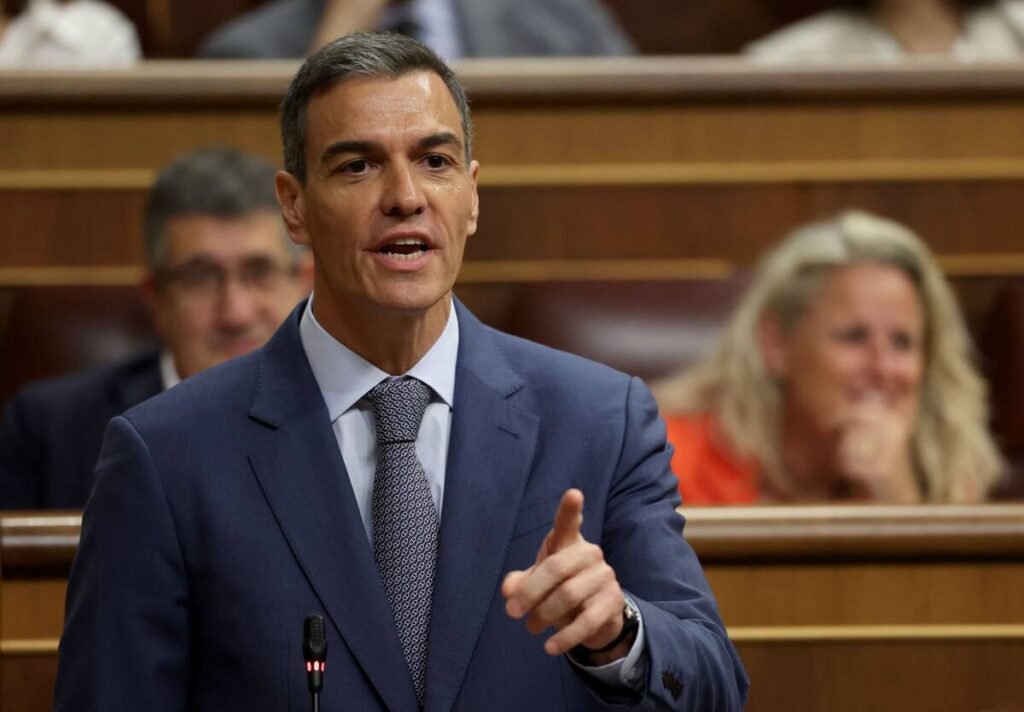
In this bleak political landscape, the only genuine defense of national and popular sovereignty has emerged from the political Left. Spain’s coalition government, led by Pedro Sánchez’s Social Democrats and the Sumar alliance, has vocally opposed the war. By denouncing the illegality of the attack, highlighting the dire economic costs for Europe, and denying the US the use of Spanish military bases, Madrid has infuriated Trump and the Spanish far right alike. While some left-wing critics correctly argue that this pacifist stance should be followed to its logical conclusion—namely, Spain’s exit from NATO—the Spanish government remains a vital, isolated example of true sovereignty within a continent unified behind war.
Ultimately, the Spanish stance demonstrates that authentic sovereignty is not rooted in militarism, xenophobia, or fantasies of ethnic homogeneity. True sovereignty means enacting popular sovereignty by respecting the public’s desire for peace, and defending state sovereignty by prioritizing international law, global cooperation, and the courage to reject imperialist escalation.