

Imperial Subservience Disguised as Sovereignty
Europe today stands at a dangerous crossroads. Beneath the rhetoric of strategic autonomy and collective security lies a stark reality: the continent is hurtling toward full-scale militarization, not in pursuit of independence, but as a junior partner in an increasingly aggressive U.S.-led imperial order. This new European posture is not the product of popular will or democratic debate, but of elite consensus — driven by economic decline, political desperation, and a willingness to sacrifice social welfare and civil liberties at the altar of a failing war economy.
The False Promise of Sovereignty
Since Donald Trump’s return to the White House, European leaders have justified massive increases in military spending as a necessary step toward sovereignty.
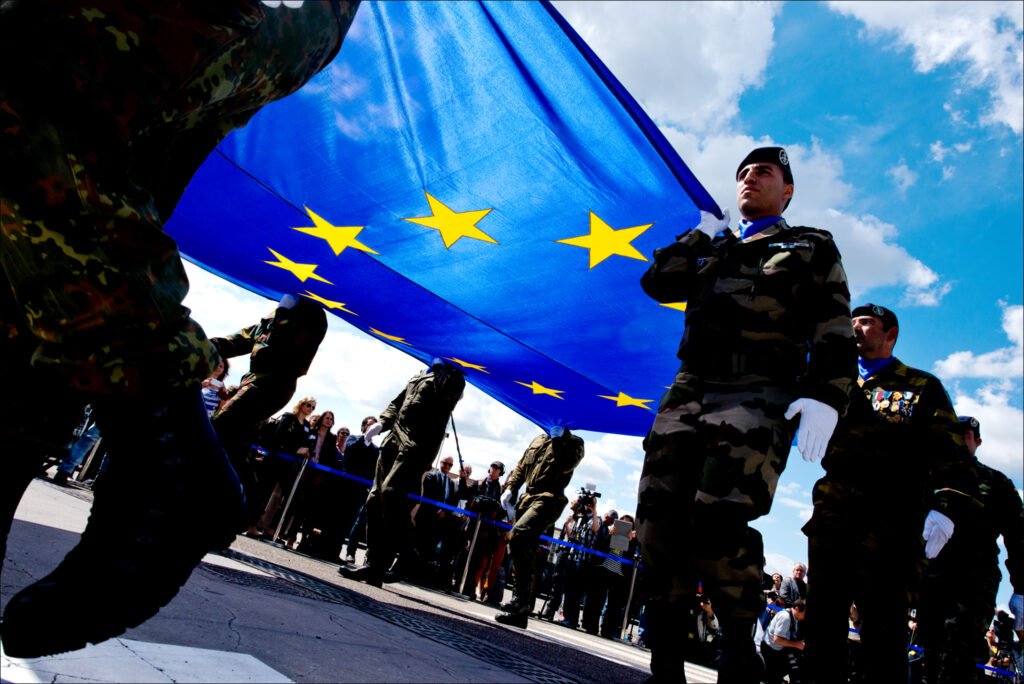
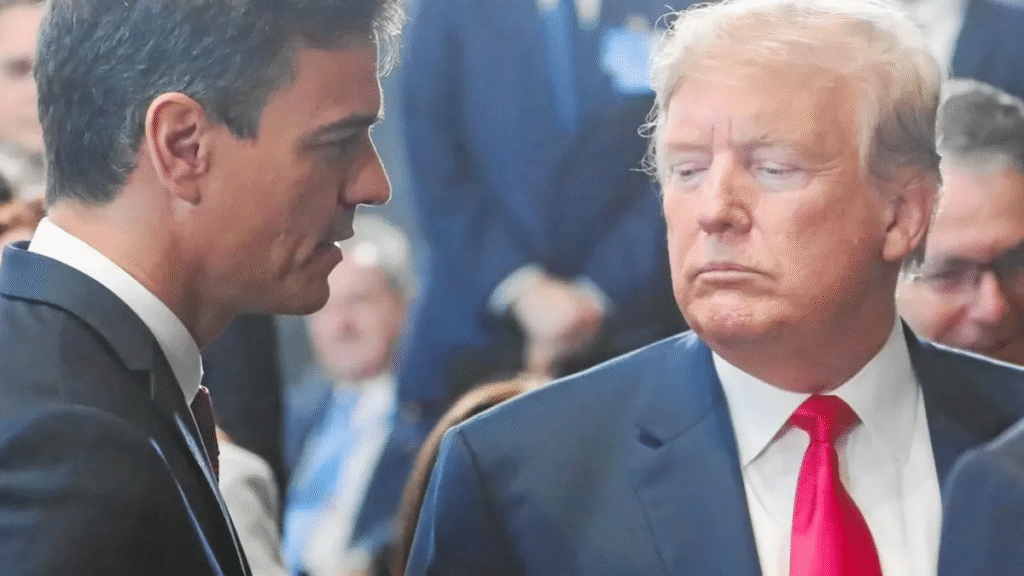
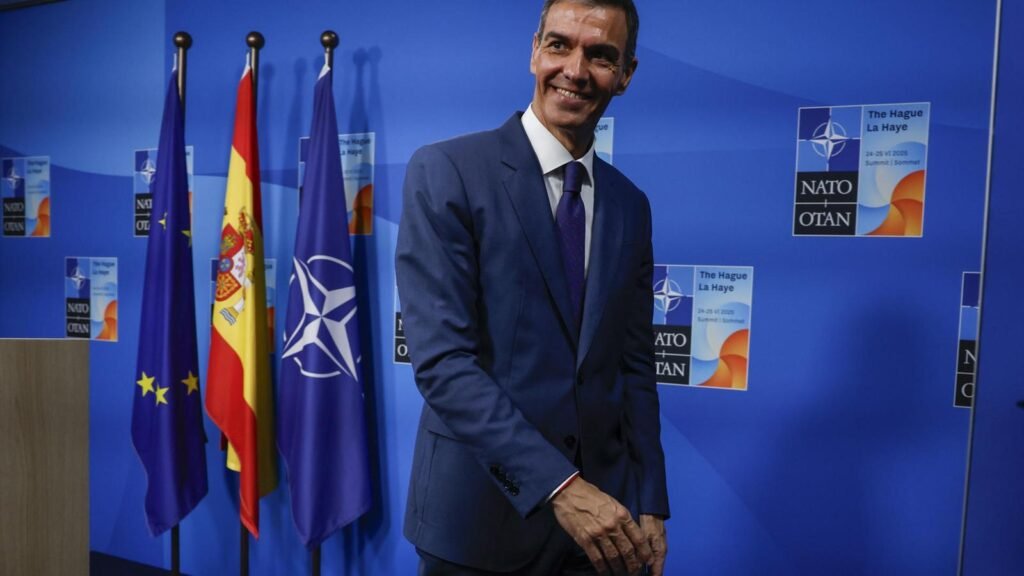
German Chancellor Friedrich Merz, triumphant after his electoral victory, framed the rearmament drive as essential to breaking Europe’s reliance on Washington. Yet this narrative collapses under scrutiny. Far from asserting independence, Europe’s militarization has been shaped and dictated by U.S. demands. The spectacle at the recent NATO summit laid this bare. NATO Secretary General Mark Rutte openly sought Trump’s approval, boasting in a leaked message that member states had agreed to allocate 5% of GDP to defense as “your win.” Only Spain, under Prime Minister Pedro Sánchez, refused to sign on to this massive reallocation of public resources toward arms. Sánchez’s resistance underscored the broader charade: Europe is not arming itself against U.S. abandonment, but in fear of U.S. punishment. Trump’s fury at Spain’s exception — including threats of new tariffs and bilateral penalties — made clear that European rearmament is about submission, not sovereignty.

Military Keynesianism and Economic Decline
The rearmament drive is not merely geopolitical; it is also economic. Europe’s political elites, particularly in Germany, have embraced military Keynesianism as a last-ditch effort to revive their faltering economies. The symbolic rise of Rheinmetall, Germany’s largest arms manufacturer, over Volkswagen captures this pivot. As Germany’s industrial base erodes — battered by high energy costs, deindustrialization, and competition from China — arms production has become a new lifeline. The German state’s abandonment of its constitutional debt brake and embrace of massive new borrowing, primarily to fund military expansion, reveals how deeply this logic has taken hold. Public debt is soaring, but instead of financing green infrastructure, education, or social services, the funds are being funneled into tanks, missiles, and ammunition. Ursula von der Leyen’s “Re-Arm Europe” initiative cements this model at the EU level: hospitals and schools face austerity, while arms manufacturers enjoy limitless public subsidy.
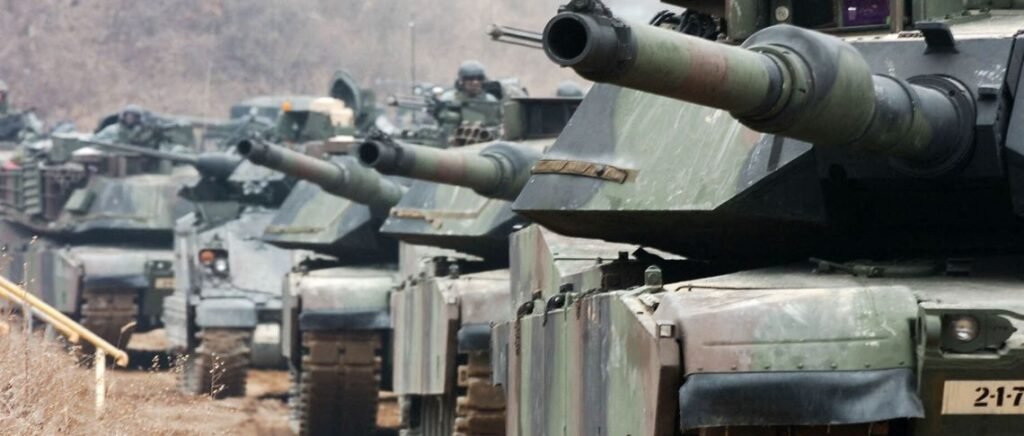
Yet military Keynesianism is no solution. Defense spending generates weak economic multipliers. Weapons production creates fewer jobs and less durable economic demand than investment in socially useful sectors. Worse, maintaining this economic model requires a permanent state of war or preparation for war — a reality Europe is neither equipped for nor capable of sustaining independently.
The Proxy Logic of Imperial War
European militarization is inseparable from its role in advancing U.S. imperial objectives. Nowhere is this clearer than in Ukraine. European leaders posture as defenders of democracy, yet they have outsourced strategic decision-making entirely to Washington. The West’s continued dangling of NATO membership for Ukraine — despite Trump’s explicit refusal to grant it — only prolongs the war while diminishing Kyiv’s leverage.
Even as Ukraine’s demographic and economic base is destroyed, European elites press for escalation, not peace. The result? A Ukraine mortgaged to Western capital, its mineral wealth pledged to U.S. corporations, while Europe is left to shoulder the costs of reconstruction.
Germany’s Friedrich Merz perhaps said it most candidly when he described Israel’s assault on Iran as the “dirty work” that serves all of Western imperialism. Europe, it seems, has embraced this model: letting others fight, bleed, and brutalize, while it pays the bills and maintains plausible deniability.
The Price of Militarism
The costs of this new European war economy are profound. Social spending will be gutted to pay for arms. In Germany, pro-Palestinian activism is being criminalized, with civil liberties sacrificed in the name of wartime discipline. Across the continent, democratic accountability is eroded as defense budgets surge without meaningful debate or consent.
What makes this trajectory particularly egregious is its total disconnection from public will. No European electorate has voted to spend 5% of GDP on the military. These policies are imposed from above, by elites desperate to secure their place within an American-dominated order — no matter the cost to their own societies.
A Call for Resistance
Spain’s Sánchez, in rejecting the 5% target, has offered a rare voice of dissent. His warning is clear: the price of militarism is paid not by those who order it, but by workers, families, and the vulnerable, through cuts to healthcare, education, and basic services. His stand shows that an alternative is possible — but it requires political courage and mass mobilization.
For Europe’s left, the task is urgent: to place opposition to militarism and imperial subordination at the heart of its political program. Breaking with the American empire, rejecting the war economy, and rebuilding Europe on the basis of peace, solidarity, and social justice is not only possible — it is necessary.