
Rojava Under Siege: Imperial Realignment, Islamist Power, and the Crisis of Kurdish Strategy
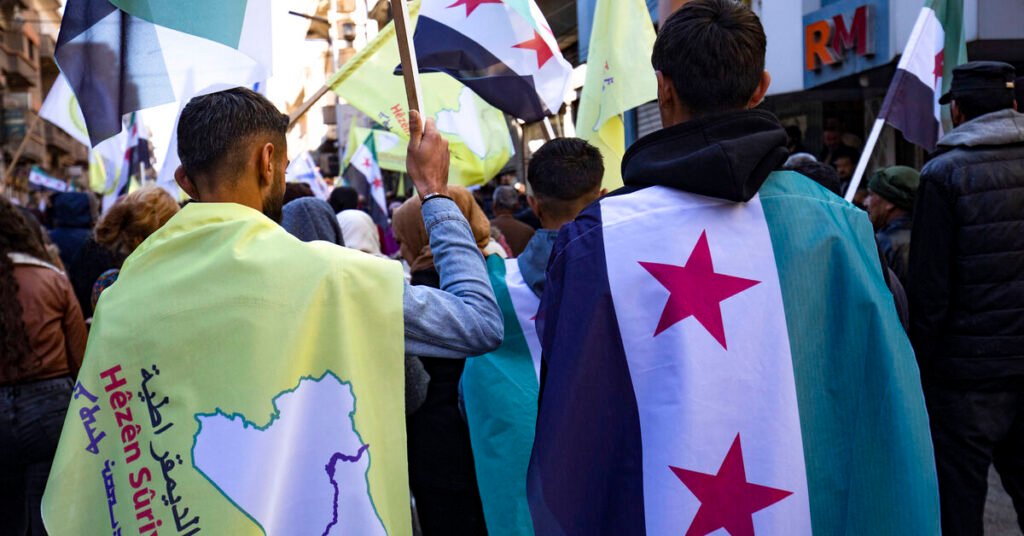
Rojava—the Democratic Autonomous Administration of North and East Syria—stands at the edge of an existential crisis. The renewed military offensive by Islamist forces aligned with the Syrian interim government, backed decisively by Turkey and tacitly accepted by Western powers, threatens not only the physical survival of the Kurdish population but also the destruction of one of the most significant experiments in self-governance to emerge from the ruins of the Syrian war. What is unfolding is not an isolated escalation, but the logical outcome of imperial maneuvering, regional power struggles, and unresolved contradictions within the Kurdish liberation movement itself.
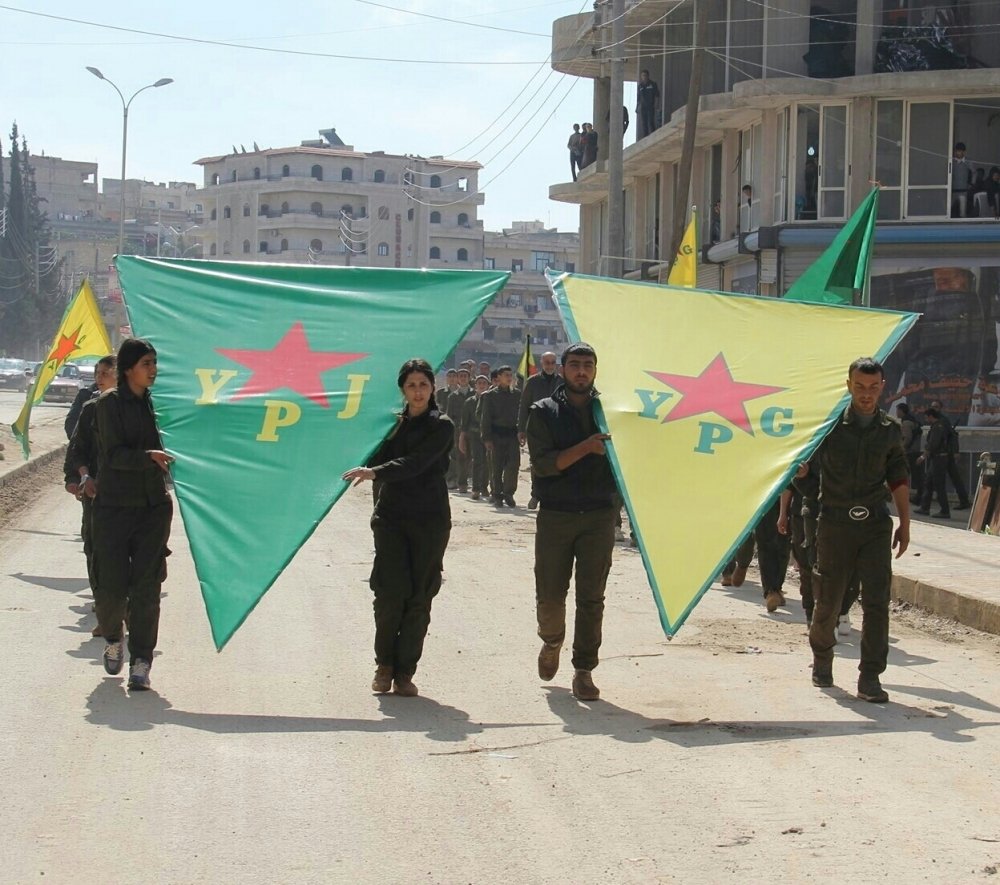
Across northeastern Syria, towns and cities have come under sustained attack. Civilian infrastructure has been deliberately targeted, hospitals bombed, and entire populations displaced. Historic Kurdish districts in Aleppo have been emptied, while jihadist forces advance toward symbolic strongholds such as Kobane. The return of ISIS iconography, the release of jihadist prisoners, and the collapse of fragile security arrangements evoke the darkest chapters of the last decade. Yet the present danger is even greater: this time, the assault comes not from a rogue insurgency alone, but from a reconstituted Syrian state apparatus operating with international acquiescence.
The Collapse of the Syrian Order and the Rise of Islamist Rule
The fall of Bashar al-Assad’s regime in late 2024 did not bring stability or democratic renewal. Instead, it created a vacuum swiftly filled by Hayat Tahrir al-Sham (HTS), a former al-Qaeda affiliate rebranded under the leadership of Ahmed al-Sharaa.
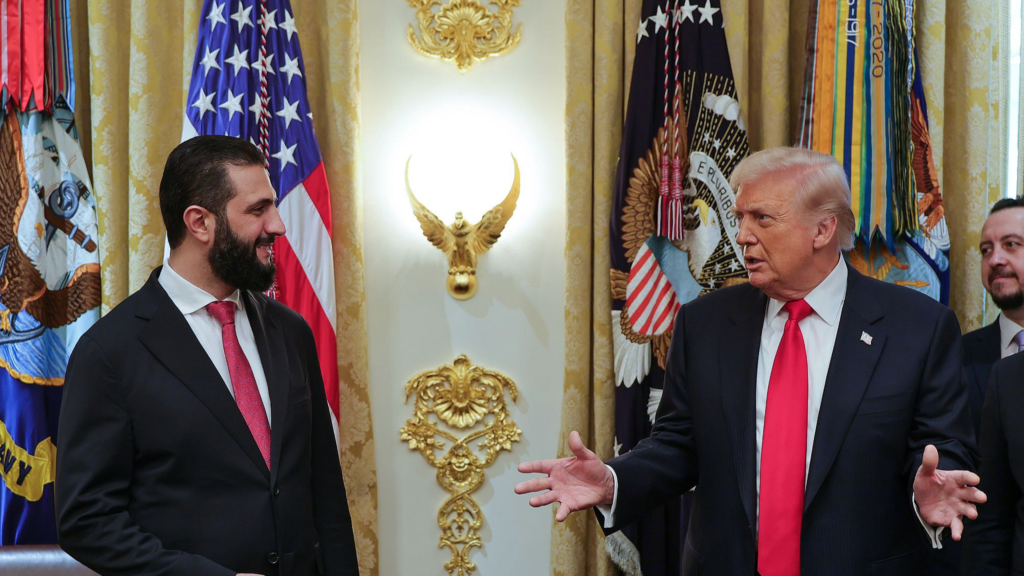
Lacking genuine popular legitimacy and coherent administrative capacity, HTS has relied on repression, sectarian violence, and external sponsorship to consolidate power. Western governments played a decisive role in legitimizing this outcome. By portraying HTS as a “necessary interlocutor” after Assad’s removal, the United States and its allies prioritized geopolitical realignment over the lives of Syria’s minorities. Sanctions were eased, diplomatic channels reopened, and al-Sharaa was presented as a pragmatic actor capable of stabilizing the country. In reality, his rule has been marked by massacres of Alawites, Druze, and now Kurds, revealing the emptiness of Western rhetoric about pluralism and human rights.
The offensive against Rojava is the culmination of this process. HTS seeks to dismantle autonomous governance and impose centralized Islamist control, while using Kurdish resistance as a rallying point for reactionary forces across Syria.
Turkey’s Strategic Calculus
Turkey’s role is neither secondary nor covert. Ankara has long regarded Kurdish self-rule in Syria as an intolerable threat, fearing its impact on Turkey’s own Kurdish population. For decades, the Turkish state has pursued a strategy of militarized suppression of Kurdish aspirations, spending vast resources to prevent any form of Kurdish autonomy from taking root.
The current offensive serves multiple Turkish objectives. It weakens the Kurdish movement militarily, expands Turkish influence southward, and positions Ankara as a decisive regional power at a moment when its geopolitical standing is under strain. Economic marginalization, regional rivalries, and shifting trade corridors have intensified Turkey’s reliance on military projection. By backing HTS and shaping the post-Assad order, Turkey aims to secure a pliant regime in Damascus and eliminate the Rojava project altogether.
Turkey’s insistence that any peace process requires the complete disarmament of the Syrian Democratic Forces (SDF) exposes the bad faith of its diplomacy. Disarmament under current conditions would amount to surrender in the face of forces openly committed to ethnic cleansing and political annihilation.
American Betrayal and Imperial Withdrawal
The conduct of the United States exemplifies the cynicism of imperial power in decline. Having relied on Kurdish fighters as the backbone of the SDF in the fight against ISIS, Washington has now declared that the partnership has “expired.” The shift reflects a broader reorientation of US strategy away from the Middle East, not toward peace, but toward selective disengagement that leaves chaos behind.
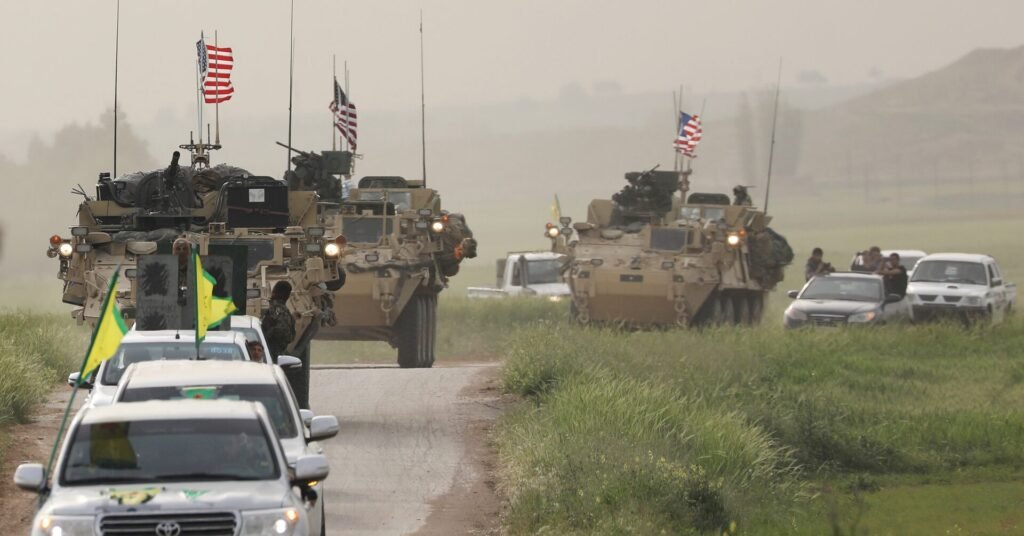
By placing its confidence in al-Sharaa to “manage” jihadist threats, the United States has effectively abandoned the Kurdish population to their fate. The relocation of ISIS prisoners, the dismantling of security arrangements, and the diplomatic green light given to Islamist consolidation have directly contributed to the current catastrophe.
This betrayal is not anomalous. It follows a long imperial pattern in which allies are discarded once they cease to serve strategic needs. The language of “opportunity” used by US officials to describe the dissolution of Kurdish self-defense structures stands in grotesque contrast to the reality of siege, displacement, and massacre.
Resistance Without Illusions
Despite overwhelming odds, resistance continues. Communities in Rojava have mobilized for self-defense, drawing on deep traditions of collective organization. Women, elders, youth, and workers alike participate in sustaining social life under bombardment—providing medical care, food distribution, and local security. This resilience reflects more than survival instinct; it expresses a collective refusal to submit to annihilation.
Yet courage alone cannot resolve the strategic impasse. The Kurdish leadership’s long-standing reliance on external powers has proven disastrous. Alliances with imperial states were treated as tactical necessities, but they have repeatedly resulted in abandonment at critical moments. Appeals to Western institutions or regional powers—including Israel—risk further isolating the Kurdish struggle from Arab and non-Kurdish working-class populations whose solidarity is indispensable. The agreement proposing the integration of Kurdish forces into the Syrian army under Islamist command signals the depth of the crisis. It threatens to reverse the gains of autonomy and dismantle the social foundations of Rojava.
The Class Question and the Future of Rojava
The fate of Rojava cannot be secured through national struggle alone, nor through reliance on imperial patrons. The current disaster is the product of capitalism and imperialism operating through regional proxies and reactionary forces. Any durable solution must therefore confront these structures directly. Rojava’s experiment in self-governance—however incomplete—has shown that alternatives to centralized authoritarian rule are possible. Its destruction would represent not merely a Kurdish defeat, but a victory for reaction across the Middle East.
A Struggle Beyond Borders
Rojava stands as a warning and a call. The convergence of imperial retreat, Islamist consolidation, and regional power competition has created conditions of extreme danger. But it has also exposed the bankruptcy of strategies based on accommodation with imperialism.
The survival of Rojava depends on breaking decisively with these illusions and reorienting the struggle toward revolutionary, class-independent politics. Only through solidarity among the oppressed—across ethnic, religious, and national lines—can the cycle of betrayal, massacre, and defeat be broken.
What is at stake is not only the future of Kurdish self-rule, but the possibility of a different political order in a region long ravaged by imperial domination and authoritarian rule.