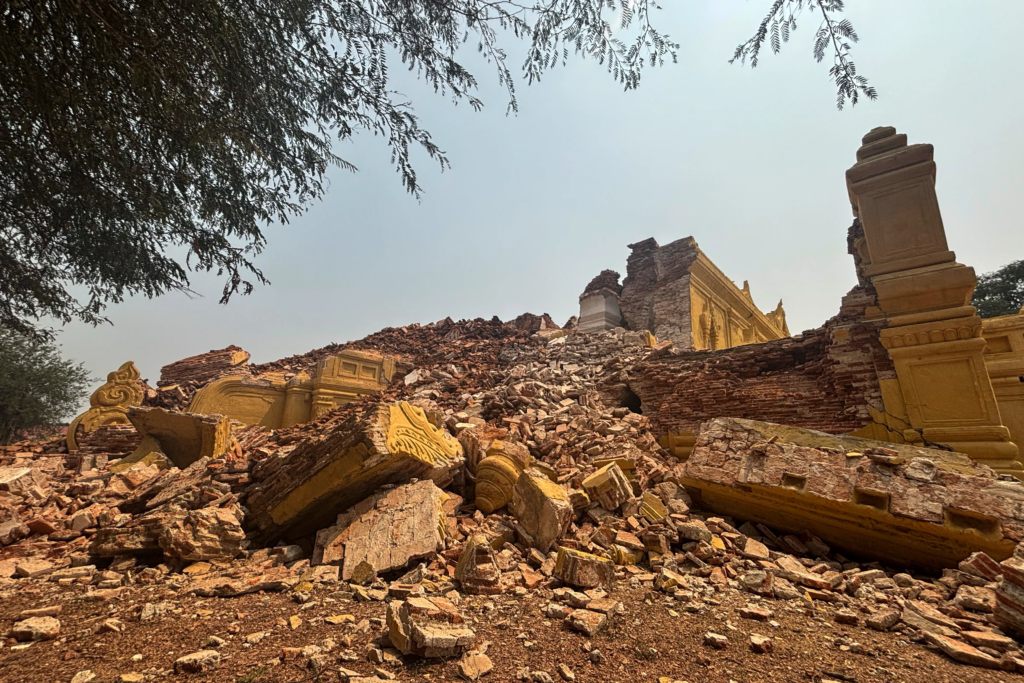

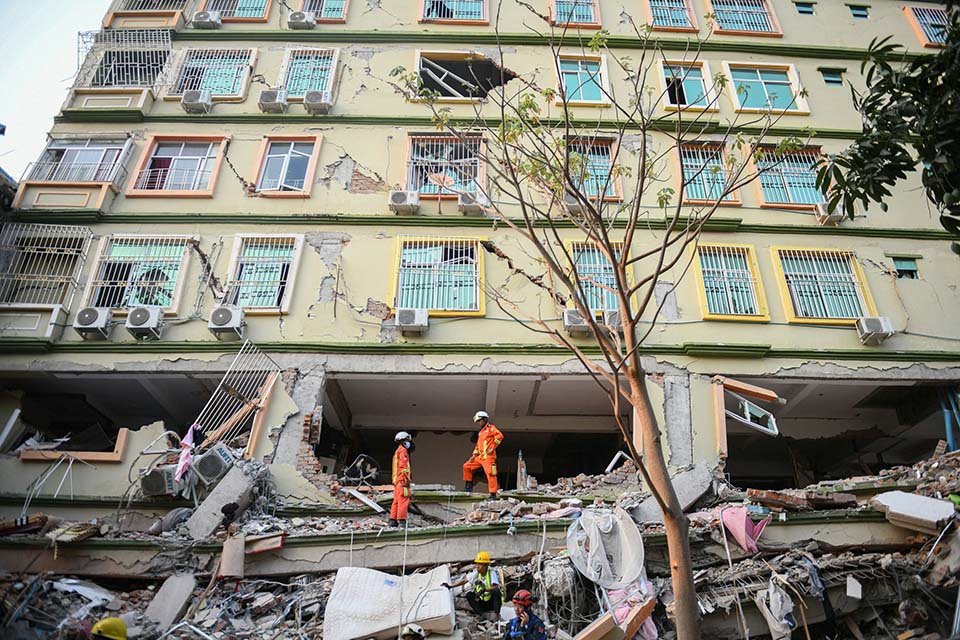
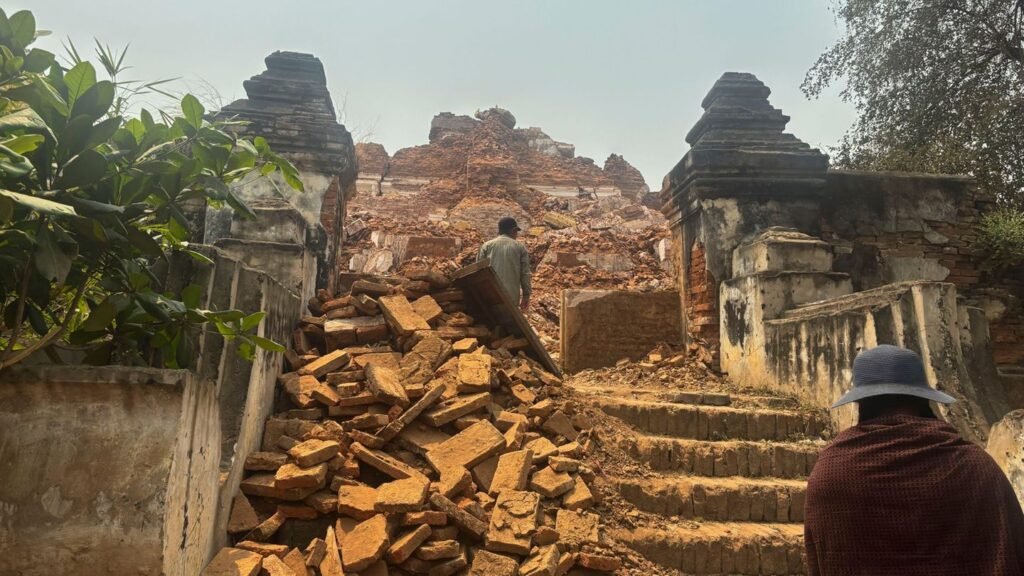
On 28 March, Myanmar was struck by a catastrophic earthquake measuring 7.7 in magnitude, its epicentre located barely 10 kilometres beneath the surface, near Mandalay, the country’s second-largest city. The seismic tremor devastated the region, reducing entire towns to rubble, with Mandalay and nearby Sagaing—perched precariously along the Sagaing Fault, where the Indian and Sunda tectonic plates collide—now lying in ruins. Historical landmarks, temples, and homes alike crumbled, while fires erupted in Mandalay immediately following the quake.
The official death toll has surpassed 5,000, yet the true scale of human loss is undoubtedly far greater. Hundreds remain unaccounted for, and given the notorious manipulation of statistics by the ruling military junta, the actual numbers are likely to be much higher. Adding to the tragedy, this earthquake’s sheer power was evidenced as far afield as Bangkok, where an unfinished high-rise collapsed, despite the Thai capital lying over 1,000 kilometres away.
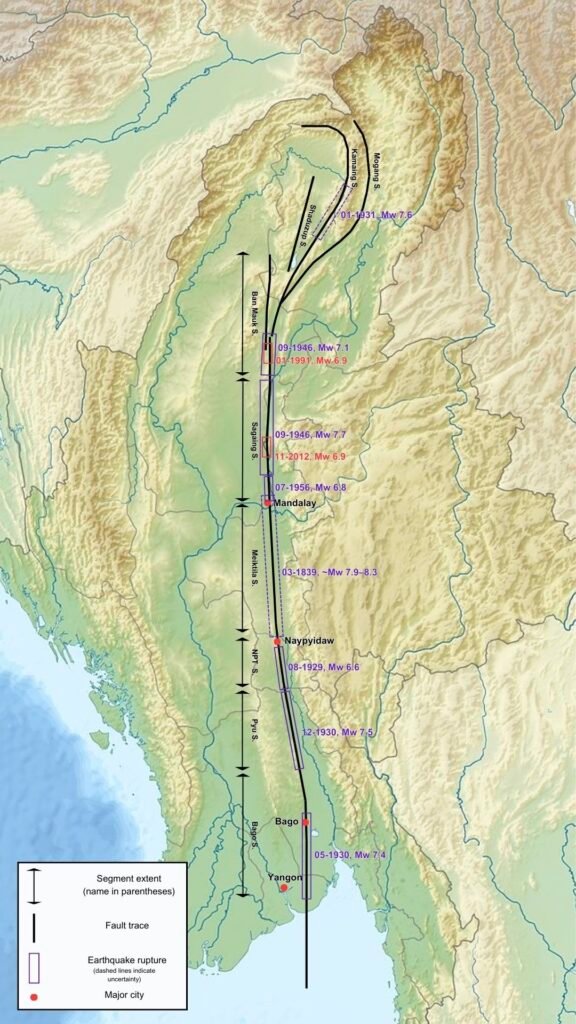
The depth and structure of the Sagaing Fault, stretching more than 1,200 kilometres across Myanmar, explain the extensive devastation. However, while the natural force of the earthquake was undeniably formidable, it does not fully account for the overwhelming scale of destruction and loss of life. It is here that Myanmar’s political reality must be addressed.
As the revolutionary Lenin once remarked, “life teaches.” The people of Myanmar have learned, through bitter and repeated experience, that under the military dictatorship, every natural disaster is transformed into a man-made catastrophe.
The Junta: Architects of Tragedy
The human toll of this earthquake mirrors the horrific precedents set during past disasters. The regime’s catastrophic mismanagement of Cyclone Nargis in 2008 cost hundreds of thousands of lives, while its disgraceful handling of the COVID-19 pandemic exposed a cruel disregard for human welfare. Now, once again, the junta’s prioritisation of its brutal war efforts over the wellbeing of its people has compounded the suffering.
On the very day of the earthquake, while civilians lay buried under rubble, the junta continued to wage its civil war, launching airstrikes and killing innocents. Far from being an unfortunate coincidence, this reflects the regime’s fundamental priorities. Such brutal indifference no longer surprises the people of Myanmar. If anything, they have come to expect it. And it is for this reason that the responsibility for this disaster lies squarely at the feet of the military regime. Although the junta’s leader issued a rare public call for international aid, this gesture was largely a cynical performance. In reality, the regime systematically obstructed relief efforts.
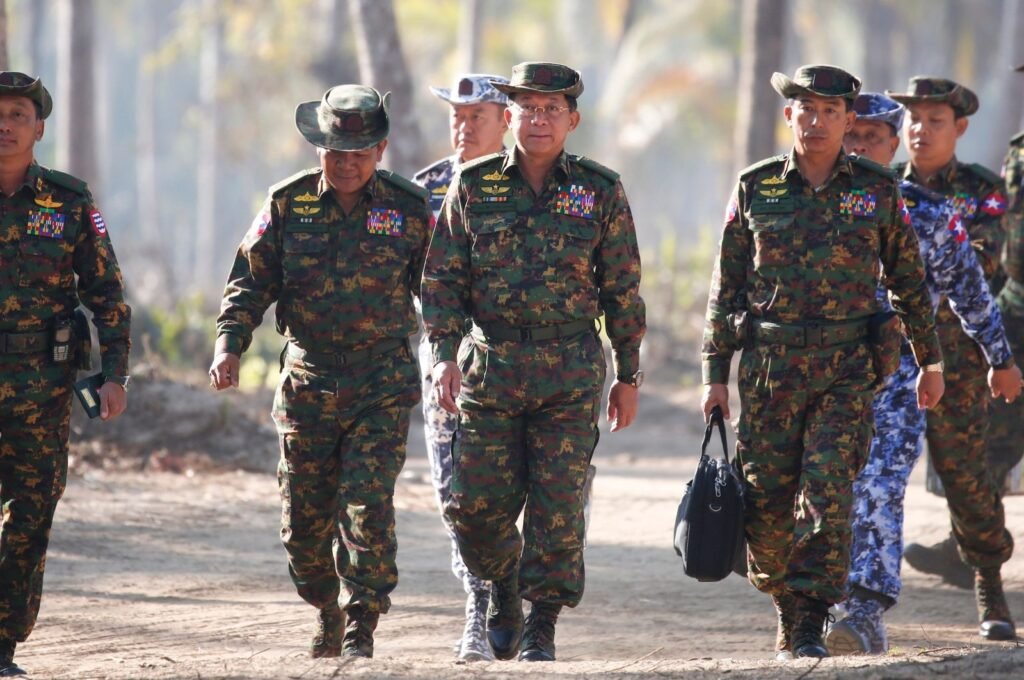
Reports surfaced of junta troops firing upon a humanitarian convoy from the Chinese Red Cross in Shan State, just outside Mandalay. An official spokesperson confirmed the attack but, true to form, offered hollow justifications.
In practice, the military was completely absent from any genuine rescue operations. Worse still, paramilitary forces such as the Pyusawhti militias actively interfered with civilian volunteer teams attempting to save lives. The junta enforced a curfew, banning rescue activities after 10 PM, and compounded the chaos by shutting down the internet, cutting mobile networks, and plunging the affected regions into blackout.
The same military that has no hesitation in deploying helicopters to slaughter civilians did not use a single aircraft to aid earthquake victims. The generals had the audacity to blame the rescue volunteers for lacking proper protective equipment, while they themselves have lavished resources on expanding their arsenal of weapons for internal repression.
Systemic Neglect and the Collapse of Health Infrastructure
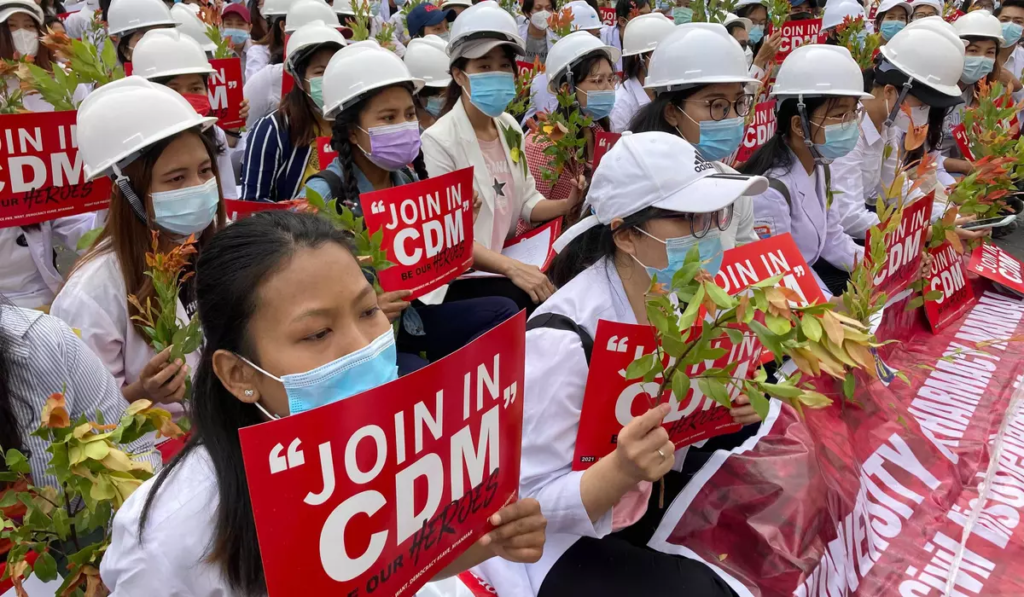
A disaster of this scale demands a well-prepared healthcare system capable of delivering emergency relief swiftly. Yet Myanmar’s healthcare system has been systematically dismantled by the junta.
Prior to the earthquake, the generals diverted vast public funds into military spending while stripping vital sectors like healthcare of resources. The junta has persecuted health workers, targeting those who joined the Civil Disobedience Movement (CDM) opposing the dictatorship. Hospitals and clinics staffed by CDM participants were shuttered. Medical professionals have been blacklisted, arrested, tortured, and even killed—most recently in Sagaing, where junta airstrikes targeted healthcare facilities.
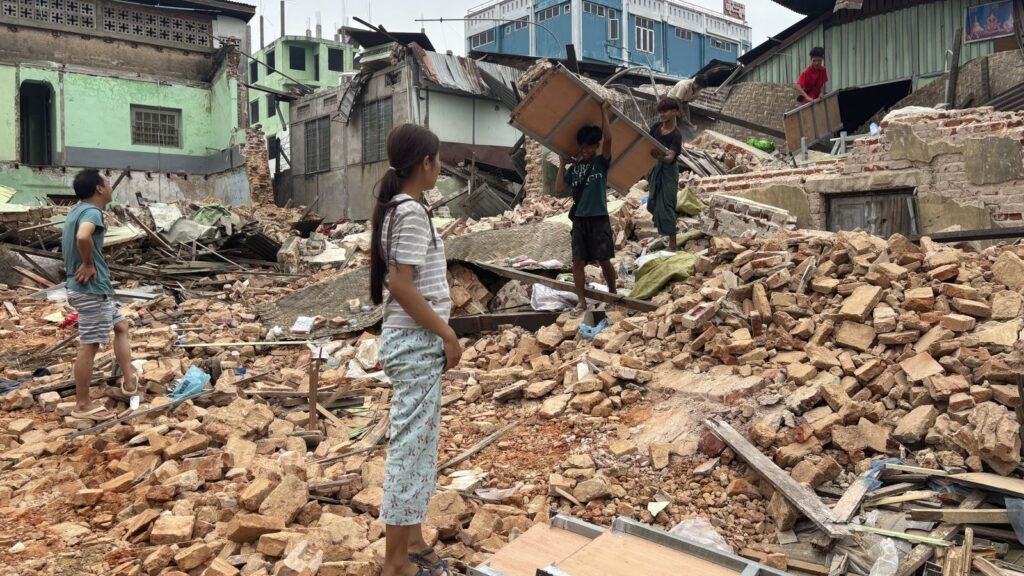
As a consequence, Myanmar entered this disaster with a healthcare system already in collapse, gravely undermining the country’s ability to respond to mass casualties. Victims of the earthquake found themselves abandoned, forced to rely on untrained volunteers and overwhelmed local clinics.
The culpability extends beyond the uniformed generals. The regime’s capitalist cronies—corrupt businessmen and profiteers—are equally complicit. Together, they represent the ruling class that sacrifices public safety for private gain.
Profits Before Lives: Capitalism’s Deadly Cost
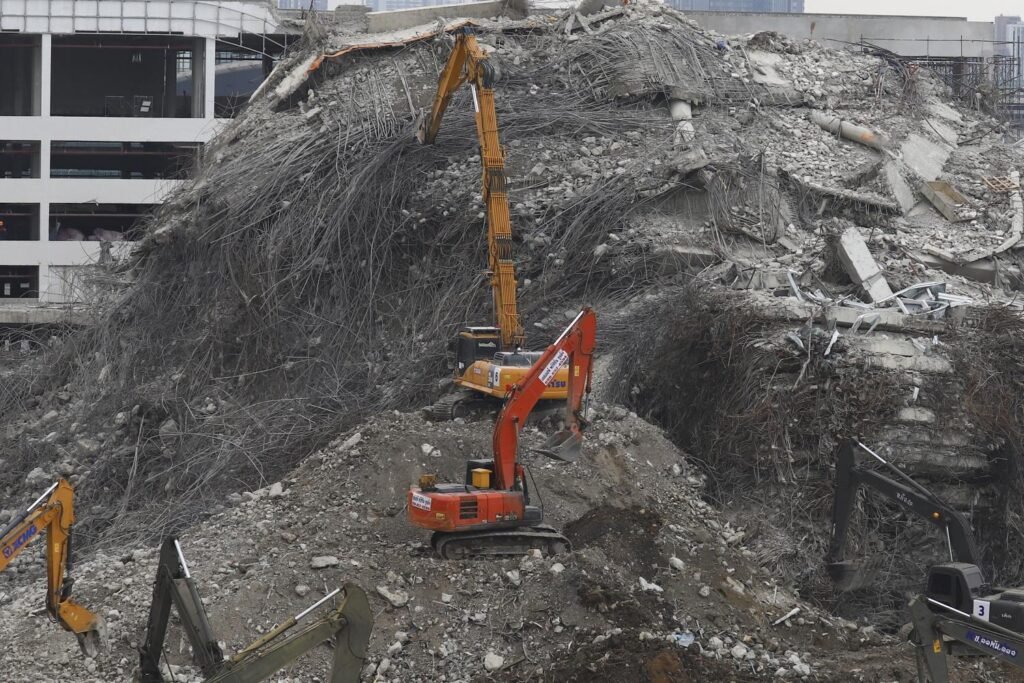
The ruin of the Sky Villa condominium complex in Mandalay stands as a potent symbol of this lethal system. Was its collapse purely the result of seismic force?
? Or was it the inevitable outcome of corruption and greed?
From a class perspective, the answer is obvious. Under capitalism, profit trumps safety. Instead of constructing earthquake-resistant buildings, developers prioritise cost-cutting and profiteering.
The Sky Villa, shamelessly marketed as an “earthquake-resistant” condominium, was built in a zone long identified as dangerously unstable. Experts had warned of the risks for decades.
Yet, developers ignored these warnings, with full knowledge—and tacit approval—of the state. Permits were issued, inspections waived, and safety corners cut, all in service of private profit. The geologist who claimed, “No matter how good the quality of the building is, it won’t withstand an earthquake like this,” inadvertently admitted the system’s fatal flaw: if safety could not be guaranteed, such structures should never have been built.
This negligence is not confined to luxury condominiums. Even modest public buildings—hospitals, schools, and universities—crumbled under the quake’s force. Their collapse is a direct consequence of the regime’s endemic corruption and contempt for human life. For Myanmar’s ruling elite, human lives are expendable, but profits are sacrosanct.
The Fight Against Disaster is a Fight Against the Regime
Natural disasters, by their very nature, cannot be prevented. But the scale of their devastation is never inevitable. With proper planning, investment, and prioritisation of human welfare, the death toll from earthquakes can be vastly reduced.
The technology and productive capacity already exist to construct earthquake-resistant infrastructure and deliver effective emergency responses. But under the military dictatorship and capitalist system, these resources remain the private property of a parasitic minority. Rather than serve the public good, they are hoarded or weaponised against the people.
Aircraft, for example, could ferry supplies and evacuate the wounded—but under the junta, they serve only as instruments of terror. Helicopters and planes, rather than aiding relief efforts, are deployed to rain bombs on villages resisting military rule.
If Myanmar’s working class and oppressed masses were to overthrow the junta and dismantle the capitalist order it defends, the vast wealth squandered on war could instead be directed towards safeguarding the people. Protecting human life would no longer be subordinate to military ambition or private profit.
The struggle against the devastation of natural disasters is inseparable from the broader class struggle. It is a fight for a new society—one in which the lives of ordinary people are valued above the greed of the few.