
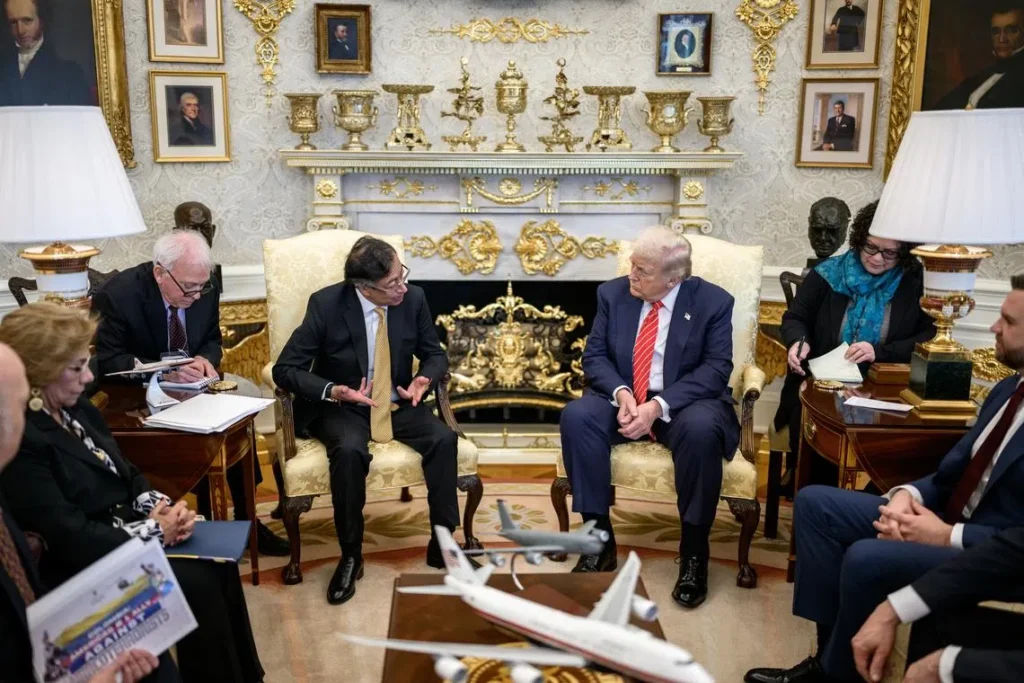
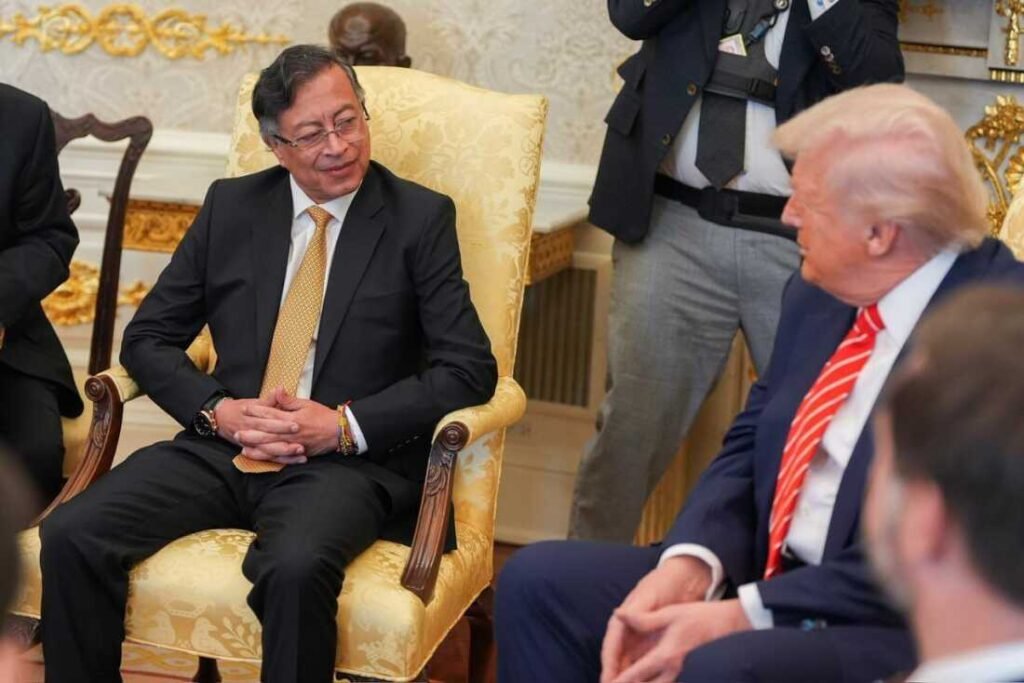
Following weeks of trepidation within the Colombian media, the highly anticipated February 3 meeting has come and gone. This gathering between Colombian President Gustavo Petro and US President Donald Trump is now being heralded as a triumph of moderate diplomacy. During their one-hour-and-forty-minute session at the White House, Trump notably praised the Colombian leader, referring to him as a “very nice guy”.
The very same press establishment that had previously forecast a catastrophic encounter—akin to Trump’s interactions with Zelensky—is now thoroughly celebrating this diplomatic development. The visual conclusion of the visit, however, was peculiar: Petro departed the premises sporting a “Make America Great Again” hat and holding a signed edition of The Art of the Deal, the US President’s first book.
The Desperation of the National Oligarchy
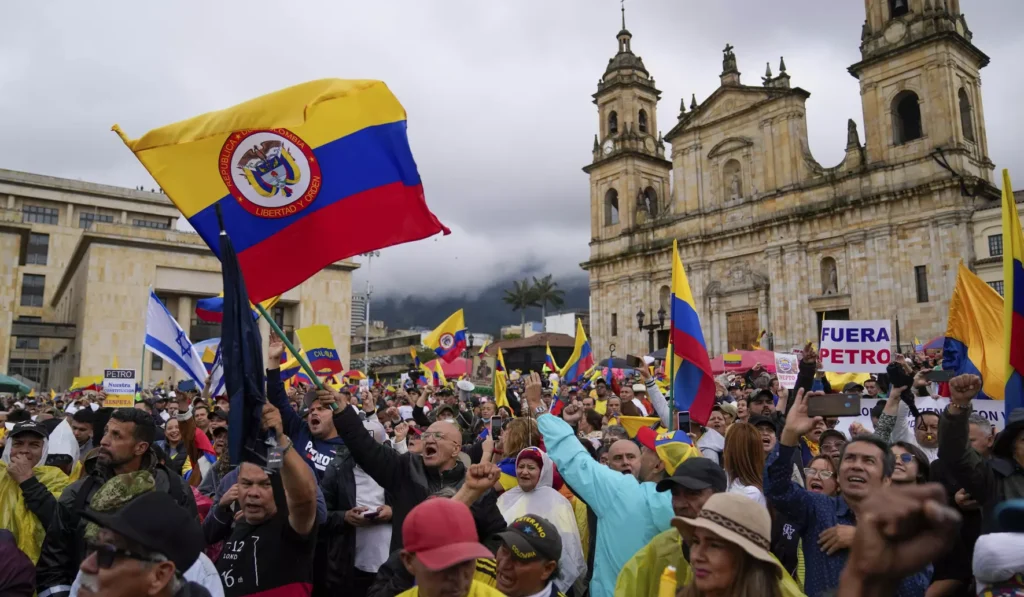
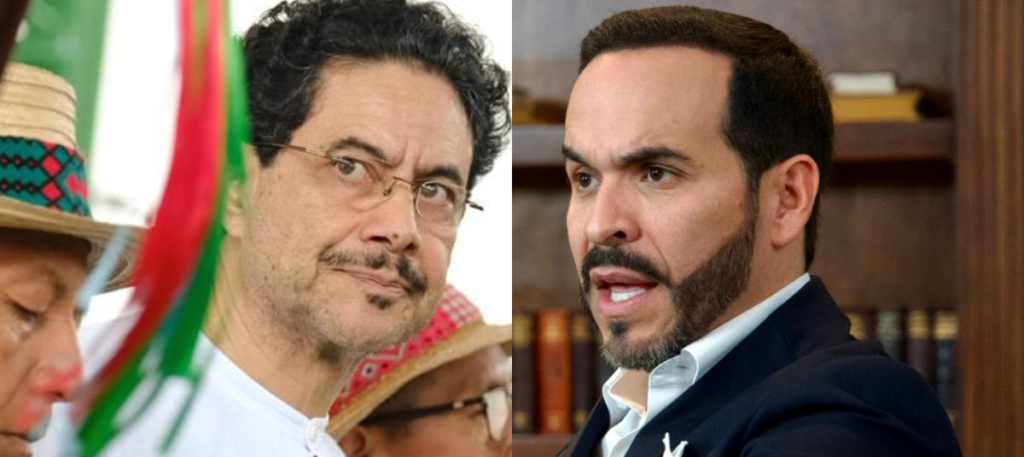
The context of this meeting is heavily influenced by the declining influence of the Colombian ruling class. Over the past year, prominent right-wing figures have traveled to the United States to petition the Republican Party for increased pressure on the Petro administration, going so far as to openly request a military intervention. They aspire to see an intervention comparable to ‘Operation Absolute Resolve’, a maneuver that resulted in 80 deaths in Caracas and the abduction of Venezuelan President Nicolás Maduro.This behavior underscores the severe political vulnerability currently afflicting the Colombian right wing. For comparison, Álvaro Uribe Vélez, who remains the principal leader of the Colombian right, concluded his presidency in 2010 with a staggering 85 percent approval rating. Today, Paloma Valencia, the candidate representing Uribe’s faction, struggles to secure a mere 5 percent in the polls. Abelardo de la Espriella, currently the most prominent right-wing candidate competing against the left’s Ivan Cépeda, owes his relative strength to a calculated distance from the traditional conservative establishment. Nevertheless, he has publicly reaffirmed his loyalty to Uribismo, claiming to be more committed to the ideology than even Uribe’s own family members, including Doña Lina, Jerónimo, and Tomás.
Faced with profound domestic weakness, the Colombian oligarchy is understandably searching for external salvation to help them reclaim control over the state apparatus. However, their appeals for American intervention expose a deeply submissive disposition, further eroding their domestic credibility given the current unpopularity of US imperialism. Moreover, these actions reveal that, stripping away their nationalist rhetoric, the local elite is entirely prepared to sacrifice the Colombian working class to secure US backing and financial gain. This ultimately confirms their fundamentally servile nature.
The Trap of Reformist Concessions
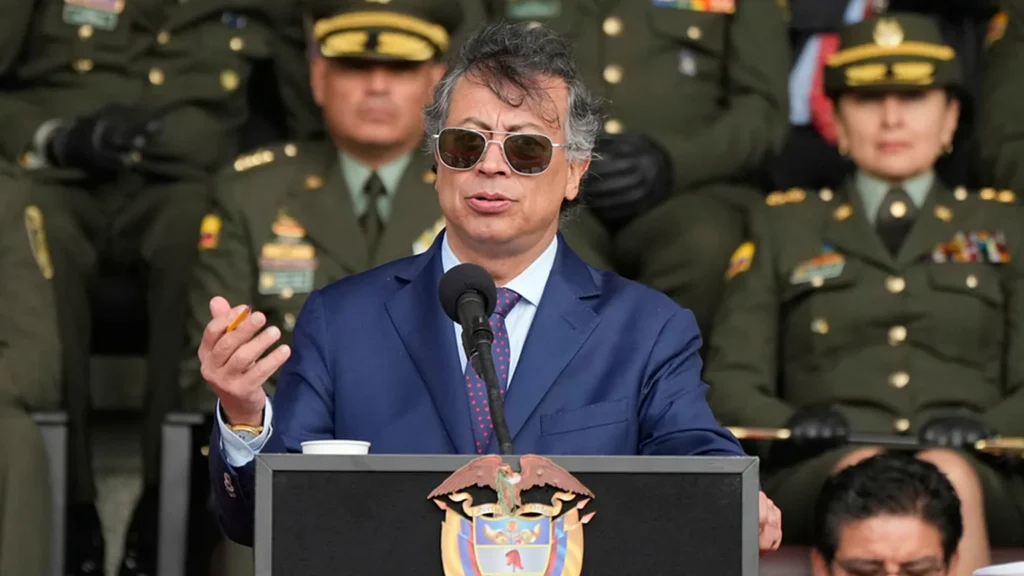
How has the Petro administration navigated these threats? Historically, Petro and Trump have been in conflict over core elements of Petro’s political agenda for over a year. Petro built substantial international prestige through his vocal opposition to US imperialism. His actions included leveraging a United Nations address to demand military intervention against the Gaza genocide, inciting the US military to defy Trump’s directives from the streets of New York, and initiating a national strike to force his labor reforms through the Colombian Congress. The tension was palpable; just days prior to a January 8, 2026 post where Petro shared an image of an eagle alongside a jaguar, Trump had publicly disparaged him as “sick” and accused him of trafficking cocaine.
Despite this antagonistic history, the last month has witnessed a series of significant capitulations. Deportation flights from the US to Colombia—which initially sparked the conflict between the two leaders—have been reinstated, along with the controversial glyphosate fumigation of coca fields. Furthermore, Armando Benedetti, the Minister of the Interior, has suggested joint operations between the US and Colombian militaries to combat the ELN guerrilla faction. These moves represent unequivocal concessions to US imperial interests.
Earlier in the year, Petro successfully mobilized millions of citizens to protest against US imperialist threats, even floating the idea of broadly arming the populace. However, this strategy exemplifies the core limitation of reformism: treating mass mobilization as a tap that can be turned on and off at will.
The working masses cannot remain indefinitely mobilized without a concrete political program to champion. Lacking a definitive action plan to confront imperialism and the local oligarchy, the public will inevitably disengage, jeopardizing future electoral support for reformist candidates. These compromises, mirroring the concessions made by Claudia Sheinbaum in Mexico to Trump, underscore the boundaries of a reformist approach. Beneath a radical exterior lies a calculated strategy of yielding critical security concessions to imperialist powers in exchange for preserving economic ties.
The Illusion of Bilateral Equality
While these concessions may appear pragmatic given the immense pressure exerted by US imperialism, they reveal a stark truth. The threats from the White House are formidable, backed by the world’s most powerful military force; this is evidenced by the deployment of 20 percent of the US Navy to the Caribbean Sea and Petro’s previous inclusion on the Clinton list for alleged ties to the global drug trade.
Petro, who has styled himself as both a revolutionary and a staunch anti-imperialist, must be scrutinized through the lens of political truth. The reality is that reformists make these concessions because they accept the necessity of operating within the confines of the capitalist system. Their reliance on American trade and their genuine fear of a US invasion compel their compliance. Despite his sweeping rhetoric regarding global revolution, Petro operates under the belief that capitalist development is the sole remedy for Colombia’s economic underdevelopment. Yet, Colombian capitalism is structurally bound to function in submission to the White House due to its profound integration with the American economy.
By framing these compromises as the masterstrokes of a statesman who prioritizes national interests over personal ideology, the administration dangerously promotes the illusion that Colombia can negotiate on equal footing with the globe’s dominant reactionary power. These concessions are only logical if one assumes the US ruling class will eventually be satisfied and halt their aggression. Trump’s track record, characterized by sudden policy reversals on issues like Ukraine and the Maduro government, suggests otherwise.
It is highly probable that Trump’s administration will interfere in the upcoming May presidential elections in Colombia, mirroring their interventions in Argentina and Honduras. The remaining question is which fractured element of Uribismo will be selected as the primary proxy for US imperialism. Simultaneously, the US aims to prevent a surge in Petro’s popularity, applying pressure to ensure he abandons radical initiatives like the Constituent Assembly, similar to how their actions in Canada guaranteed Mark Carney’s win against a Trump-aligned Conservative Party.
The True Path to Anti-Imperialist Struggle
True Colombian freedom is impossible as long as the nation’s economy remains subservient to the profit motives of US multinational corporations. Petro’s overarching political goal of achieving genuine national sovereignty is the foundational premise of his proposed reforms in health, pensions, and agriculture. However, these reforms inherently threaten the profit margins of the American ruling class operating within Colombia.
To protect these economic interests, the US has historically poured vast resources into the country’s security apparatus. Colombia’s ongoing security crises are inextricably linked to the global market and imperialist dynamics. The financial and military resources fueling the cartels originate directly from the US market. Furthermore, US-sponsored security frameworks, such as ‘Plan Colombia’, have been utilized to destabilize specific regions with the explicit purpose of suppressing organized labor. This historical context is vital when assessing the current government’s pivot toward branding itself as the top ally of the United States in the fight against narco-terrorism.
Consequently, a genuine struggle against imperialism cannot be waged through an alliance with it, particularly when dealing with an unpredictable figure like Donald Trump. The essential step forward requires the organization of the Colombian working class, the very demographic that generates the wealth extracted by imperialist forces. An organized working class could effectively lead the peasantry—a group historically coerced into producing for both local landowners and the global market.
Together, this unified force would possess the capability to expropriate the commanding heights of the economy, placing these vital sectors under the democratic administration of peasants and workers. Such a decisive victory would lay the groundwork for a planned economy, effectively banishing imperialist influence from the nation. By initiating this bold transformation, the Colombian working class could serve as a catalyst for the broader working class across Latin America—a region of immense wealth—to dismantle Yankee imperialism and establish the Socialist Federation of Central and South America. This newly formed workers’ state would act as a critical vanguard for the global socialist revolution, possessing the strength to ultimately force the capitulation of the US ruling class.