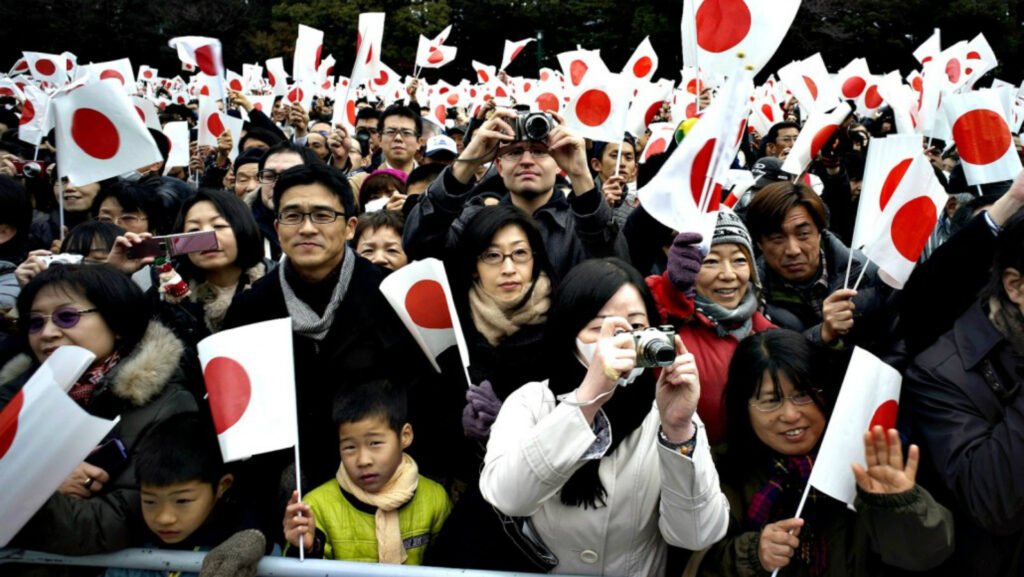

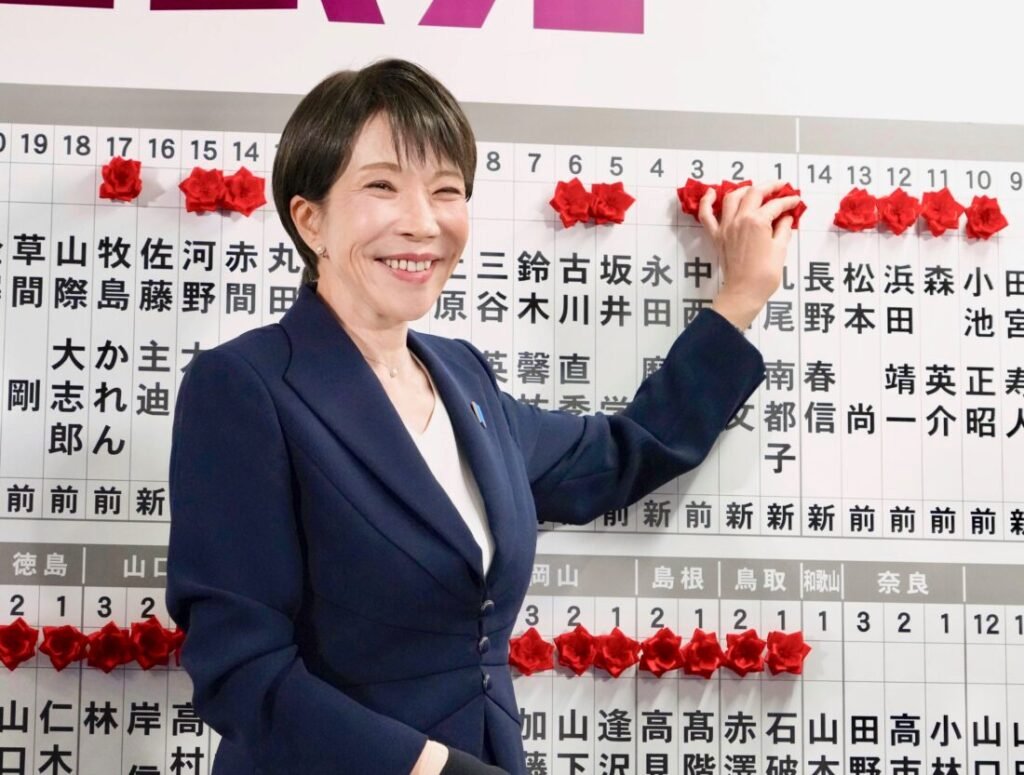
In a stunning political development, the Liberal Democratic Party (LDP) recently secured the most substantial parliamentary majority in Japanese history during the February 8 Lower House elections. Emerging from a period of profound vulnerability—marked by the loss of its parliamentary majorities last year and the defection of its long-time coalition partner, Komeitō—the party astonishingly captured a supermajority of over two-thirds of the seats.
However, this victory represents less an endorsement of the LDP itself and more a direct mandate for Prime Minister Sanae Takaichi. She successfully capitalized on a pervasive anti-establishment sentiment, stepping into a void left by a stagnant and ineffective opposition. This political vacuum was glaringly illustrated by the Centrist Reform Alliance (CRA), a hastily assembled coalition with a contradictory platform that suffered a catastrophic loss of more than 120 seats.
The Ascendancy of the ‘Outsider’
Takaichi’s rise to the premiership in the autumn, replacing Shigeru Ishiba, catalyzed the LDP’s reversal of fortunes. Although she is a steadfast defender of capitalist interests and a disciple of former Prime Minister Shinzo Abe, Takaichi is largely perceived by the public as a fresh face. She notably idolizes the reactionary British Conservative leader, Margaret Thatcher. Crucially, unlike the entrenched dynastic families that have historically controlled the Japanese state—such as the Satō–Kishi–Abe lineage, which exclusively governed the nation for twenty postwar years across three premierships—Takaichi hails from a modest background as the daughter of a police officer and an office worker.
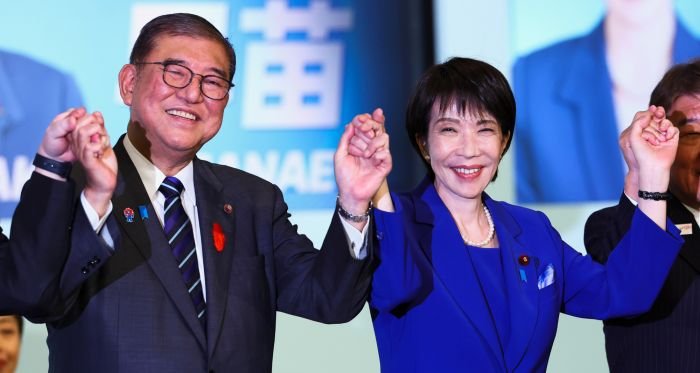
Her reputation as a charismatic, straightforward speaker has propelled her speeches to viral status on social media. This ‘outsider’ image starkly contrasts with a traditional establishment that increasingly appears incompetent to the Japanese youth. Consequently, shortly after taking office, her approval rating among 18- to 39-year-olds soared to 77 percent, eclipsing Ishiba’s meager 38 percent. Her populist pledges to lower taxes and increase wages have cemented this support. Yet, the LDP’s overall approval rating languishes around 30 percent, indicating that millions of voters who despise the party are simultaneously projecting their desperate hopes onto Takaichi—a distinct manifestation of the global anti-establishment mood.
The Structural Crisis of Japanese Capitalism
To understand the Takaichi phenomenon, one must examine the protracted crisis of Japanese capitalism following the economic implosion of the 1990s.
- The Nikkei 225 stock market plunged by almost 80 percent between 1989 and 2009.
- While it finally surpassed its 1989 peak in 2024, this speculative recovery has not translated into real economic development.
- Between 1989 and 2019, Japan’s GDP grew at an anemic average of 1.2 percent annually.
- Consequently, Japan’s share of global GDP shrank from 17.8 percent in 1995 to an estimated 3.6 percent in 2025, while its share of global exports plummeted from 8.8 percent in 1986 to just 2.9 percent in 2023.
- Real wages increased by a mere 3 percent from 1991 to 2020, compared to a 50 percent surge in the United States.
This stagnation is inextricably linked to a severe productivity crisis. In the 1960s, labor productivity expanded by 9 percent annually; today, it barely registers 1 percent growth, placing Japan behind OECD nations like Slovenia, Czechia, and Lithuania. Instead of modernizing the means of production, the capitalist class has relentlessly attacked the postwar gains of the working class to extract greater surplus value.
The social consequences are devastating.
- Workers face grueling hours, shrinking living spaces, and profound exploitation.
- Epidemics of burnout and mental health crises have introduced terms like karoshi (death from overwork) and hikikomori (severe social withdrawal) into everyday vocabulary.
- The guarantee of lifetime employment has been dismantled, replaced by part-time and casual labor for the youth.
- A ‘lost generation’ of workers now faces retirement with minuscule pensions, while young people are super-exploited to sustain an aging population before eventually being discarded.
- This intense exploitation destroys the material basis for starting families, worsening the demographic collapse.
Despite Takaichi’s anti-immigration rhetoric, restricting foreign labor is fundamentally incompatible with the needs of Japanese capitalism, which desperately requires cheap workers. Compounding this misery, the Bank of Japan raised interest rates in 2024 for the first time in 17 years, and inflation is ravaging working-class living standards. Lacking a formidable class-based alternative on the left, the desperate masses are placing their faith in Takaichi’s promises of economic revitalization.
The Contradictions of “Sanaeconomics”
Takaichi’s immediate policy platform includes removing a surplus gasoline tax, increasing gas subsidies, and prioritizing inflation control. She also boldly pledged to suspend the consumption tax (an 8 to 10 percent VAT) for two years—a demand she effectively co-opted from the opposition. Demagogically vowing to sacrifice her own work-life balance and “work, work, work” alongside the populace, she offers rhetorical solidarity while avoiding any commitment to ending the systemic super-exploitation of labor. However, her populist tax cuts violently clash with her aggressive militarization agenda. Takaichi intends to elevate military spending to 2 percent of GDP by March, potentially pushing it toward the 3.5 percent demanded by the Trump administration.
To fund these initiatives, the government must cover an immense revenue shortfall: $41 billion is missing from a record-breaking 122 trillion yen ($785 billion) budget, which already includes a staggering 9 trillion yen ($58 billion) for the military.
Because reductions in corporate subsidies and taxes on high earners cannot bridge this gap, the state must rely heavily on borrowing. With a national debt sitting at 237 percent of GDP—surpassed globally only by Sudan—the financial markets are increasingly hostile. Rising interest rates are projected to inflate debt servicing costs to over 30 trillion yen. When the yen recently depreciated and bond yields spiked, former Bank of Japan board member Takahide Kiuchi bluntly warned that managing market distrust over fiscal policy is solely the government’s responsibility. While the international press draws parallels to the swift ousting of Liz Truss in the UK, Takaichi’s massive electoral mandate makes an immediate removal by the capitalist establishment far riskier, forcing market strategists to bide their time.
Imperialist Ambitions and the Constitution
A cornerstone of Takaichi’s nationalist agenda is the revision of Article 9 of the constitution, the postwar ‘anti-war clause’ that has historically restricted Japan’s military capabilities. By signaling her willingness to defend Taiwan militarily against China, Takaichi appeals both to US imperialist interests and her domestic nationalist base. Her frequent visits to the Yasukuni shrine, which honors Japanese war criminals, further cement her image as a steadfast, uncompromising leader.
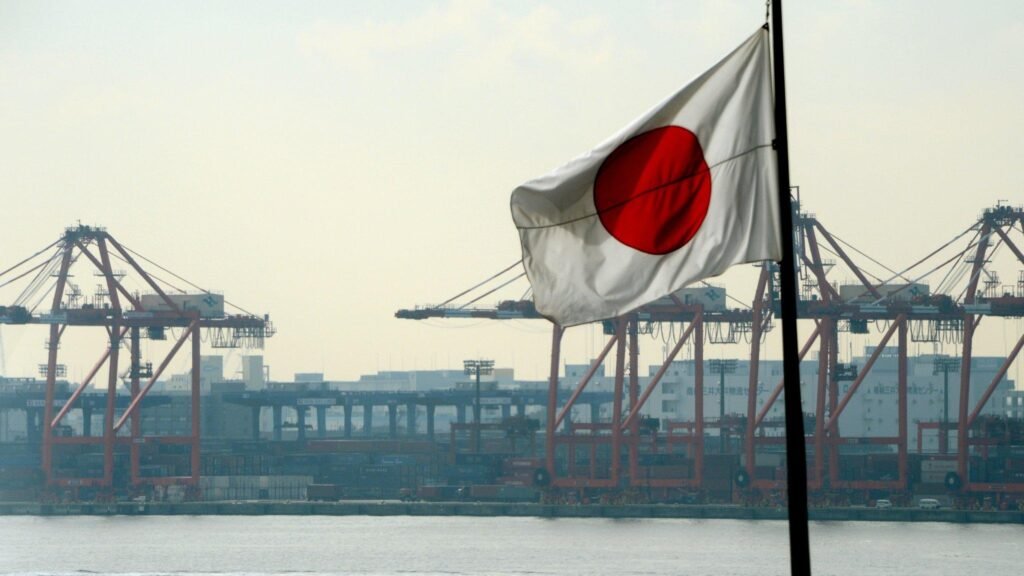
As US influence wanes and Donald Trump demonstrates reluctance to unconditionally shield Taiwan, a faction of the Japanese ruling class envisions replacing the US as the dominant regional enforcer in the Pacific. While anti-militarism defined postwar Japanese society, these sentiments are fracturing amidst global instability. A Kyodo News poll recently showed that 48.8 percent of citizens support exercising collective self-defense for Taiwan, versus 44.2 percent opposed. Simultaneously, the youth have largely rejected the impotent moral pacifism of the left, leading to the collapse of the Communist Party and Reiwa Shinsengumi, who saw their combined seats drop from 17 to just 5. Because amending the constitution requires a two-thirds majority in both chambers and a national referendum, Takaichi’s current lower house supermajority brings this historic, reactionary shift dangerously close to reality.
The Task Ahead
Historically, the LDP has maintained power by adopting watered-down versions of opposition policies, a strategy executed successfully during the economic upswings of the 1960s. Today, amid profound global capitalist decay and thirty years of domestic stagnation, this maneuver is fundamentally unviable. Although the Japanese state may temporarily leverage its vast foreign debt holdings—including US Treasuries—to satisfy creditors, this merely delays an inevitable reckoning.
Even if the LDP manages short-term concessions, the structural crisis persists. Drastic austerity measures will eventually be required to service the ballooning debt and military budgets, inevitably fracturing the ruling class and provoking a fierce backlash from the working masses, especially with a global recession looming. While the right wing currently celebrates, Takaichi’s administration is a colossus with feet of clay. Devoid of genuine solutions, it will inevitably collapse, paving the way for a dramatic shift to the opposite end of the political spectrum. The imperative for class fighters in Japan is clear: to counter Takaichi’s nationalism with working-class internationalism, reject the dead-end of reformism, and forge a revolutionary communist leadership capable of dismantling the capitalist system entirely.