
The Strategic Rupture Between the United States and Europe Under Trump
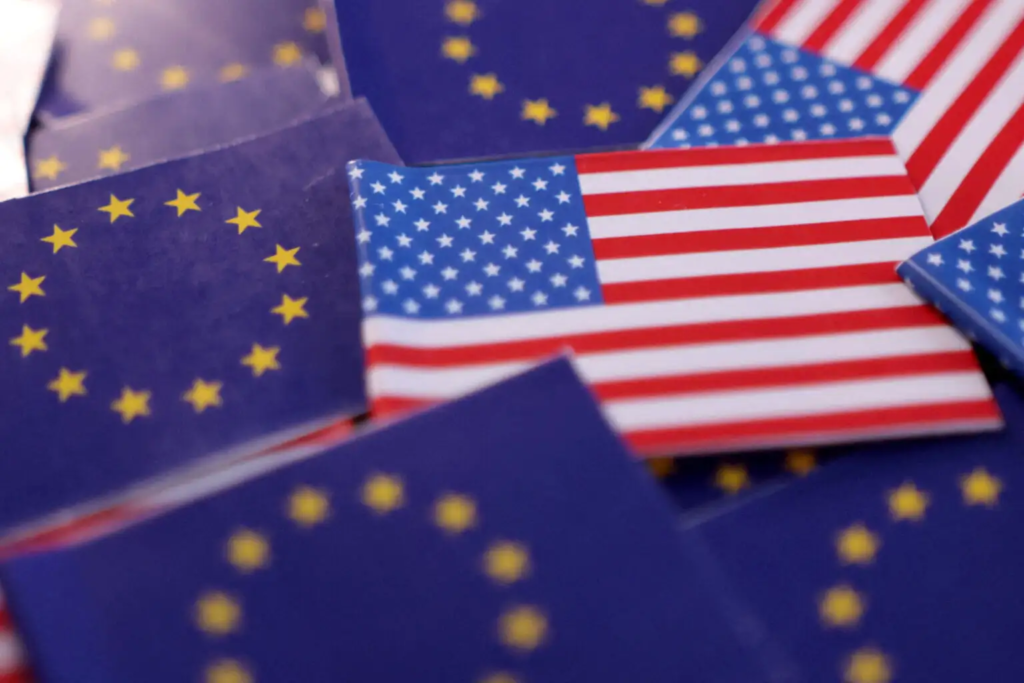
Recent developments in United States foreign policy mark a decisive departure from the transatlantic consensus that has shaped Western politics since the end of the Second World War. The publication of Washington’s new National Security Strategy, reinforced by public statements from senior figures in the Trump administration, has exposed a fracture that European leaders neither anticipated nor are prepared to manage. What is unfolding is not a tactical disagreement but a structural realignment in which Europe finds itself downgraded from strategic partner to geopolitical liability. This rupture did not emerge suddenly. Long before Donald Trump returned to the White House, signs were accumulating that large sections of the American political establishment—and, crucially, a growing share of the US population—had begun to question the cost and utility of America’s global role.

Endless military engagements, mounting domestic economic pressures, and rising scepticism toward foreign entanglements have eroded public support for the post–Cold War order. The new security doctrine gives formal expression to this shift.
A Blunt Reassessment of Europe
The language of the strategy document departs sharply from the conventions of diplomatic courtesy. Western Europe is portrayed as economically stagnant, culturally fragmented, demographically weakened, and increasingly incapable of sustaining its own security. The European Union is described not as a source of stability or innovation but as an institutional structure that undermines sovereignty, suppresses political dissent, and accelerates social decay.
Migration policies, climate initiatives, and supranational governance are framed as contributors to what the document characterises as a looming civilisational crisis. The implication is unmistakable: Europe is no longer regarded as a reliable or even desirable long-term ally. In some scenarios outlined in the document, certain NATO members are implicitly treated as future strategic risks rather than assets.
Such assessments have been received in European capitals not merely as criticism but as a public humiliation. For decades, European governments assumed that their alignment with Washington guaranteed permanent protection and influence. That assumption has now been openly discarded.
Democracy, Hypocrisy, and Political Control
One of the most inflammatory aspects of the new US position concerns its assessment of political life in Europe. The document praises the rise of so-called “patriotic” parties and accuses EU institutions and national governments of suppressing political competition, restricting freedom of expression, and manipulating electoral processes under the banner of defending liberal democracy.
European leaders have reacted with indignation, dismissing such claims as interference in internal affairs. Yet recent developments across the continent lend substance to the accusations. In several states, political forces deemed unacceptable by the liberal establishment have faced legal harassment, exclusion from media platforms, or direct administrative obstruction. Elections have been annulled, candidates disqualified, and parties threatened with bans—not for criminal activity, but for challenging prevailing ideological orthodoxies.
The contradiction is evident. European elites profess an unwavering commitment to democratic values while simultaneously redefining democracy to exclude outcomes they find politically inconvenient. Elections are endorsed only insofar as they reproduce acceptable results. When they do not, extraordinary measures are suddenly justified as necessary safeguards.
Shock and Disorientation in European Capitals
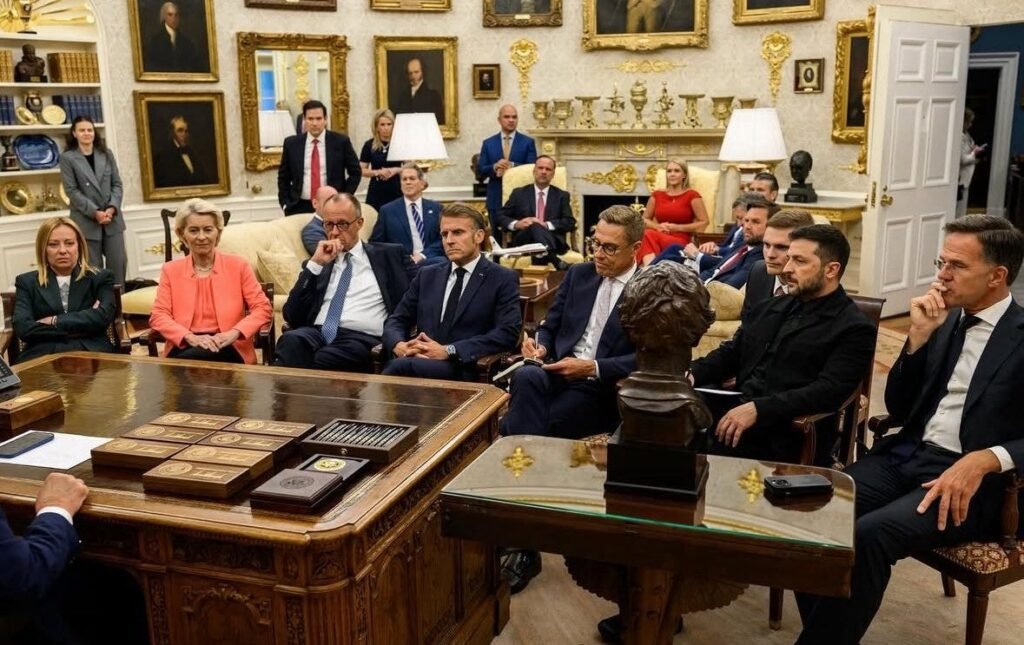
The immediate response among European governments to Washington’s new stance has been confusion bordering on panic. Accustomed to a subordinate but secure role within a US-led order, European leaders now face the prospect of strategic abandonment. Their influence in Washington, long assumed to be substantial, has been revealed as minimal.
Publicly, officials issue defiant statements about European autonomy and unity. Privately, there is growing alarm over military dependence on the United States, particularly in the context of the war in Ukraine. Europe’s defence capabilities, neglected for decades, remain insufficient to sustain a major confrontation without American support. This dependency severely constrains Europe’s ability to respond openly to Washington’s shift.
As a result, European diplomacy has been reduced to frantic activity without strategic clarity: emergency summits, repetitive declarations of solidarity, and rhetorical invocations of a “Collective West” whose material foundations are visibly eroding.
Ukraine and the Collapse of Strategic Illusions
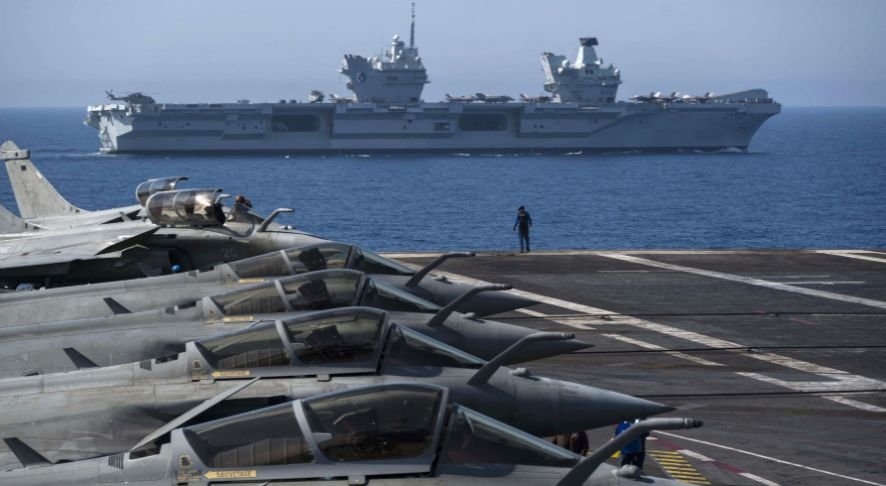
Nowhere are these tensions more pronounced than in relation to Ukraine. The Trump administration has concluded—correctly—that the war has reached a point where continued escalation offers no realistic prospect of victory. From Washington’s perspective, the conflict has become a costly distraction from more pressing strategic priorities, particularly competition with China and consolidation of influence in the Western Hemisphere.
This assessment directly contradicts the position of European governments and the Ukrainian leadership, both of which remain committed to a narrative of eventual military success despite mounting evidence to the contrary. Ukrainian forces face severe manpower shortages, collapsing defensive lines, and relentless pressure along the front. Infrastructure has been devastated, the economy is effectively bankrupt, and public morale is deteriorating.
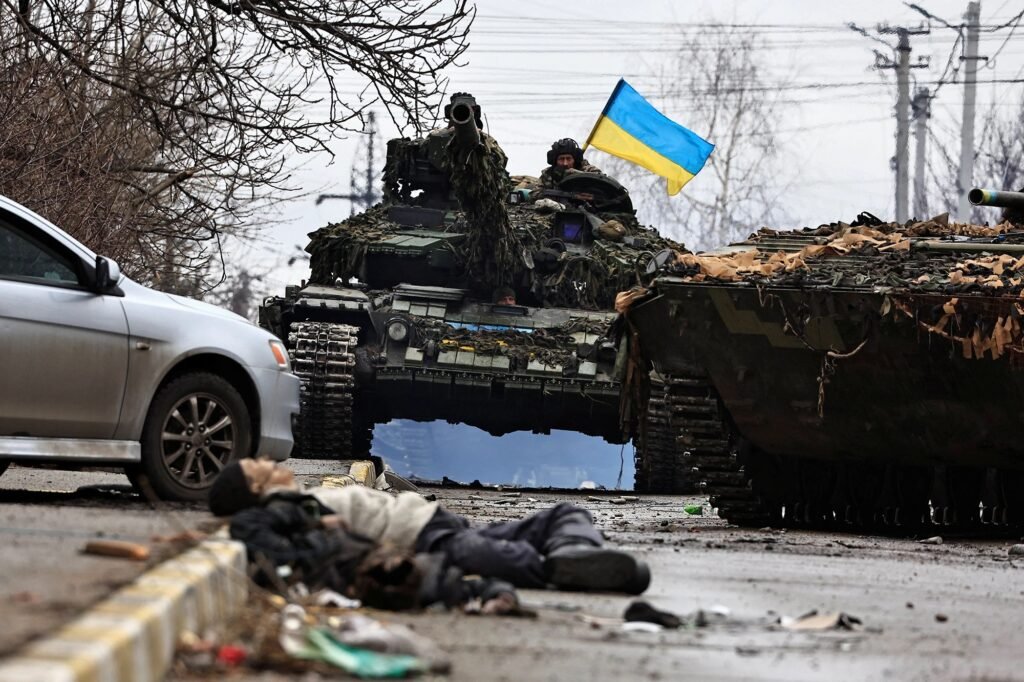
Yet calls for negotiation are rejected in favour of maximalist demands that bear no relation to the realities on the battlefield. This refusal to adjust objectives reflects not strategic calculation but political survival. For the Ukrainian leadership, the continuation of war postpones elections and delays accountability for widespread corruption. For European leaders, acknowledging defeat would amount to admitting the failure of years of policy and rhetoric.
Europe’s Fear of US–Russian Rapprochement
The prospect that Washington might seek a stabilisation of relations with Moscow represents a profound threat to Europe’s political establishment. Such a shift would undermine the central justification for Europe’s current militarisation, sanctions regimes, and internal political discipline. More fundamentally, it would expose the extent to which European strategy has been outsourced to American power.
This explains the intense hostility toward any US initiative aimed at de-escalation. European governments are not merely sceptical of negotiations; they are actively working to obstruct them. The fear is not that talks might fail, but that they might succeed—leaving Europe marginalised and forced to confront Russia without American mediation or protection.

Authoritarian Drift and Legal Breakdown
The debate over frozen Russian assets illustrates the extent of Europe’s institutional degradation. Proposals to confiscate these assets outright—despite widespread legal warnings—signal a willingness to abandon basic principles of property rights and international law. Such measures are justified as exceptional responses to an exceptional crisis, yet they establish precedents with potentially catastrophic consequences for financial stability and legal credibility.
These actions reinforce the very criticisms levelled by Washington: that Europe increasingly governs through emergency powers, legal improvisation, and executive fiat. Far from defending democracy, such practices hollow it out from within.
An Unravelling Order
What emerges from this confrontation is a picture of a declining transatlantic order held together by habit rather than shared interest. The United States is recalibrating its priorities in response to internal pressures and strategic overreach. Europe, by contrast, remains trapped in assumptions forged in a different era, unable to adapt and unwilling to reassess.
The tragedy is that the cost of this impasse is borne not by those who shape policy, but by populations subjected to economic strain, political repression, and, in Ukraine’s case, relentless violence. The refusal to face reality prolongs suffering without altering outcomes.
The current crisis reveals not only a conflict between Washington and Brussels, but a deeper crisis of Western governance itself. The language of values and democracy masks a growing reliance on coercion, denial, and managed consent. In this sense, the confrontation triggered by Trump’s security doctrine is less an anomaly than a moment of clarity—one that exposes the contradictions that have long been accumulating beneath the surface of the Western alliance.