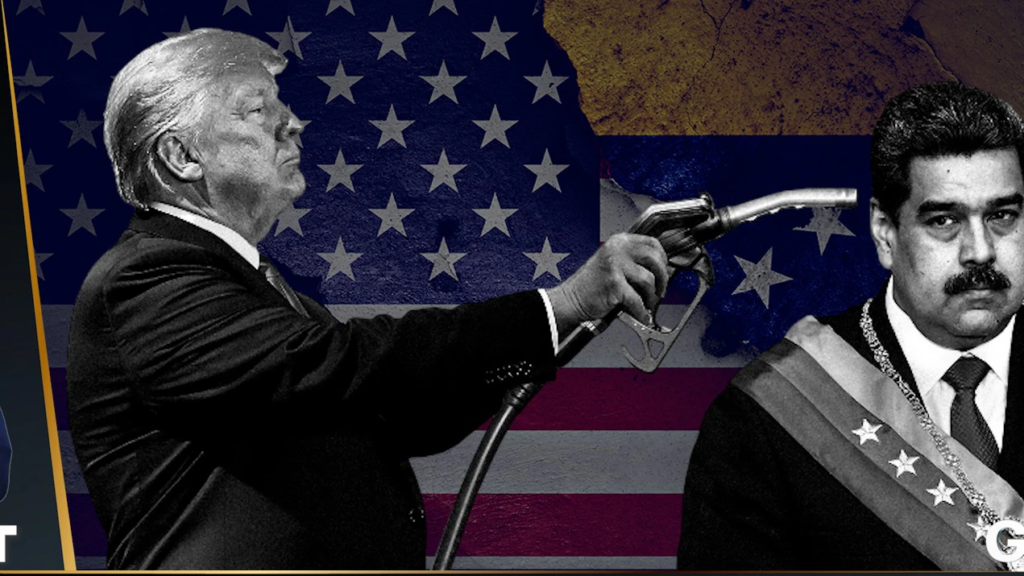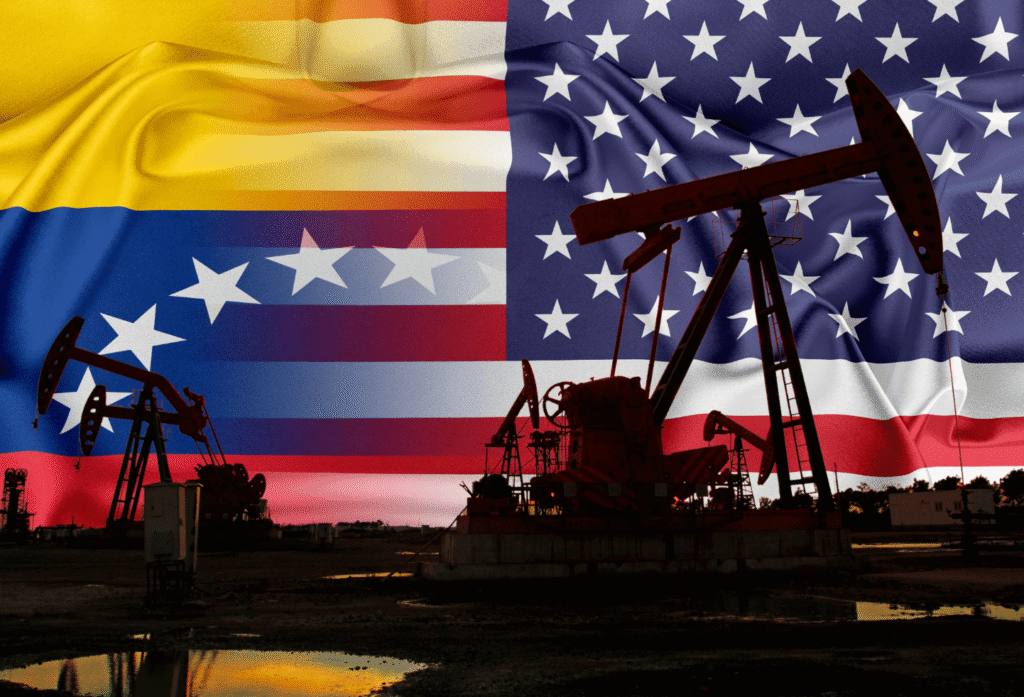
For over half a year, the United States has intensified a military buildup in the Caribbean under the guise of combatting drug trafficking. Yet beneath the rhetoric lies a broader strategy—one rooted in the pursuit of regime change in Venezuela. Despite deploying warships, surveillance aircraft, and special operations units, Washington has failed to unseat President Nicolás Maduro. What, then, is the real aim of this campaign, and why does it continue?
A Manufactured Justification: The Drug War Narrative
The official explanation for the aggressive U.S. posture centers on counter-narcotics operations. However, this claim collapses under scrutiny. A striking contradiction emerged when former Honduran president Juan Orlando Hernández—convicted in the U.S. for serious drug trafficking charges—was recently pardoned by President Trump. This exposes the U.S. government’s willingness to overlook narcotrafficking when it serves its strategic interests.
The supposed war on drugs is a smokescreen. Washington’s military focus on Venezuela has far more to do with geopolitics and economics than with narcotics.
Oil, Elites, and Economic Opportunism
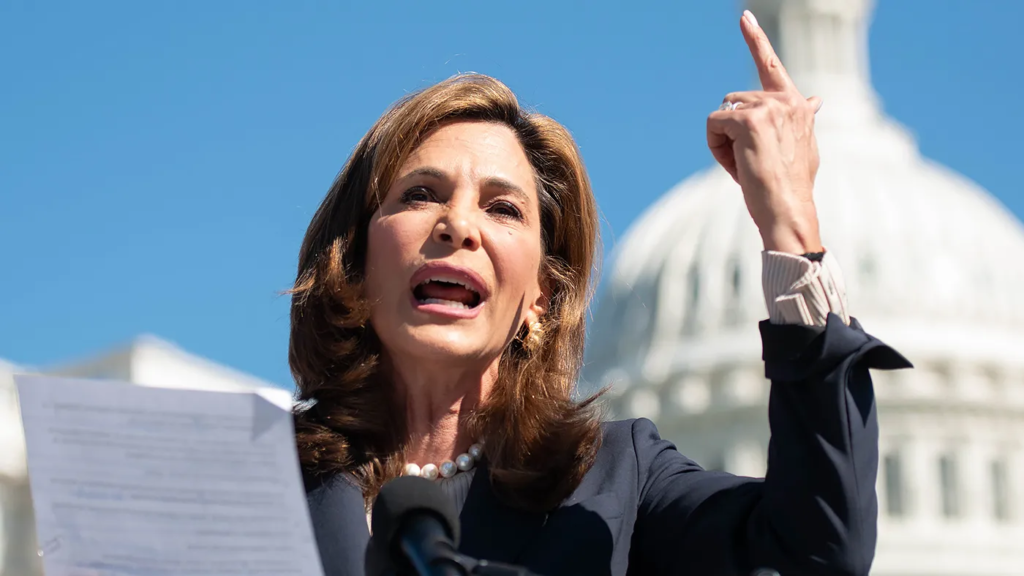
At the heart of the U.S. obsession with Venezuela is oil—massive reserves of it. Venezuela possesses the largest proven petroleum reserves on Earth, particularly heavy crude suited to Gulf Coast refineries. While domestic U.S. audiences remain largely opposed to foreign intervention, influential right-wing figures—including congresswoman María Elvira Salazar—have tried to sway public opinion by emphasizing the commercial potential of Venezuela’s energy wealth.
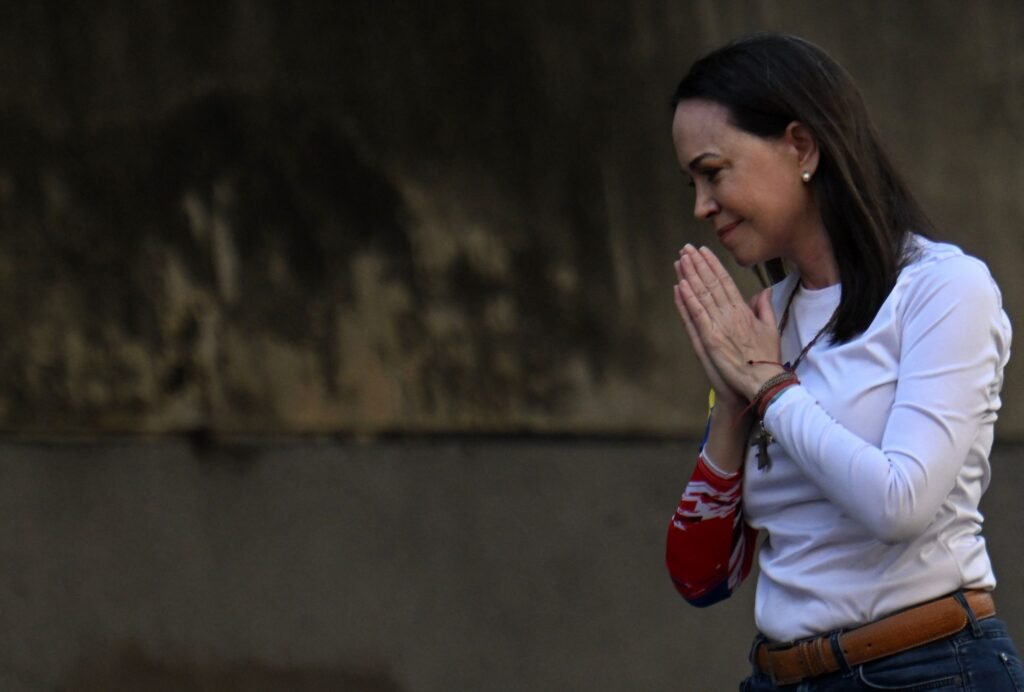
Venezuelan opposition figure María Corina Machado has been vocal in inviting foreign capital to profit from Venezuela’s vast resources.
Speaking to the American Business Forum, she envisioned a sweeping privatization campaign encompassing not only oil and gas but also infrastructure and gold reserves—worth an estimated $1.7 trillion. Her vision paints a future where U.S. multinationals are welcomed to extract, control, and profit.
Crucially, the current Venezuelan government has already expressed a willingness to negotiate access to these resources. Maduro’s administration held preliminary discussions with U.S. representatives earlier this year, indicating that economic concessions are not off the table. But Washington’s primary interest is not merely economic gain—it is ideological and geopolitical dominance.
The Real Strategic Target: Latin America’s Autonomy
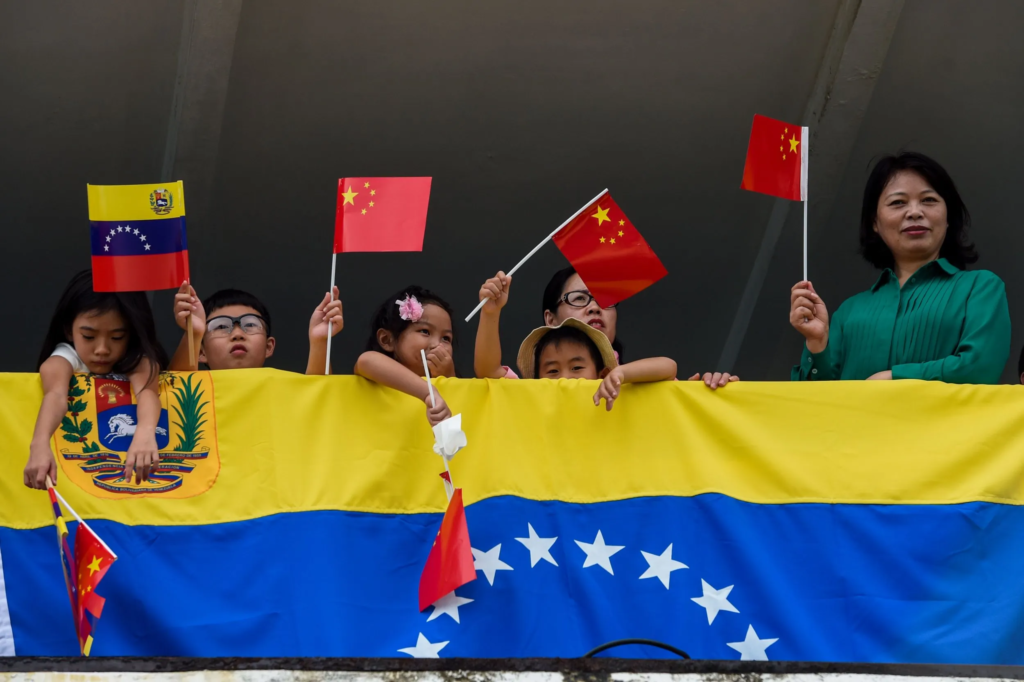
Beyond Venezuela’s oil, U.S. policy reflects a broader strategic aim: reasserting hegemony over Latin America and repelling rival powers—especially China and Russia—from what Washington continues to view as its “backyard.” Venezuela, as a staunch ally of both Moscow and Beijing, has become the symbolic battleground for a renewed Monroe Doctrine in action.
A document from the Trump administration, outlining its national security priorities, openly asserts the need for the U.S. to dominate the Western Hemisphere. It calls for denying “non-Hemispheric competitors” any influence over the region’s strategic assets. This language marks a return to 20th-century gunboat diplomacy, now dressed in the rhetoric of national security and migration control.
Secretary of Defense Pete Hegseth reiterated these goals at the Reagan Center, emphasizing that American dominance in the hemisphere is non-negotiable. The administration’s national security strategy further suggests reallocating military forces to “replace the failed law enforcement-only strategy” and deploying lethal force if necessary.
This is not a temporary posturing by the Trump administration. It represents a structural shift toward a more aggressive and interventionist U.S. foreign policy in Latin America.
Colombia and the Illusion of Compromise
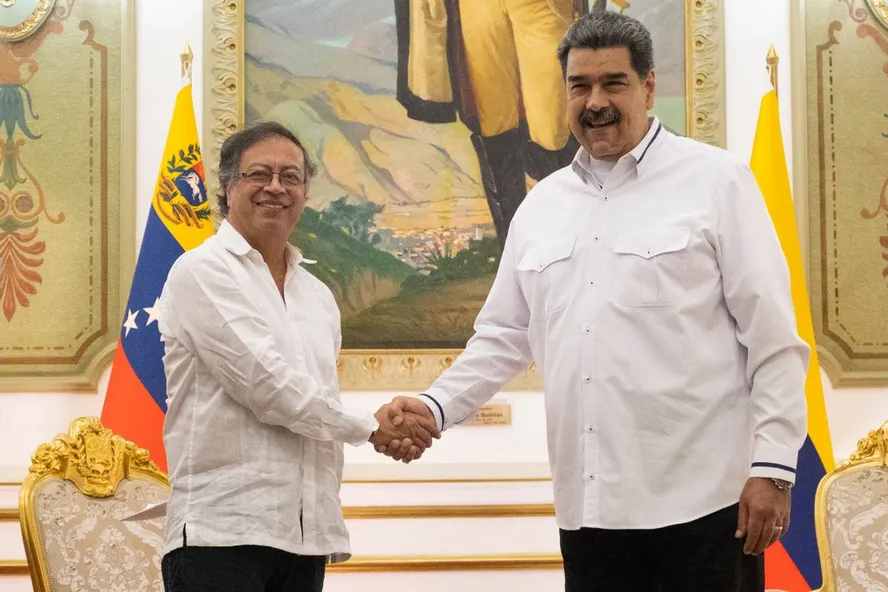
Colombian President Gustavo Petro, though critical of U.S. military adventurism, recently proposed a “transitional government” in Venezuela—an apparent effort to prevent an outright invasion. While well-intentioned, such concessions risk validating Washington’s coercive approach. Any compromise that appears to meet U.S. demands will be seen as a victory for imperialism, not diplomacy.
History shows that concessions do not satisfy U.S. strategic objectives—they embolden further demands. If Maduro falls under pressure, other progressive governments in the region, including Colombia’s own, will be next in line for destabilization.
Trump’s Calculations and Maduro’s Defiance
Donald Trump’s approach combines coercion with psychological warfare. Reports have circulated suggesting the U.S. offered Maduro safe exile in countries like Qatar or Russia. Others claim negotiations were held for a transition period led by Vice President Delcy Rodríguez. These accounts remain unverified but demonstrate the complexity of Washington’s tactics: alternating between threats of force and backchannel diplomacy.
The New York Times, in a thinly veiled endorsement, described Rodríguez as a “moderate” and a “market reformer”—a signal to the U.S. business elite that she could be a more compliant partner. But even this pivot has failed to produce the outcome the White House desires.
The New York Times, in a thinly veiled endorsement, described Rodríguez as a “moderate” and a “market reformer”—a signal to the U.S. business elite that she could be a more compliant partner. But even this pivot has failed to produce the outcome the White House desires.
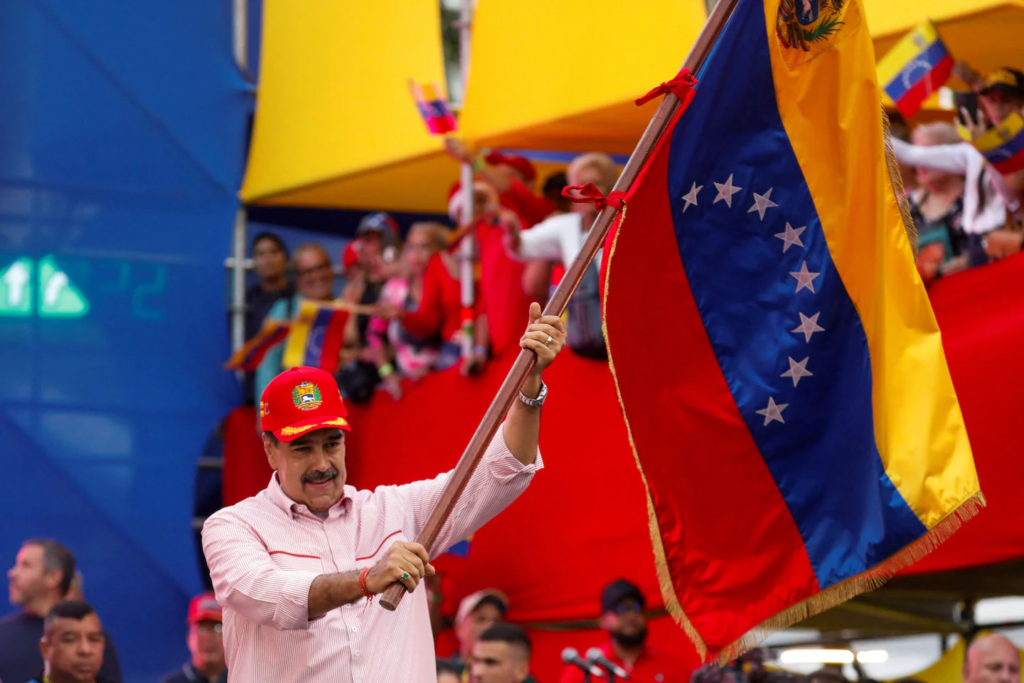
Despite the pressure, Maduro has not yielded. Instead, Venezuela has faced down economic sanctions, cyber attacks, and attempted insurrections. Now, with nearly a fifth of the U.S. Navy patrolling the Caribbean and aerial blockades in place, the risk of direct military confrontation looms.Trump faces a dilemma. To preserve credibility, he may escalate with targeted strikes or covert operations. Yet such actions would carry unpredictable consequences. Conversely, backing down would expose the limitations of U.S. power and embolden regional resistance.
Sovereignty or Subjugation
What is at stake in Venezuela is not merely the future of one government, but the broader question of Latin American autonomy in the 21st century. U.S. actions are designed to signal that no deviation from Washington’s script will be tolerated—not in Caracas, not in Havana, not in Bogotá.
The challenge now is not only to resist the current wave of aggression, but to build enduring alternatives. That means empowering democratic institutions rooted in popular participation, breaking with neoliberal dependence on foreign capital, and forging South-South cooperation based on mutual respect.
In this context, Venezuela’s resilience carries global significance. It serves as a warning against the unchecked reach of empire and a testament to the enduring struggle for dignity, sovereignty, and justice across the Global South.