

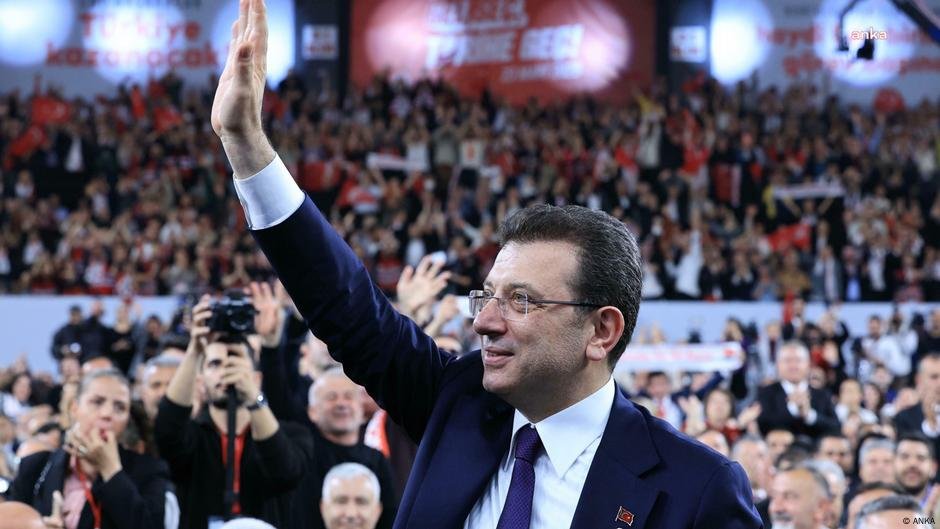
On the morning of 19 March, Turkey awoke to a series of coordinated arrests targeting over a hundred individuals from across the political spectrum. Among those detained was Ekrem İmamoğlu, the prominent Mayor of Istanbul and the most credible challenger to President Recep Tayyip Erdoğan. The mass detentions, encompassing politicians, journalists, academics, and public figures, represent a significant intensification of state repression—one that signals a further slide toward autocracy.
İmamoğlu’s arrest, coming just days before the Republican People’s Party (CHP) primaries, where he was poised to announce his presidential bid, is widely interpreted as a strategic maneuver designed to eliminate Erdoğan’s most formidable rival. The charges—allegedly aiding the Kurdish PKK and forming a criminal organization—are viewed by many as politically motivated. In tandem, Istanbul University annulled İmamoğlu’s degree, a constitutional requirement for presidential eligibility, effectively barring his candidacy.
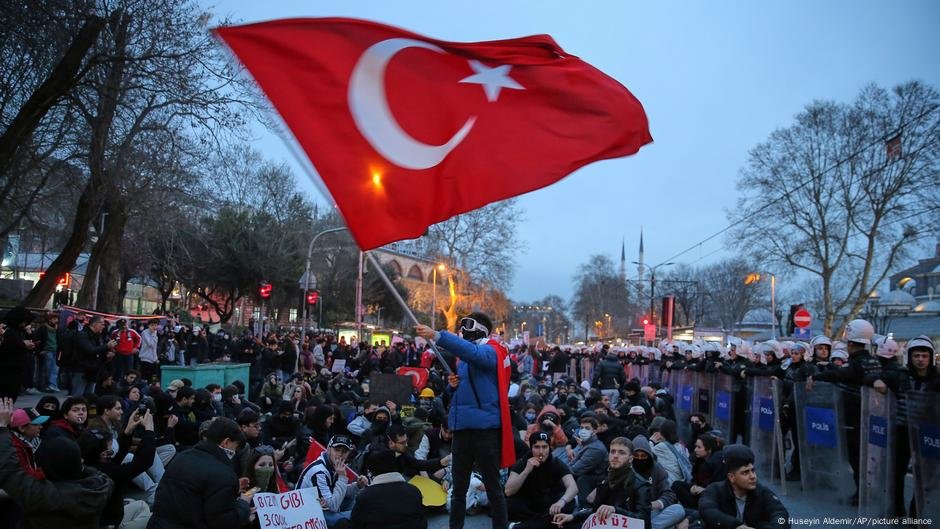
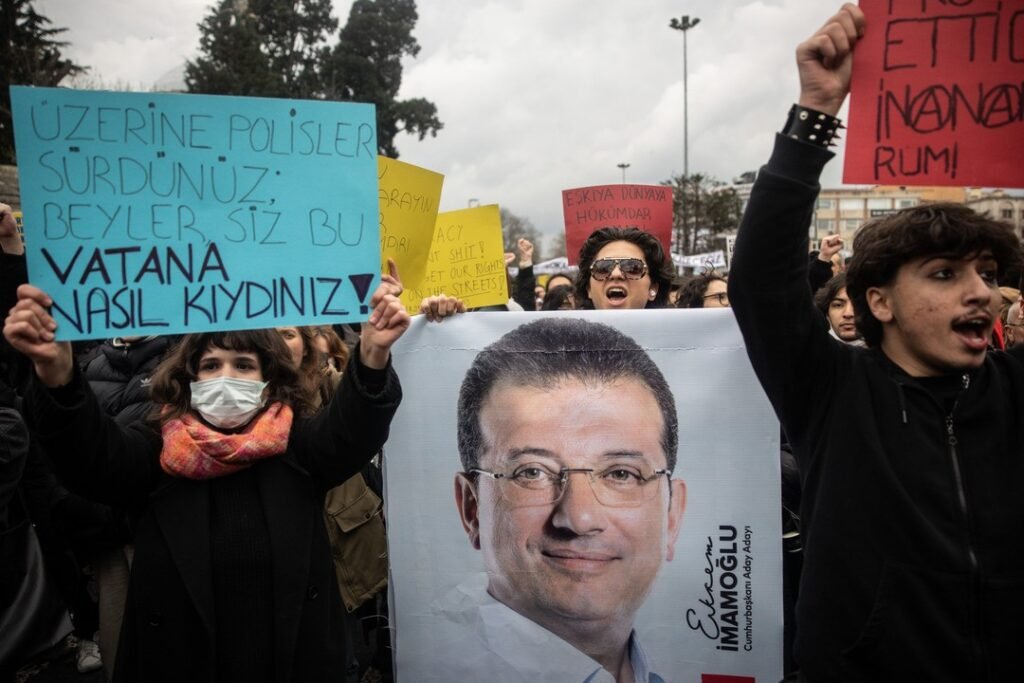
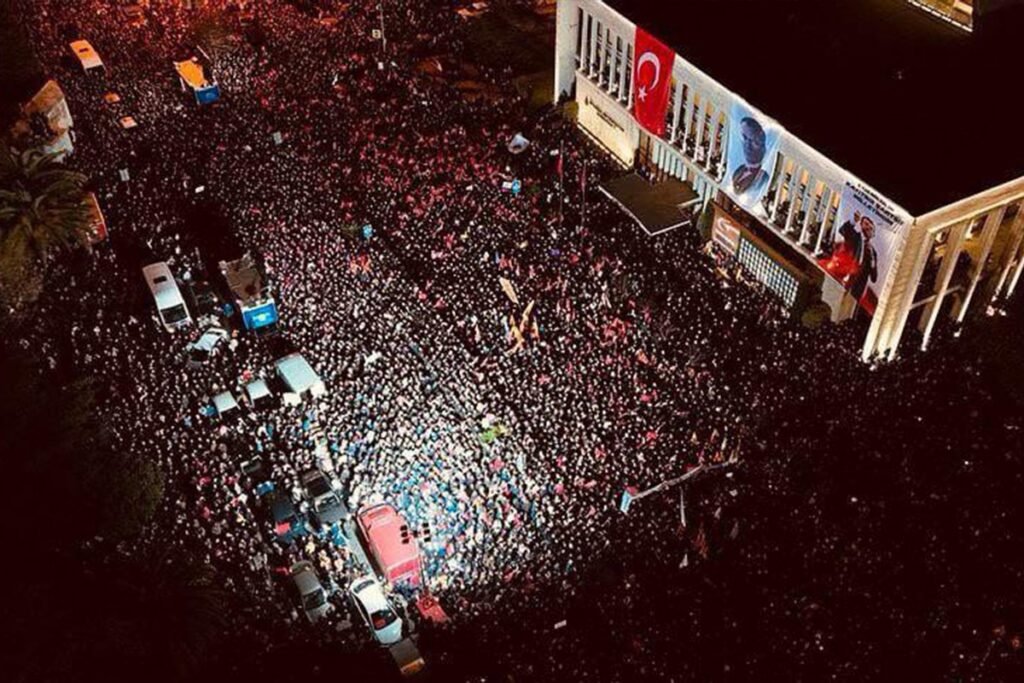
The state responded to the growing unrest with a show of force: public protests were banned for four days in Istanbul, transportation hubs were closed, and access to social media was restricted. Yet, resistance has only intensified. Across Turkey, hundreds of thousands have taken to the streets, decrying what many see as a coup against democracy.
Erdoğan’s Descent into Bonapartism
For over two decades, Erdoğan has navigated Turkish politics with remarkable agility, first rising to power during a period of economic expansion. But the landscape began to shift following the 2008 global financial crisis. The 2013 Gezi Park protests and the subsequent rise of the HDP between 2014–2016 posed serious threats to his rule.
The failed 2016 military coup, however, presented Erdoğan with a decisive opportunity. He responded with a comprehensive purge of the military, judiciary, and civil service, effectively dismantling the old Kemalist establishment. What followed was a transformation of the Turkish state into a centralized executive regime—one where dissent is criminalized, and institutions are subordinated to the presidency.
More recently, Erdoğan’s economic policies—particularly his insistence on low interest rates—triggered a devastating inflationary spiral. His 2024 pivot to austerity, though praised by international financial markets, further eroded living standards for ordinary Turks. The discontent found expression in a surge of labor strikes and in the 2024 local elections, which saw the AKP lose control of Istanbul, Ankara, Izmir, and historically conservative strongholds in Anatolia.
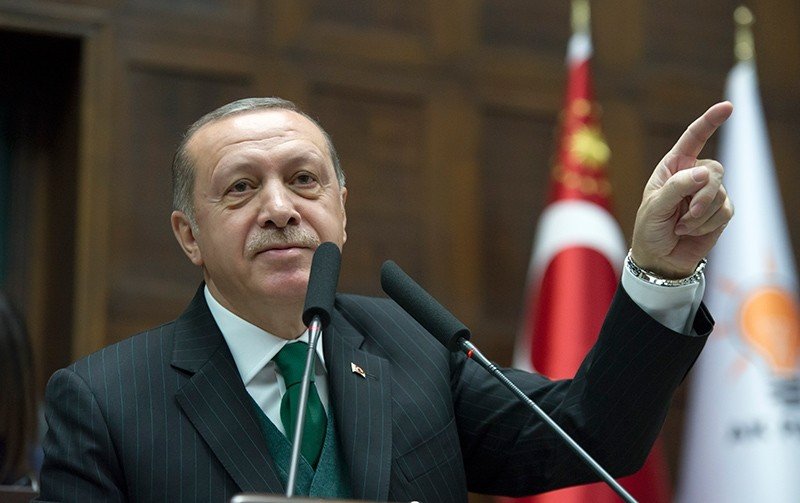
Erdoğan’s repressive actions, including İmamoğlu’s arrest, must be understood within this broader context: they represent a regime in decline, fighting desperately to maintain its grip on power.
Divide and Rule: Co-opting the Kurdish Question
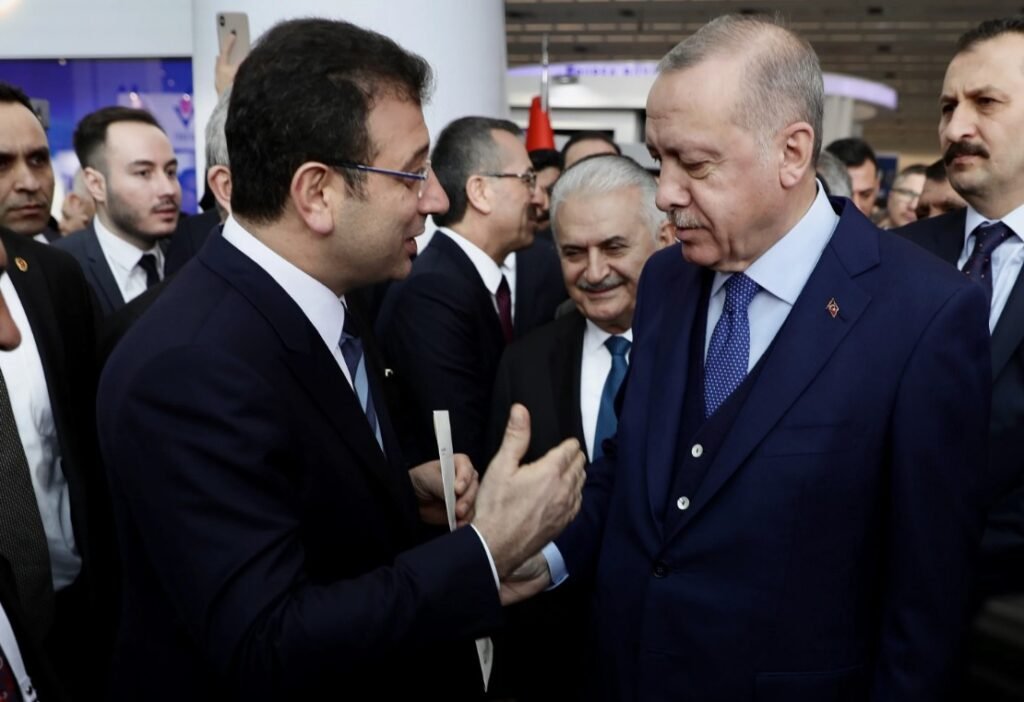
In a calculated move, Erdoğan initiated a new dialogue with Abdullah Öcalan, the imprisoned leader of the PKK. In February, Öcalan reportedly called for the dissolution of the armed struggle—a significant gesture that suggests a potential deal. By extending an olive branch to the Kurdish movement, Erdoğan seeks to fracture the CHP–Kurdish alliance, which has been pivotal in opposition victories.
This maneuver is not without precedent. Erdoğan previously allied with the CHP to suppress Kurdish movements, only to later reverse course when political calculus demanded it. Today, he hopes that by feigning reconciliation with Kurdish leaders, he can weaken opposition unity and isolate the CHP.
Yet, this gambit has not gone uncontested. Rather than divide the opposition, Erdoğan’s actions have strengthened the bonds between the CHP and the pro-Kurdish Peoples’ Equality and Democracy Party (DEM). The crackdown has inadvertently catalyzed a new wave of solidarity between secularists and Kurdish nationalists.
The Weakness of the Opposition
Despite widespread protests and electoral momentum, the CHP’s capacity to mount meaningful resistance remains limited. İmamoğlu himself is a businessman with ties to the real estate sector, and his economic platform aligns closely with Erdoğan’s. The CHP remains a bourgeois party, more invested in defending Turkey’s secular republican traditions than advancing a transformative agenda.
Leftist forces—including the DEM and various trade unions—have largely trailed behind the CHP, issuing abstract appeals for “democracy” without articulating concrete demands or proposing a path toward mass mobilization. The DİSK union federation, despite correctly linking repression to capitalist exploitation, has stopped short of calling for a general strike.
The result is a disjointed opposition that has so far failed to match Erdoğan’s ruthlessness with organized resistance. Symbolic gestures, such as record turnout in the CHP primaries, reflect popular anger but fall short of the decisive action needed to challenge the regime.
A New Wave of Protest
In stark contrast to the political elite’s inertia, Turkey’s youth and working class have begun to reassert themselves. Student protests have erupted across major cities, with demonstrators condemning both Erdoğan’s repression and the complicity of university administrators. The scale and determination of these protests suggest a generational shift—one unburdened by the defeats of the Gezi movement or the trauma of the 2016 coup.
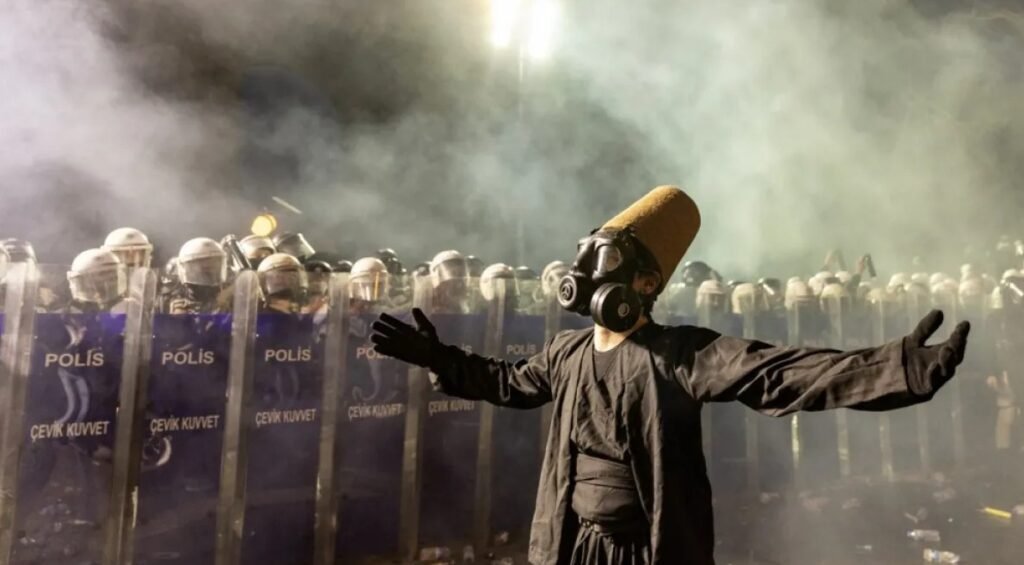
These demonstrations have defied bans, curfews, and police brutality, drawing in hundreds of thousands. In many cities, CHP leaders were booed for attempting to redirect the movement toward electoral procedures. Protesters rightly asserted, “The solution is in the streets, not the ballot box.”
Yet, for this movement to succeed, it must move beyond spontaneous outrage. It must organize—through neighborhood committees, workplace councils, and student assemblies—and escalate toward a national general strike. The experiences of mass uprisings in Serbia and Greece offer valuable lessons in the power of grassroots mobilization to challenge entrenched regimes.
A Revolutionary Alternative
Turkey’s current crisis is not merely political—it is systemic. It reflects the exhaustion of a neoliberal model that has concentrated wealth, hollowed out democratic institutions, and exacerbated social inequality.
The way forward requires more than a change of leadership; it demands a fundamental restructuring of Turkish society along socialist lines.
This means breaking with both the Kemalist establishment and the Islamist-authoritarian bloc, and forging a new path centered on workers’ power, democratic control of the economy, and full rights for all ethnic and religious communities. The arrests of opposition figures, while alarming, have awakened a powerful force—the Turkish people themselves. The challenge now is to harness this energy, to move from protest to program, from outrage to organization.
No to Dictators & Repression!
Free All Political Prisoners!
Organize Mass Mobilizations and a General Strike!
For Workers’ Unity on a Socialist Program!