
A Renewed Momentum: Youth and the Rise of Die Linke
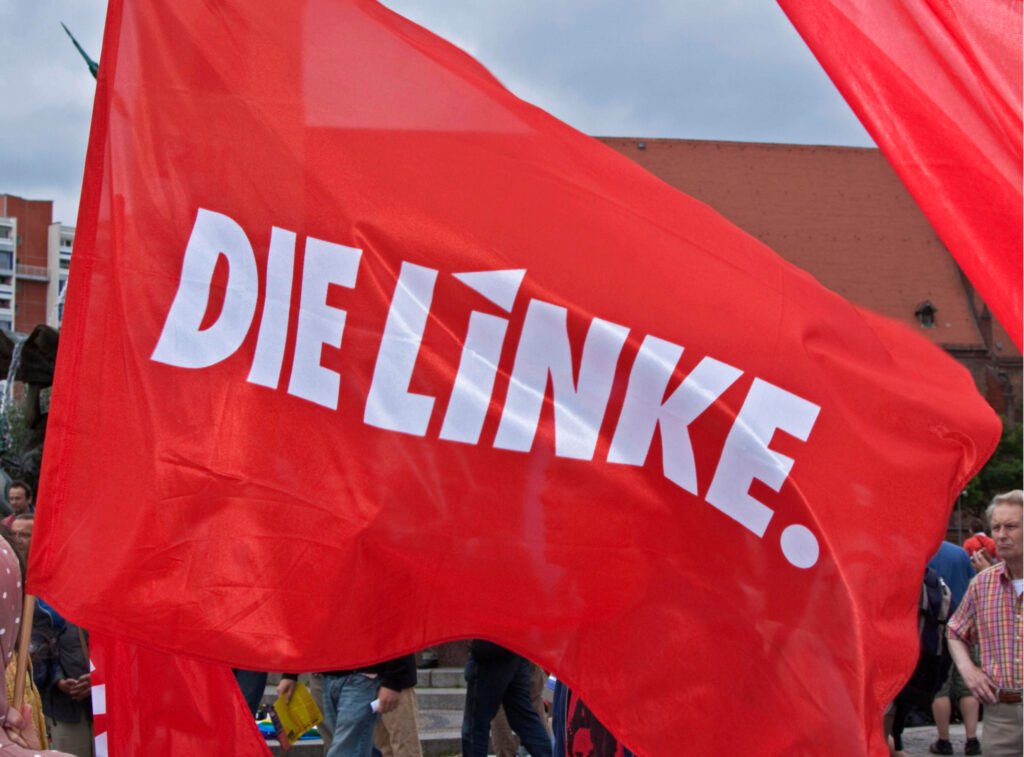
The recent electoral performance of Die Linke in Germany reflects a profound undercurrent: a growing determination among young people to resist the manifold crises inflicted by capitalism. Garnering 8.8 percent of the vote in the Bundestag elections, Die Linke staged a remarkable comeback after years of stagnation. Current polling suggests the party has climbed to 11 percent, establishing itself as the leading political force among the youth, even winning the elections in Berlin.
The voting patterns among first-time voters highlight a striking polarisation: 27 percent supported Die Linke, 6 percent turned to the populist BSW, and 20 percent backed the far-right AfD. In contrast, the traditional establishment parties—the conservative CDU, the SPD, the Greens, and the FDP—combined managed to secure just 43 percent of the youth vote.
Young Germans are increasingly recognising capitalism for what it is: a system mired in permanent crises and terminal decline. In 2021, 62 percent of young people held an optimistic view of Germany’s future; today, that figure has dropped to 46 percent. When asked about the future of the world, optimism plunges to a mere 38 percent.
The corrosive effects of crisis-ridden capitalism weigh heavily on young shoulders. Surveys reveal that 51 percent of young people struggle with stress, 36 percent endure chronic exhaustion, and 33 percent suffer from anxiety. Their deepest anxieties centre around inflation (65 percent), wars in Europe and the Middle East (60 percent), unaffordable housing (54 percent), the growing polarisation of society (49 percent), the climate catastrophe, and the frightening advance of the far right.
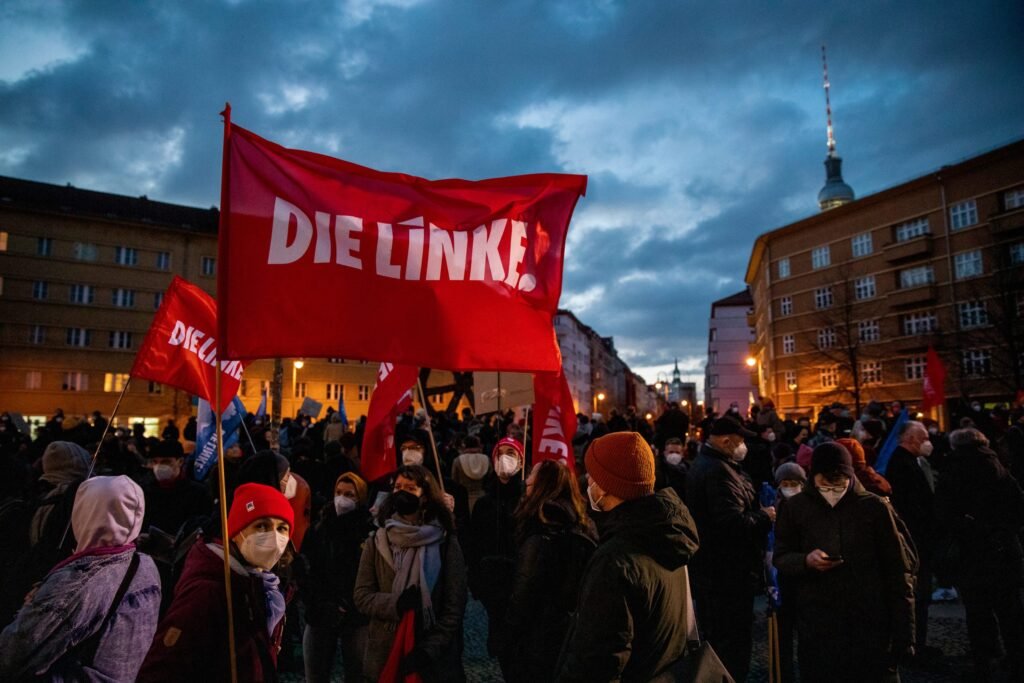
Yet, these mounting fears coexist with an inspiring political awakening. Generations born since the early 2000s are among the most politically aware and active in decades. Approximately half of young people identify as politically engaged, having lived through an era defined by seismic global movements: the Arab revolutions, the mass protests across Latin America, Africa, and Asia, the Fridays for Future climate strikes, Black Lives Matter, feminist uprisings in Spain, Ireland, Poland, and Iran, and, most recently, the courageous protests against the genocide in Gaza.
A growing thirst for radical change is unmistakable. Young people yearn for a society rooted in dignity, secure livelihoods, and meaningful work. These aspirations inevitably propel them towards class struggle. Die Linke’s electoral breakthrough is a testament to this militant sentiment burgeoning among the youth.
The Impact of Die Linke’s Campaign
On the eve of the elections, Die Linke successfully rekindled its reputation as a genuine force for social justice. In particular, it championed the fight against racism and reactionary migration policies. The Bundestag’s vote in favour of a racist asylum law, backed by both the CDU and the AfD, sent shockwaves through young voters.
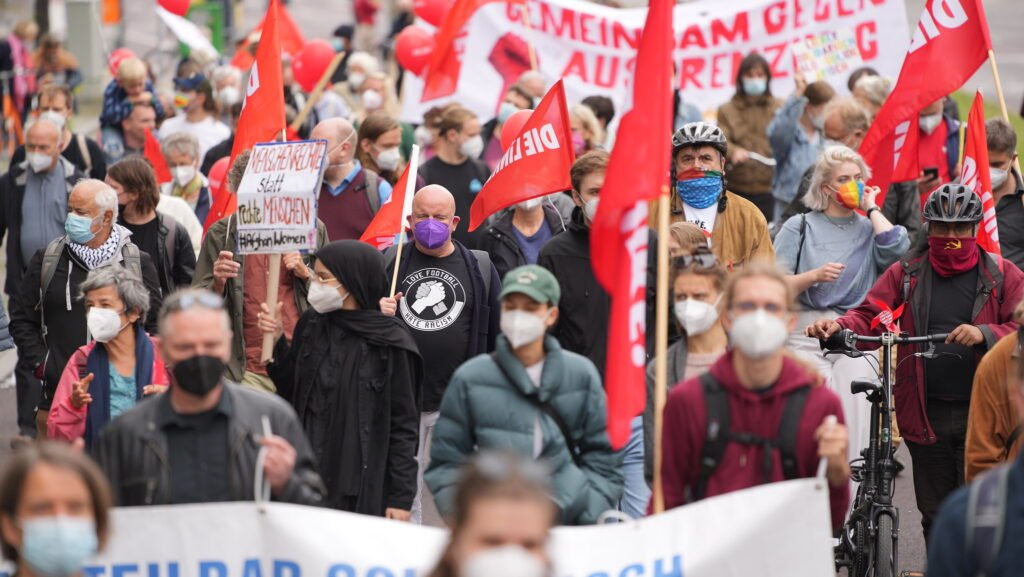
Die Linke’s counter-position was unequivocal: the party pledged to “take to the barricades” against racism, austerity, militarisation, and imperialist war. This bold stance electrified young activists and drew them into the party’s orbit.
By harnessing the militant energy from the demonstrations against Friedrich Merz and the far right, Die Linke amplified its appeal among youth. Its clear opposition to the establishment’s open racism and harsh austerity policies resonated deeply, helping it to tap into widespread discontent and anxiety about the future.
The Historical Foundations of Die Linke
However, Die Linke’s current resurgence comes despite years of internal crisis. Not long ago, in the aftermath of the Bundestag’s asylum bill vote, the party was languishing at a dismal 3 percent in the polls—a reflection of stagnation that had plagued it since 2021.
That year, the party narrowly avoided parliamentary obliteration, falling short of the five percent threshold but salvaging seats by winning three direct constituencies. The internal crisis deepened in 2023, when the party splintered. Sahra Wagenknecht and her faction, forming the BSW, pandered to anti-immigration sentiment and adapted to the AfD’s rhetoric, while the party’s majority drifted toward accommodation with the liberals and social democrats.
Die Linke’s origins are deeply rooted in two major waves of social upheaval. The first arose in the 1990s, following the collapse of the Soviet Union and the destruction of the GDR’s planned economy by West German capitalism. East Germany was subjected to brutal deindustrialisation, mass unemployment, and emigration. The devastating social consequences created a fertile base for the Party of Democratic Socialism (PDS)—successor to East Germany’s ruling party—which gained significant traction in the East from the mid-1990s.
The second wave came in the early 2000s, as working people recoiled from the aggressive neoliberalism of the SPD-Green coalition under Gerhard Schröder. The infamous Agenda 2010 ushered in harsh social cuts, attacks on labour rights, and punitive reforms to unemployment benefits (known as Hartz IV). Anger at these betrayals spurred protests, led trade unionists to break from the SPD, and ultimately catalysed the formation of the WASG (Labour and Social Justice Electoral Alternative) in 2004.
By 2007, the WASG and the PDS united to form Die Linke, offering the first credible alternative to the SPD from the left, and rallying workers and young people from both East and West Germany behind a new banner. The formation of Die Linke was a necessary step forward, expressing the desire for an organised, militant response to capitalist attacks.
The Contradictions Within
Yet, from its inception, Die Linke suffered from deep contradictions. Leaders like Gregor Gysi and Dietmar Bartsch espoused reformist illusions, placing excessive faith in parliamentary politics and coalition-building with the SPD and Greens.
Rather than mobilising mass movements outside the parliamentary arena, Die Linke increasingly adapted to the status quo. Wherever it held regional power, the party capitulated to demands for austerity and privatisation. When outside government, it refrained from providing decisive leadership to grassroots movements.
This passive approach led to stagnation. After initial gains, the party’s momentum faded in the second half of the 2010s. Despite repeated calls for renewal, Die Linke clung to parliamentary routines and liberal compromises. Even its official goal of “democratic socialism” was quietly abandoned.
As the crises of capitalism deepened—the COVID-19 pandemic, war in Ukraine, the energy crisis, inflation, and economic stagnation—Die Linke retreated further into political paralysis. The leadership failed to offer bold alternatives, causing disillusionment and mass departures from the party.
As early as 2023, communists warned:
“It is clearer than ever that the straitjacket of reformism must be cast aside. Every symptom of capitalism’s decay demands mass resistance. New waves of struggle are emerging—on the streets, in workplaces, and in schools. What is needed is a new, organised force: a workers’ party committed to the fight for socialist revolution.”
Die Linke Today: Between Promise and Paralysis
Ahead of the recent federal election, Die Linke showed signs of revival. The party distinguished itself within the growing mass protests against the AfD and CDU’s xenophobic policies. While establishment parties whipped up racist hysteria over migration, Die Linke stood apart, leading door-to-door campaigns, particularly in Berlin and Leipzig, and tackling real concerns such as housing shortages, low wages, and cuts to public services.This activism breathed life into the party’s election prospects. On election night, Jan van Aken, Die Linke’s leader, declared that the party would “fight every assault on the welfare state, both in parliament and on the streets.” He hailed the eagerness of new members to continue mobilising beyond electoral politics. However, post-election, the leadership’s old habits resurfaced. While Die Linke’s parliamentary group opposed the €500 billion special fund for militarisation and debt-financed rearmament, party leaders in Bremen and Mecklenburg-Western Pomerania endorsed these war credits in the Bundesrat.
Instead of orchestrating resistance in workplaces and communities, Die Linke’s leaders have facilitated the traditional parties’ consolidation of power. Gregor Gysi, elder statesman of the party, signalled reconciliation with the class enemy in his Bundestag address, portraying military spending as essential for deterrence and dialogue.
This marked a dismal return to reformist compromise. Die Linke had previously pledged to confront austerity, militarism, and climate inaction head-on. Yet, after the election, it sought accommodation with bourgeois forces rather than leading mass resistance.
Which Way Forward?
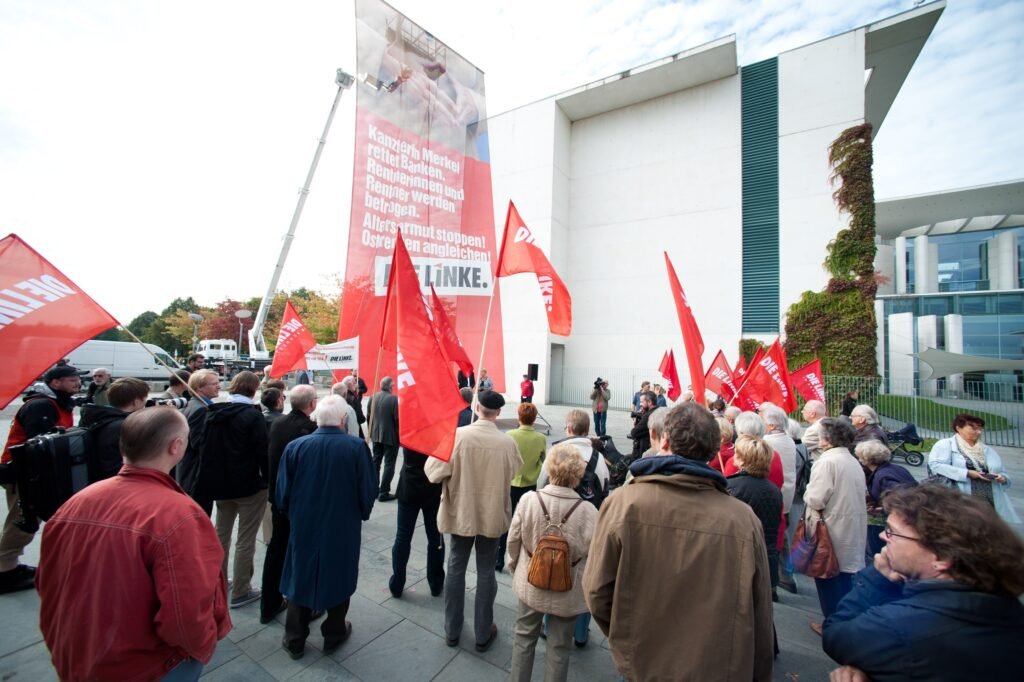
Die Linke’s recent electoral success underscores the deep desire among young people to fight. The task now is to transform that energy into sustained mobilisation. Die Linke must call upon its base of over 4 million voters and its new members to build a genuine mass movement against austerity, militarism, and the ruling establishment.
Communists argue that Die Linke must go beyond parliamentary slogans. The youth, energised by global class struggles, are ready to act. Their courage can inspire the broader labour movement to break from its passivity. A mass street movement led by the youth could spearhead this transformation. But to succeed, it requires not only bold tactics but also a clear programme of socialist demands. Reformism and “social partnership” have failed to defend workers’ interests; now, the working class and youth need a revolutionary organisation that will fight to win.
The Revolutionary Communist Party (RKP) in Germany advocates precisely this path. We reject nationalism and the defence of this exploitative system. We insist that workers and youth rely on their own strength to take control of society’s destiny.
We declare: peace to the huts, war on the palaces!
Class struggle, not class compromise!
The future of the youth and the working class lies in revolutionary struggle for socialism!