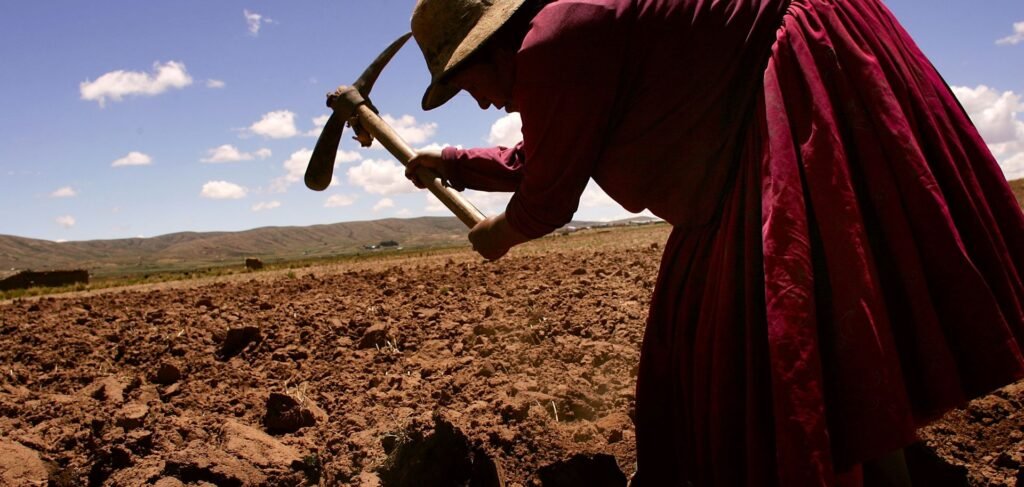

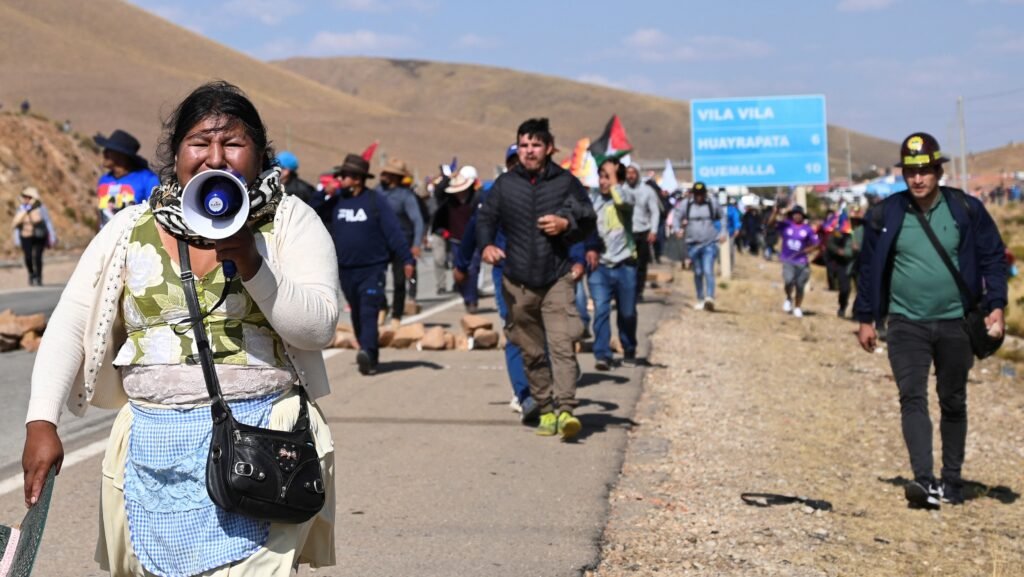
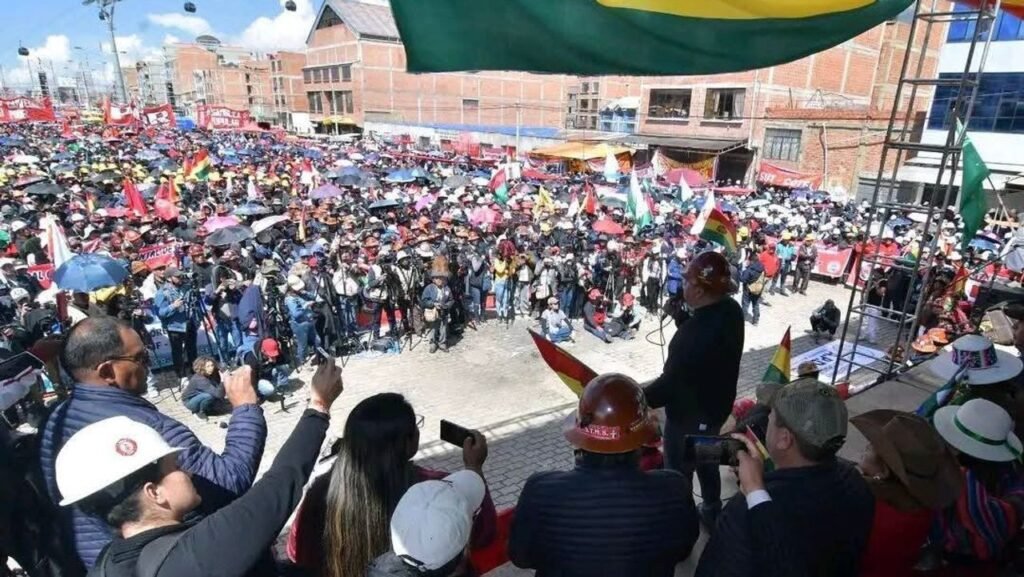
In a profound demonstration of civic resistance, indigenous and peasant representatives from Bolivia’s northern Amazonian departments of Beni and Pando recently completed a grueling twenty-day march to the capital city of La Paz. Enduring freezing high-altitude conditions and severe physical exhaustion—with at least fifty participants requiring medical attention—the marchers sought to defend their ancestral territories against encroaching privatization. Upon their arrival, they were greeted by a massive solidarity rally organized by prominent labor organizations, including the highland peasant union (CSUTCB) and the national miners’ federation (FSTMB). This mobilization underscores a growing national backlash against the administration of President Rodrigo Paz and its newly enacted agrarian legislation, Law 1720.
The Mechanics and Criticisms of Law 1720
At the center of the current unrest is Law 1720, a legislative measure that threatens to fundamentally alter Bolivia’s plurinational model of land distribution. The government argues that the law is designed to assist small-scale farmers by allowing them to formally convert their smallholdings into “medium-size” commercial properties, thereby granting them access to commercial mortgages and credit.

However, legal experts and agrarian researchers view the legislation as a mechanism that will ultimately facilitate corporate encroachment. Roger Adan Chambi, an Aymara lawyer specializing in indigenous land rights, argues that rather than empowering small producers, the law weakens their property rights by exposing them to the volatility of commercial debt. Because many rural farmers lack the financial capacity to service mortgages, the law risks creating a cycle of indebtedness that will eventually force them to sell or forfeit their land. Consequently, this would enable large-scale transnational agribusinesses to rapidly consolidate land ownership across the biodiverse Amazonian frontier.
Furthermore, the legislation was passed without the constitutionally mandated consultation with the affected grassroots organizations and indigenous communities, a direct violation of Article 30 of the Bolivian Constitution. Critics note that the law heavily favors established oligarchs, such as Branko Marinković—a senator who previously acquired 33,000 hectares of land under the interim government of Jeanine Áñez in 2020 and is now a leading proponent of the new legislation.
Economic Collapse and Agrarian Extractivism
The government’s push for Law 1720 must be understood within the context of Bolivia’s severe macroeconomic crisis. Over the past decade, the national economy has steadily deteriorated due to the evaporation of state revenues from hydrocarbon exports and the underperformance of the country’s lithium extraction initiatives. In the absence of these traditional revenue streams, the Paz administration appears to be pivoting toward agrarian extractivism and the expansion of large-scale, pesticide-intensive monoculture farming as an economic lifeline.
This economic desperation is further compounded by a severe, protracted domestic diesel shortage. A depletion of the central bank’s foreign reserves has made fuel imports prohibitively expensive, resulting in the distribution of poor-quality diesel that damages vehicles. In response, transport workers’ unions have initiated a series of crippling national strikes and blockades.
The Re-articulation of Social Movements
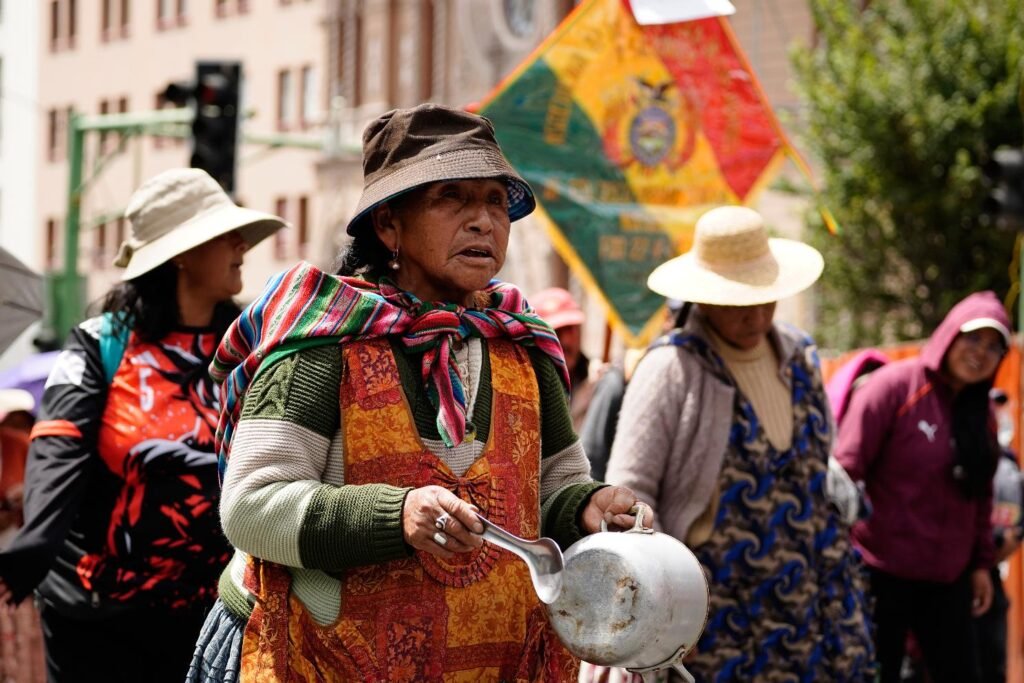
The current protests represent a significant recalibration of Bolivia’s social movements. Historically, the country’s most visible and highly organized resistance networks have emerged from the highland mining and peasant communities. However, the recent march was spearheaded by lowland Amazonian groups, echoing the historic 1990 March for Territory and Dignity that first forced the national government to recognize lowland indigenous land rights. The convergence of these Amazonian groups with powerful highland unions like the CSUTCB and the Central Obrera Boliviana (COB) suggests that a unified, cross-regional opposition front is forming. These organizations, which recently successfully pressured the government to retract the neoliberal Decree 5503—a measure that would have eliminated fuel subsidies and deregulated foreign extractive projects—are now escalating their demands, declaring indefinite strikes and calling for President Paz’s resignation.
A Political Vacuum
Despite the strength of the social mobilization, Bolivia currently faces a profound political vacuum. The Movement for Socialism (MAS), which dominated Bolivian politics for nearly two decades, has effectively collapsed and was heavily defeated in the previous national elections. Its internal structures were severely damaged by factional disputes between loyalists of former presidents Evo Morales and Luis Arce.
President Paz originally secured his electoral victory by running against an extreme right-wing candidate, Jorge Fernando “Tuto” Quiroga, presenting himself as a more moderate alternative capable of capturing the support of the popular sectors. However, his administration has rapidly aligned itself with corporate agribusiness interests.
With the MAS marginalized and recent municipal elections dominated by conservative candidates, there is currently no viable progressive electoral project capable of translating the demands of the social movements into institutional power.
Nevertheless, as lowland indigenous groups and powerful highland labor unions unite to defend the legal safeguards of their ancestral territories, they are once again demonstrating the capacity of grassroots coalitions to challenge systemic privatization and demand equitable economic policies.