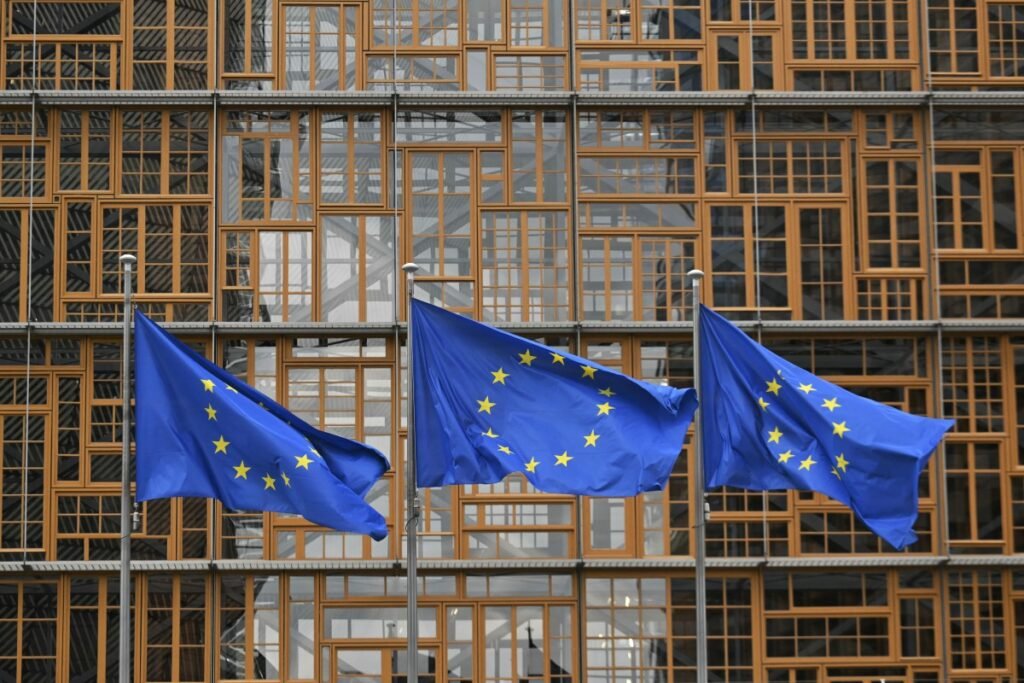

On the first of October, French Prime Minister Sébastien Lecornu introduced a stringent 2027 budget designed to generate €54 billion in savings. This severe fiscal consolidation includes comprehensive freezes on public-sector wages and strict caps on pension increases, all implemented while the national military budget remains on a trajectory to double. Concurrently, the European energy market experienced a severe shock, with gas prices closing the following day at €76 per megawatt-hour, representing a staggering 143 percent year-over-year increase. Continental gas storage levels remain precariously low at 71 percent, well below the five-year average of 87 percent. Germany finds itself in a particularly vulnerable position, with storage at a mere 57 percent, largely due to Qatar extending its force majeure declarations on liquefied natural gas deliveries into December. Simultaneously, the continent’s security apparatus is stretched thin; the European Union’s foreign policy chief, Kaja Kallas, recently issued an urgent appeal to member states for additional naval assets to secure commercial shipping routes following the Houthi consolidation of control over the Bab al-Mandeb strait. This maritime vulnerability is compounded by immediate continental threats, underscored by the August discovery of an explosives-laden drone at Leipzig airport that was reportedly targeting a Ukrainian cargo aircraft. Consequently, Europe is not merely confronting isolated economic or security dilemmas; it is facing a singular, multi-front crisis that must be financed entirely out of heavily strained national budgets.

Compounding Geopolitical Shocks and Institutional Responses
During the NATO summit held in The Hague in June 2025, European allies committed to a monumental defense spending target of 5 percent of gross domestic product by 2035, allocating 3.5 percent for core military expenditures and 1.5 percent for broader security initiatives. This represented a massive leap from the euro area’s 2025 baseline defense spending, which hovered around 1.5 percent of GDP, with nations such as Spain immediately negotiating specific exemptions. The European Union responded to these ambitious targets with the Readiness 2030 framework, an initiative designed to mobilize €800 billion. However, the structural flaw of this framework is its reliance on national borrowing, facilitated by a temporary suspension of European deficit regulations, with only €150 billion provisioned as common loans through the Security Action for Europe (SAFE) instrument. This financial architecture was rapidly undermined by two subsequent geopolitical shocks. The outbreak of conflict involving Iran severely disrupted the flow of Gulf liquefied natural gas, which traditionally accounts for approximately one-fifth of the globally traded supply. Simultaneously, the Houthi seizure of Yemen’s Red Sea coastline placed Europe’s most efficient maritime route to Asian markets under adversarial control. These developments occurred against the backdrop of an unrelenting war in Ukraine, where springtime ceasefire negotiations collapsed almost instantly, and Russia’s campaign of sabotage and drone incursions across NATO territory—ranging from Polish airspace to German logistical hubs—entered its third consecutive year.
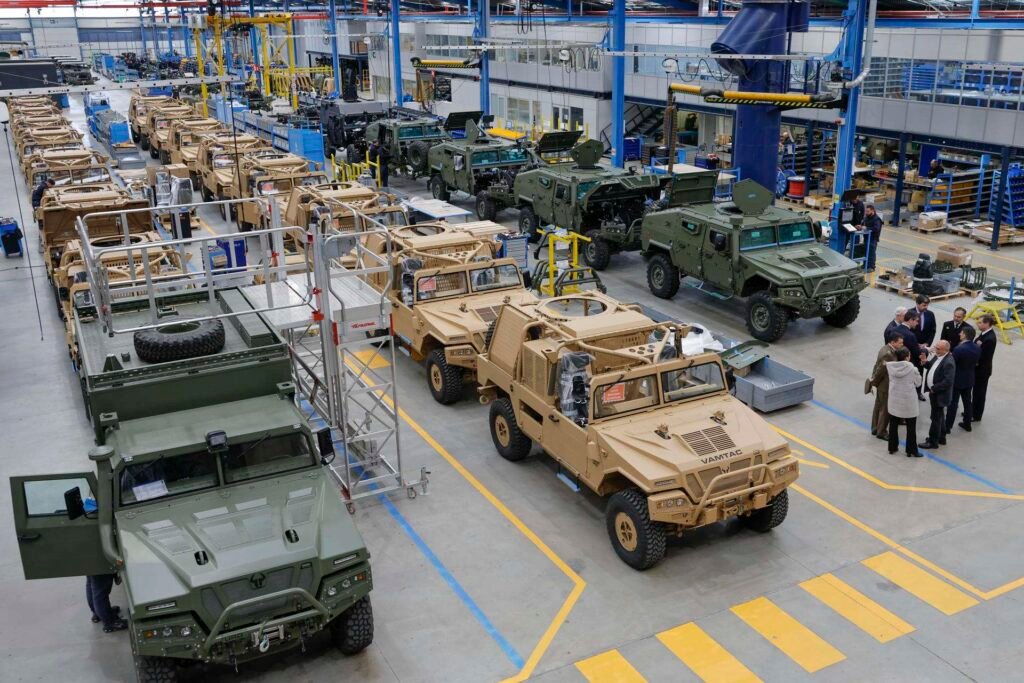
The Fiscal Burden of Continental Deterrence
The conventional economic framing of this crisis as a temporary “guns versus butter” dilemma is fundamentally flawed. None of the prevailing geopolitical shocks are transient, and from a macroeconomic perspective, the European continent possesses the aggregate wealth necessary to finance its rearmament. The European Central Bank estimates that the currently planned defense expansions will contribute an additional 0.4 percentage points to euro area economic growth between 2025 and 2028. Because the bulk of these funds will be directed toward capital equipment rather than personnel salaries, the inflationary impact is projected to remain negligible at less than 0.1 percentage points. Thus, at a continental level, the arithmetic of rearmament is sound.
The systemic vulnerability lies entirely in how this capital is sourced. The European Central Bank calculates that Germany alone is responsible for approximately 70 percent of the euro area’s supplementary defense spending. Berlin’s 2027 budget elevates core defense spending to €109 billion, charting a course toward the 3.5 percent GDP target by 2029 through the authorization of €838 billion in new borrowing between 2027 and 2030. Germany possesses the fiscal space for such debt issuance, starting with a debt-to-GDP ratio of roughly 66 percent.
Conversely, France is operating with a sovereign debt burden of 119 percent of GDP and a 5.4 percent annual deficit, compelling the government to implement €54 billion in severe domestic cuts simply to sustain its defense commitments.
Italy and Greece face even steeper challenges, burdened with debt ratios of 135 percent and 151 percent respectively. Ultimately, Europe is attempting to purchase a shared public good—the strategic deterrence of Russian aggression—using heavily segmented national balance sheets of vastly unequal strength. For nations lacking the capacity to borrow, the domestic social model is inevitably sacrificed. While France freezes public compensation, even Germany’s 2027 budget includes trimmings to social benefits and pension subsidies. This domestic trade-off is generating intense political friction; polling indicates that while 68 percent of French citizens support enhanced defense spending, 50 percent vehemently oppose sacrificing public services to finance it. Similar skepticism is evident in Britain and Germany, where majorities oppose tax increases and excessive borrowing respectively.
The energy crisis further exacerbates this trap. During the 2022 energy shock, European governments successfully deployed hundreds of billions in subsidies and price caps funded by cheap debt. Although the current gas price surge is comparatively milder, the macroeconomic environment has fundamentally shifted. France’s ten-year bond yield has climbed to 4.9 percent—a 130 basis point premium over German bunds—requiring Paris to secure an additional €10 billion next year solely for debt servicing. The 2022 strategy of debt-financed economic cushioning is now an exclusive luxury of Berlin, indicating that the current energy shock will inflict permanent structural damage on European economic growth. While historical comparisons to Cold War rearmament are frequent, they ignore the reality that mid-century rearmament occurred alongside 4 percent annual growth rates, low sovereign debt, and an unquestioned American security guarantee. Today, with weak growth, high debt, and shifting strategic priorities in Washington, individual national budgets are demonstrably incapable of sustaining the rearmament effort. Unless staunch opposition to new joint borrowing from Germany, the Netherlands, Austria, Finland, and Sweden softens, the financial burden of every subsequent crisis will disproportionately crush the continent’s weakest fiscal links.
Strategic Trajectories and Future Scenarios
Geopolitical analysts project three potential trajectories for the European security and economic architecture over the coming winters. The base case, holding an estimated 50 percent probability, foresees a structurally divided, two-speed rearmament process. In this scenario, Germany, Poland, and the Nordic and Baltic states successfully maintain their trajectory toward the 3.5 percent spending target. Conversely, France, Italy, and Spain inevitably fall behind these benchmarks, forced into implementing piecemeal reductions to their welfare systems. Prime Minister Lecornu’s budget would likely pass in a significantly diluted form by early 2027, provided the winter remains meteorologically normal and there is no further military escalation in the Strait of Hormuz. While bond spreads would remain elevated, they would avoid a catastrophic explosion, effectively shifting the heavy political cost of rearmament onto southern European governments currently grappling with surging populist movements.
A more pessimistic downside scenario, assessed at a 30 percent probability, envisions a severe winter shock colliding directly with a French fiscal crisis. Should a severely cold winter combine with Qatar’s extended force majeure and depleted German reserves, regional gas prices could easily breach the €100 per megawatt-hour threshold, necessitating emergency industrial demand destruction. Under these pressures, the French budget could collapse, bringing down the government and causing the bond spread over Germany to widen dramatically. In this fiscal emergency, long-term defense commitments would become the immediate casualty, as widespread civil unrest would force policymakers to choose between funding civilian pensions or military procurement. Such a collapse would signal to Moscow that its sustained campaign of asymmetric pressure, sabotage, and airspace incursions is strategically effective.
The upside scenario, estimated at a 20 percent probability, posits that the sheer weight of these overlapping crises finally compels the creation of a comprehensive common financing mechanism. Escalating commercial losses in the Red Sea, continuous Russian provocations, and unsustainable French borrowing costs could ultimately force Berlin to support a highly capitalized, defense-specific joint borrowing instrument during the next European Union budget negotiations. Germany’s own rapidly doubling interest obligations and the desperate need of its domestic defense industry for reliable, large-scale European orders would provide the domestic political justification for this shift. Implementing a “SAFE 2” mechanism would successfully transfer the massive financial burden of continental deterrence from fragile national budgets onto the robust, collective balance sheet of the European Union, representing the only viable pathway to resolving the structural permanence of the current crisis.
Market Indicators and the Front Line of Defense
Ultimately, Europe possesses the aggregate financial capacity to secure its own defense. What remains utterly unsustainable is the attempt to finance a unified continental security apparatus through twenty-seven isolated, uncoordinated fiscal bets. The current paradigm—where Germany borrows heavily, France implements drastic cuts, and Italy delays action—ensures that every spike in energy prices or disruption in global shipping lanes inflicts maximum damage on the budgets least equipped to absorb the shock. This systemic fragmentation is precisely what transforms a sequence of manageable geopolitical disruptions into an endless, structural crisis.
Moving forward, the most critical indicator of European resilience will not be found on a traditional battlefield, but rather in the spread between French and German ten-year sovereign borrowing costs. As Prime Minister Lecornu attempts to shepherd his deeply unpopular budget through a fragmented parliament, the existing 130 basis point spread already reflects profound market anxiety. If this gap widens decisively during the upcoming winter, the financial markets will have rendered a definitive verdict on the viability of the current system. While the physical front line of European security stretches from the Baltic city of Narva to the Bab al-Mandeb strait, the decisive battle that will determine whether that line holds is currently being waged within the French bond market.