

The escalating tripartite conflict involving the United States, Israel, and Iran has severely compromised the security of global shipping networks, most notably through the destabilization of the Strait of Hormuz. Concurrently, a resurgence of targeted operations by Houthi militants has exponentially increased the peril of navigating the Bab el-Mandeb Strait, effectively placing two of the most critical maritime chokepoints on the globe under immense geopolitical pressure. In response to these acute supply chain vulnerabilities, international shipping conglomerates are actively evaluating alternative transit corridors. The Northern Sea Route, which traverses the Arctic coastline of the Russian Federation, has emerged prominently in these discussions. Accelerated by the retreating ice coverage associated with global climate change, the route is increasingly accessible and theoretically offers a vastly expedited connection between European and East Asian markets. However, beneath this theoretical promise lies a complex web of geographic, economic, and geopolitical limitations that render the Arctic route a highly improbable substitute for traditional Middle Eastern corridors. Currently, during its operational sailing season, the Northern Sea Route facilitates less than 0.5 percent of the weekly maritime transits between Europe and East Asia compared to established southern routes. Ultimately, the Arctic’s most substantial contribution amidst the current logistical crisis will not materialize through commercial container shipping, but rather through the strategic exportation of Russian energy resources.
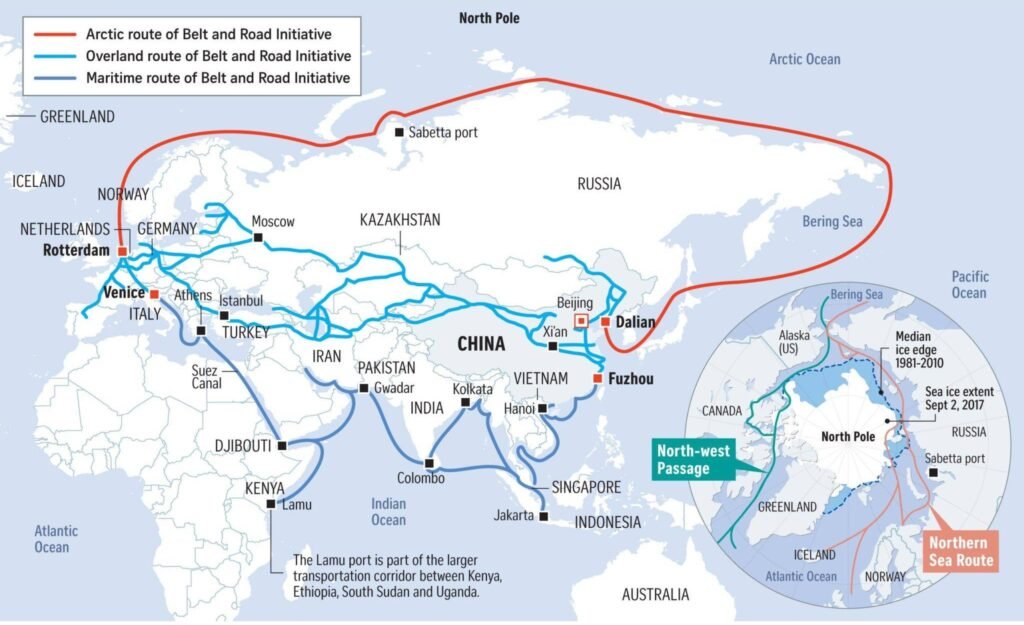
Economic, Navigational, and Environmental Impediments
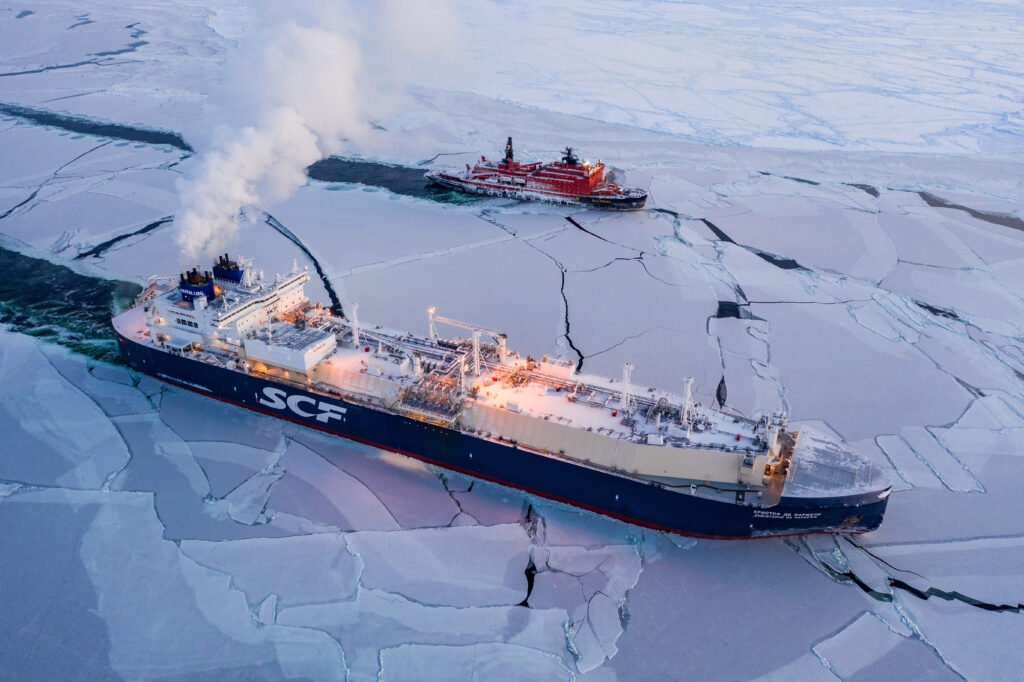
While the Northern Sea Route undeniably provides substantial distance reductions for specific maritime journeys connecting northern Europe with Northeast Asia, a shorter geographical distance does not inherently equate to lower operational costs. The severe environmental realities of the Arctic dictate stringent navigational parameters; extreme ice conditions, particularly throughout the winter months, severely restrict transit windows. Consequently, shipping operators are frequently mandated to utilize specialized vessels possessing advanced ice-class capabilities or to procure costly icebreaker escort services to ensure safe passage.
Furthermore, the Russian government leverages its territorial jurisdiction to impose a myriad of strict navigation requirements and transit tariffs, which exponentially inflate the aggregate costs and administrative burdens for foreign shipping entities. Beyond the immediate economic disincentives, the route is fraught with profound environmental and operational hazards. The Arctic theater suffers from a severe deficit in search-and-rescue infrastructure, leaving vessels critically isolated in the event of an emergency. An ecological disaster, such as a localized oil spill within these remote, ice-covered waters, would present nearly insurmountable containment challenges. To mitigate these inherent perils, shipping companies must secure highly specialized insurance policies, implement rigorous emergency preparedness protocols, and deploy custom-engineered vessels. These complex logistical requirements are further compounded by the stringent legal and financial barricades erected by Western sanctions against the Russian Federation.
Geographic Limitations and the African Alternative
The fundamental geographic orientation of the Northern Sea Route further curtails its utility as a global logistical alternative. While the corridor is technically capable of accommodating certain classes of large-scale maritime vessels, the pervasive ice formations, stringent navigational regulations, and lack of supportive maritime infrastructure severely cap its aggregate throughput capacity, rendering it entirely incapable of absorbing the massive cargo volumes traditionally funneled through conventional shipping lanes. Additionally, the route’s geographic utility is highly localized; it primarily advantages bilateral trade specifically routed between northern Europe and Northeast Asia. It provides virtually zero logistical advantage for maritime shipments originating from the Persian Gulf or for vessels transiting between the Asian continent and destinations outside of the northern European theater.
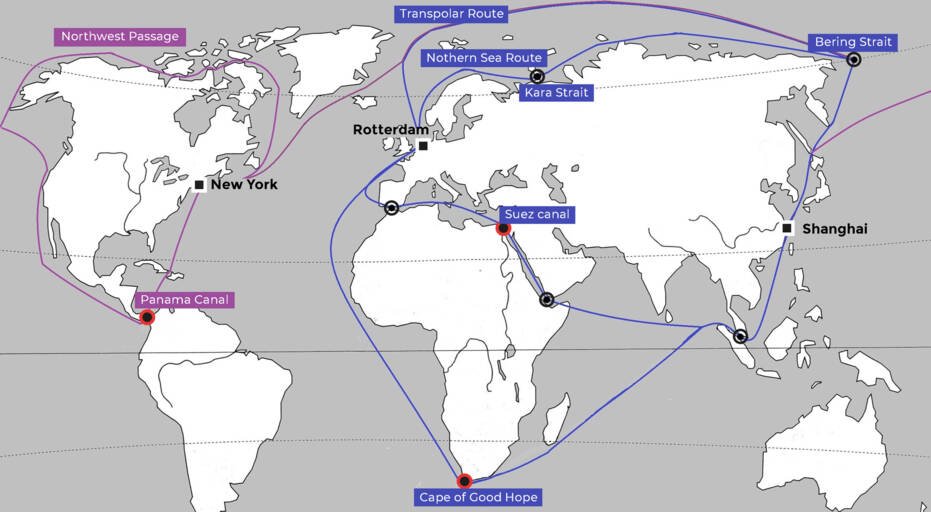
Faced with the profound disruptions in the Red Sea, the vast majority of international shipping enterprises have concluded that redirecting their fleets around the African continent via the Cape of Good Hope remains a vastly more pragmatic operational response. While this southern diversion cannot bypass the Strait of Hormuz for raw materials and cargo originating deeply within the Persian Gulf, it offers vital structural advantages. Despite the substantial accumulation of added transit distance and resultant fuel expenditures, the Cape route effortlessly accommodates the largest commercial supertankers and container ships in the global fleet, operating continuously year-round without the debilitating seasonal ice restrictions that plague the Arctic.
The Strategic Ascent of Arctic Hydrocarbons
Although the Arctic will not emerge as a viable alternative for global containerized freight, the region is poised to offer strategic relief specifically through the domain of energy production. The extraction and exportation of Russian Arctic hydrocarbons present a unique geopolitical advantage: these critical energy supplies can be directly routed to energy-hungry Asian consumer markets without ever navigating the contested waters of the Strait of Hormuz or the Bab el-Mandeb Strait. The realization of this capability is already underway, evidenced by Russia’s massive Vostok Oil initiative, which officially commenced export operations in September 2026. Additionally, the heavily sanctioned Arctic LNG 2 project has successfully demonstrated its operational resilience, managing to produce liquefied natural gas despite severe logistical and financial impediments. Over the long term, both of these massive infrastructure projects are positioned to inject supplementary hydrocarbon volumes into international markets, thereby systematically reducing global reliance on energy supplies that must transit through volatile Middle Eastern maritime chokepoints. However, immediate relief is hindered by significant production constraints and shipping bottlenecks, and merely redirecting Russia’s existing export volumes to new buyers would fail to increase the aggregate global energy supply.
Asian Beneficiaries and the Western Sanctions Dilemma
The anticipated expansion of these massive Arctic energy projects presents Western governments with an acute geopolitical paradox. Policymakers must confront the uncomfortable choice of determining whether the urgent necessity of stabilizing global energy security justifies the relaxation of the very economic sanctions designed to cripple Russia’s capacity to finance its ongoing military campaign against Ukraine. As this dilemma paralyzes Western capitals, Asian economic powers are positioning themselves to capitalize on the shifting energy landscape. The People’s Republic of China is uniquely positioned to reap massive benefits from the surge in Russian Arctic energy exports, having aggressively invested capital into regional energy projects while actively participating in commercial shipping operations along the Northern Sea Route.
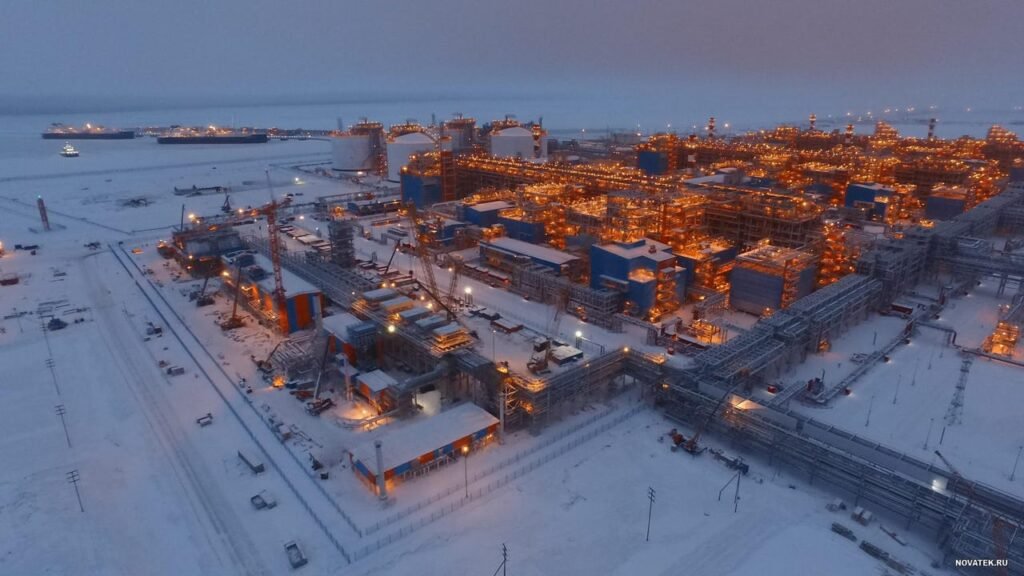
Japan similarly maintains strategic financial investments in Russian liquefied natural gas developments, while the governments of South Korea and India continue to actively explore emerging maritime and energy opportunities in the high north. Nevertheless, the overarching framework of Western sanctions and intense political considerations severely complicate these strategic investments, generating profound diplomatic friction particularly for steadfast United States allies such as Japan and South Korea. Ultimately, the escalating crisis in the Middle East will not transform the freezing waters of the Arctic into a modern equivalent of the Suez Canal. Instead, it will solidify the critical importance of Russian Arctic energy resources to the continued economic expansion of Asian markets, even as Western sanctions stubbornly cap the region’s ultimate geopolitical potential.