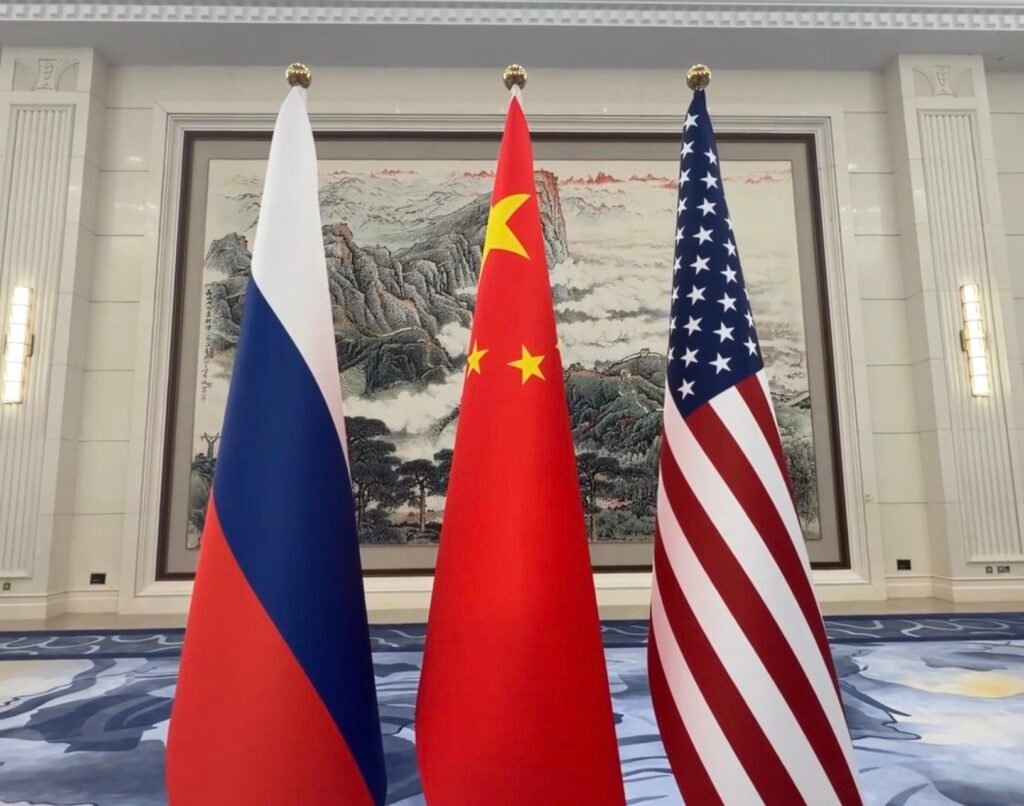

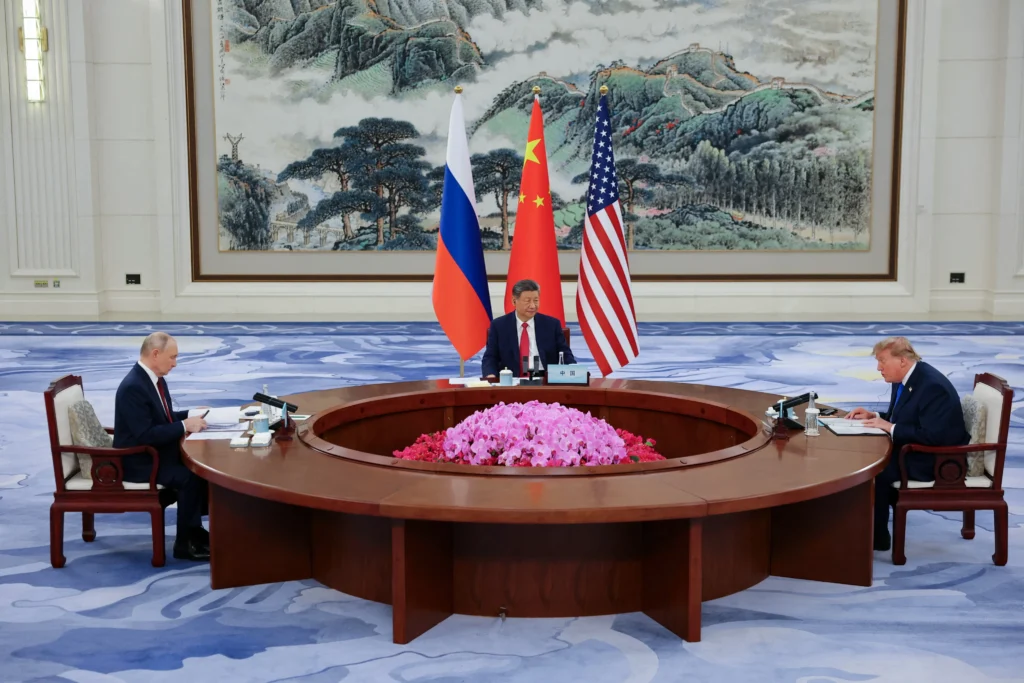
United States President Donald Trump’s high-profile trilateral summit with Chinese President Xi Jinping and Russian President Vladimir Putin in Shenzhen has underscored the inherent constraints of personalized statecraft. Convened at Kylin Villa—a venue historically reserved for sensitive diplomatic engagements involving figures such as Kim Jong-il and envoys of the Dalai Lama—the meeting lasted under ninety minutes. While the three leaders issued a joint “peace declaration” reaffirming that a nuclear war must never be fought and agreeing to initiate dialogue on nuclear risk reduction, the gathering yielded no concrete timetable for arms control negotiations. Furthermore, the talks produced no discernible breakthroughs regarding the ongoing conflicts in Iran and Ukraine, tensions over Taiwan, bilateral trade disputes, or artificial intelligence governance.
For President Trump, the summit occurred amid considerable domestic political vulnerability. Following the Republican Party’s loss of congressional control in the November midterm elections, and facing declining approval ratings driven in part by public dissatisfaction with the continuing conflict involving Iran, the administration sought to project international authority. Trump has consistently championed direct, leader-to-leader engagement with counterparts such as Xi, Putin, and North Korean leader Kim Jong Un as a superior alternative to traditional, incremental diplomatic channels. Speaking to NBC News, Trump characterized the Shenzhen encounter as an extraordinary success, rating it a “12 out of 10,” while the White House maintained that his Asian engagements demonstrated global respect for American leadership. However, critics contend that this reliance on personal rapport and public gestures often lacks the rigorous preparation and defined objectives necessary for durable agreements. As Christopher Preble, a senior fellow at the Stimson Center, observed, while Trump secured significant diplomatic pageantry alongside two of the world’s most influential leaders, it remains questionable whether the summit achieved substantive progress on any major geopolitical dispute.
Strategic Optics and the Yalta Comparisons
Analysts noted that the summit’s primary utility lay in its political symbolism, allowing all three leaders to project global influence without committing to meaningful concessions. For President Xi, hosting this unprecedented trilateral meeting reinforced China’s standing as a central diplomatic power and a premier venue for global security deliberations. Xi’s decision to greet Trump personally at the airport with a military welcome further highlighted the importance both administrations placed on ceremonial optics—a dynamic Trump himself emphasized when comparing his reception to that of other visiting dignitaries.
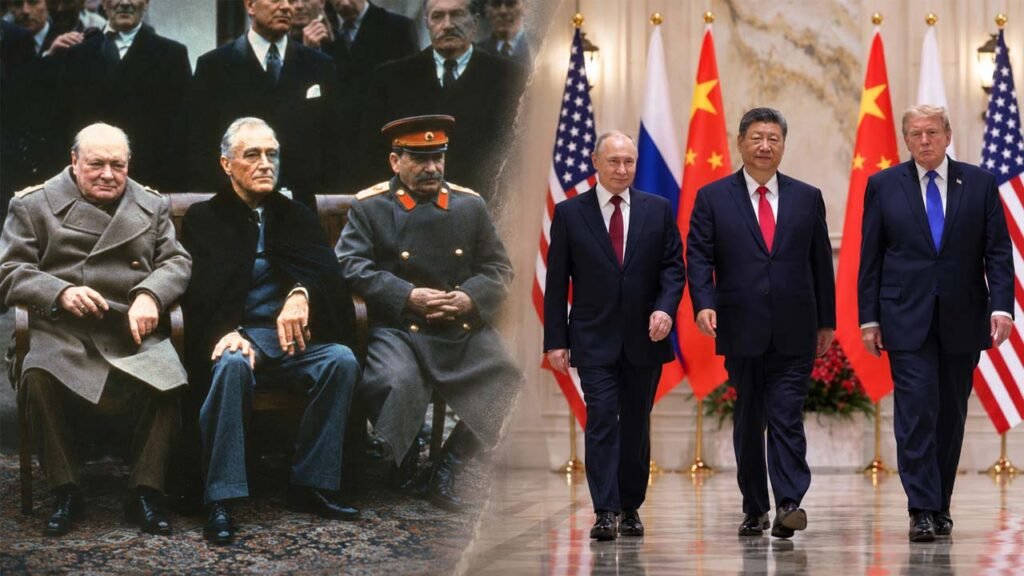
For President Putin, the gathering offered an invaluable platform to stand as an equal alongside the leaders of the world’s two largest powers, despite Russia’s comparatively smaller economic footprint and its persistent international isolation following the four-year war in Ukraine. By participating without offering major policy concessions, Putin reinforced Moscow’s narrative that Russia remains an indispensable actor in global security architecture. Prior to the meeting, the trilateral format drew comparisons to the 1945 Yalta Conference, where the United States, the United Kingdom, and the Soviet Union negotiated the post-World War II order. These parallels generated acute anxiety in Kyiv and among smaller nations, which feared that great powers might negotiate their futures without their participation. Ultimately, however, the brief Shenzhen encounter proved far less consequential than the week-long Yalta deliberations.
Allied Anxieties and Regional Frictions
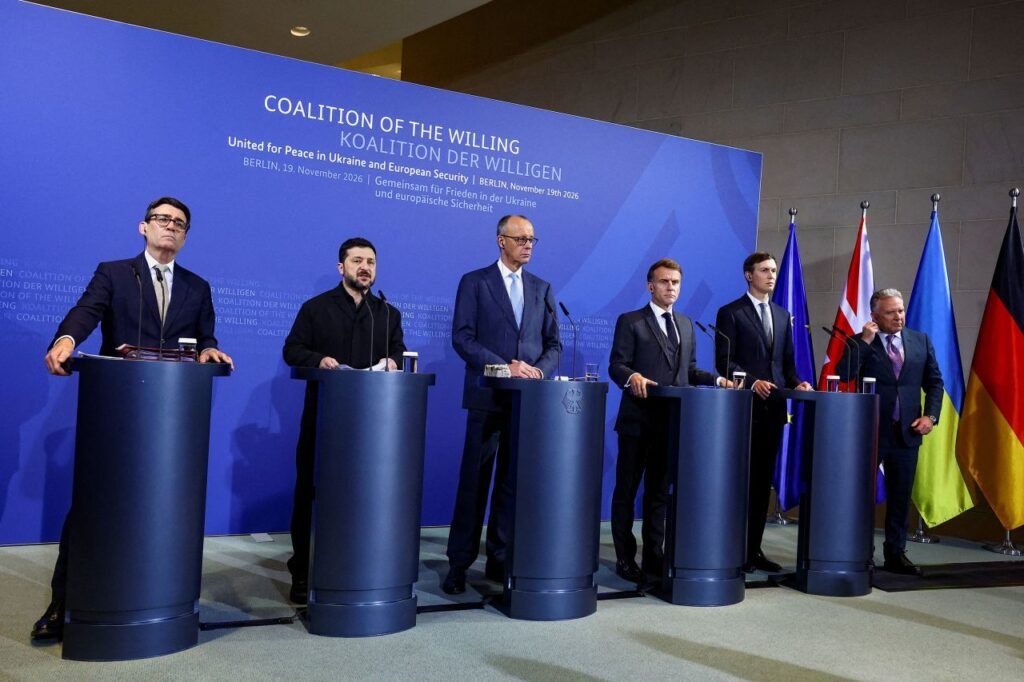
The exclusion of traditional Western and Asian allies from the trilateral discussions provoked palpable frustration across partner capitals. European leaders convened in Berlin on Thursday to reaffirm their steadfast support for Ukraine, with several officials expressing unease over Trump’s cordial public engagement with Putin—whom Trump referred to as a friend alongside Xi during separate bilateral meetings—while Europe remains directly committed to supporting Kyiv. German Chancellor Friedrich Merz dismissed the Shenzhen gathering as appearing to be “first and foremost a photo opportunity,” reflecting a broader European concern that Washington’s preference for direct major-power negotiations could marginalize traditional allies in matters of continental security.
Simultaneously, the summit highlighted sharp geopolitical tensions in the Indo-Pacific. Japanese Prime Minister Sanae Takaichi was notably sidelined during the proceedings, underscoring the strained state of Sino-Japanese relations following her remarks regarding potential military deployments concerning Taiwan. These regional anxieties were further compounded by reports from both Japan and Taiwan of Russian military aircraft incursions. During the talks, Xi cautioned Trump on the necessity of properly managing the Taiwan issue to maintain positive bilateral ties, while also advocating for “free and open” trade. Putin, in turn, emphasized Russia’s role in ensuring food and energy security across the Asia-Pacific region. Although the leaders acknowledged the importance of maintaining uninterrupted oil flows through the Strait of Hormuz, Xi refrained from addressing Iran directly, opting instead to urge diplomatic dialogue to resolve regional conflicts.
The Peace Declaration and Nuclear Risk Reduction
The most tangible output of the Shenzhen summit was the “peace declaration,” released by Chinese state media and the Kremlin without immediate accompanying statements from the leaders themselves. Beyond reaffirming that a nuclear war cannot be won and must never be fought, the document included commitments to reform the United Nations, strengthen the global supply of refined petroleum products, and uphold the immunity of state officials in international courts.
Daryl Kimball, executive director of the Arms Control Association, welcomed the nuclear declaration as a constructive step given that the United States, Russia, and China possess the world’s largest nuclear arsenals, though he cautioned that rhetorical commitments must be followed by practical measures. Achieving a formal trilateral arms control treaty remains a formidable challenge, a reality Trump acknowledged to Reuters during his return flight to Washington. A primary impediment is Beijing’s persistent reluctance to join conventional arms control frameworks alongside Washington and Moscow, as China maintains that its significantly smaller nuclear arsenal makes equal participation unjustifiable. Consequently, the agreement to hold nuclear risk-reduction talks represents an initial diplomatic opening rather than a substantive arms control breakthrough.
Future Trajectories Beyond the Pageantry
Looking ahead, diplomatic attention is already shifting toward the Group of 20 summit scheduled for mid-December, which President Trump plans to host at his golf resort in Florida. President Xi is expected to attend, and while President Putin has not received a formal invitation, his potential participation remains a subject of speculation. Although the Florida gathering may offer another venue for direct trilateral engagement, the outcome in Shenzhen suggests that expectations for major breakthroughs must be tempered by the profound strategic divergences separating Washington, Beijing, and Moscow.
Even as the balance of power in the United States Congress shifts in January, President Trump retains substantial executive authority over foreign policy, ensuring that his unpredictable, leader-to-leader diplomatic style will remain a defining feature of his administration. Ultimately, the efficacy of this approach will not be measured by ceremonial welcomes or aspirational declarations, but by tangible developments beyond the summit room—specifically, whether the conflict in Iran is resolved, whether the war in Ukraine moves toward a viable settlement, and whether the United States and China can effectively manage their intensifying economic and technological rivalry.