

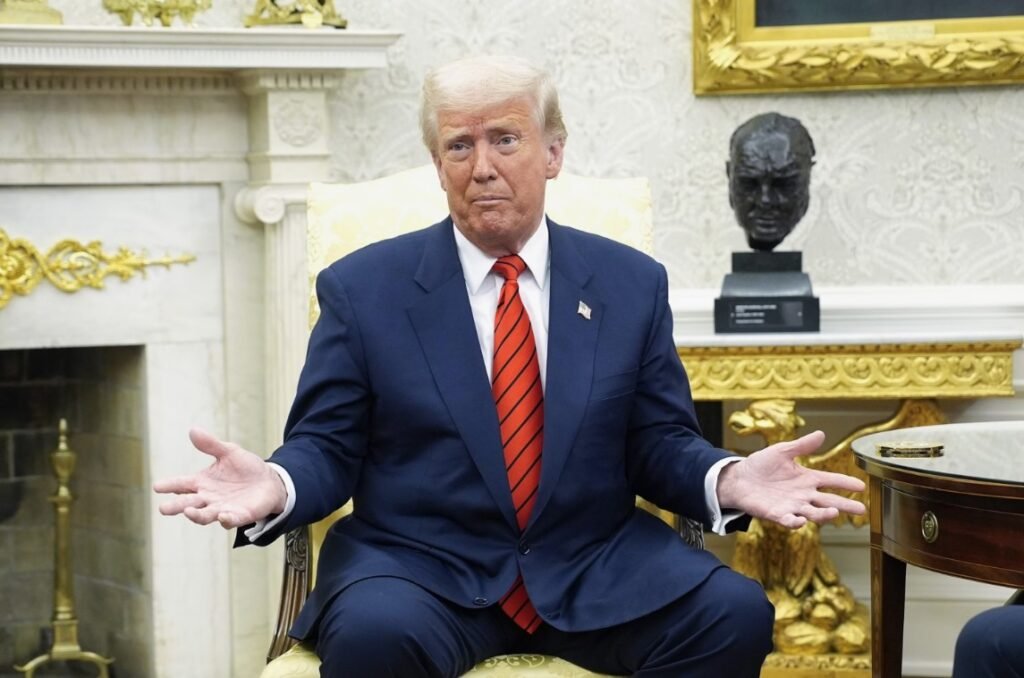
A well-known Chinese proverb warns, “May you live in interesting times,” often considered a curse rather than a blessing. That sentiment is now deeply felt among Western leaders as they grapple with the public fallout from an extraordinary confrontation between U.S. President Donald Trump and Ukrainian President Volodymyr Zelensky.
The diplomatic row between Trump, his Vice President JD Vance, and Zelensky unfolded like a political earthquake, shaking the very foundations of Western unity on Ukraine. For many in Washington, Brussels, and London, the dramatic scene in the Oval Office—where an expected agreement collapsed into a bitter standoff—was a moment of profound reckoning.
What began as a routine diplomatic visit to finalize a deal quickly escalated into a full-blown crisis that has forced Western leaders to confront an uncomfortable reality: the strategic landscape in Ukraine has shifted irreversibly. The illusion of continued American commitment to Kyiv is now shattered, replaced by an openly transactional approach that leaves Ukraine in an increasingly vulnerable position.
The Deal That Wasn’t: Trump’s Business-First Approach
For weeks, Trump had boasted about a lucrative agreement with Ukraine that would grant the U.S. control over vast mineral reserves beneath Ukrainian soil. This was framed as a repayment for the $350 billion in aid that Washington had already funneled into Kyiv’s war effort.
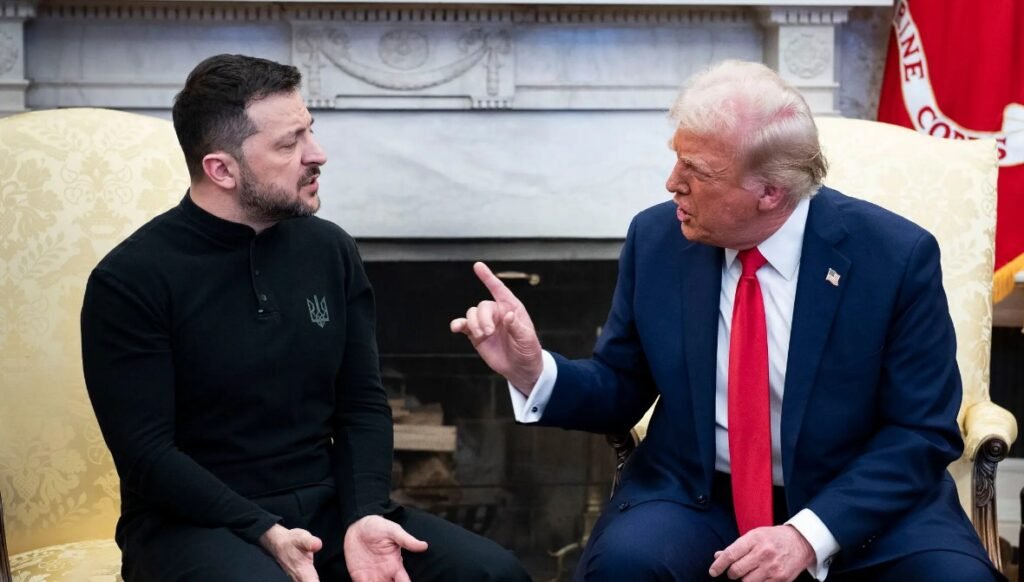
However, when Zelensky arrived in Washington, he had a very different understanding of the proposed deal. From Kyiv’s perspective, the offer of mineral rights was a bargaining tool—a way to secure continued military and financial aid from the United States. The Ukrainian president believed he could entice Trump into a long-term commitment by offering access to Ukraine’s untapped natural resources.
Trump, however, interpreted the situation in purely transactional terms. Having already spent hundreds of billions propping up Ukraine’s war effort, he saw the mineral rights as a debt repayment, not a down payment for future military support. The misalignment of expectations quickly escalated into a high-stakes confrontation.
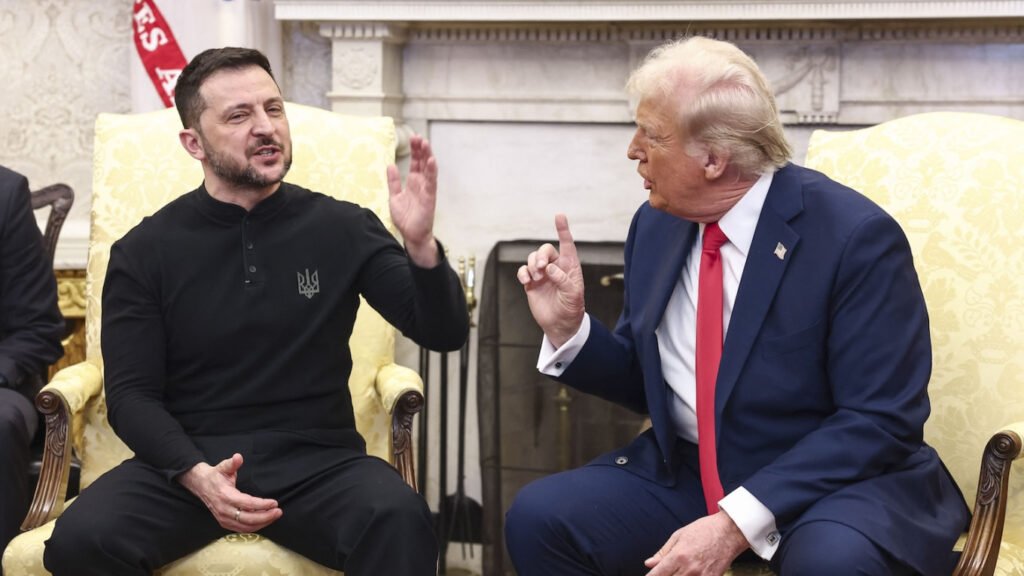
The Ukrainian delegation, expecting a discussion on future aid, was instead met with a demand to finalize the transfer of resource rights—without any additional commitments from Washington. For Zelensky, this was a diplomatic nightmare: not only was new aid off the table, but Ukraine was expected to part with critical economic assets for nothing in return. In a moment of palpable frustration, Zelensky refused to sign the agreement. What followed was a heated exchange, described by insiders as one of the most explosive diplomatic incidents in recent U.S. history.
Trump’s Strategy: Ending the War, Cutting U.S. Losses
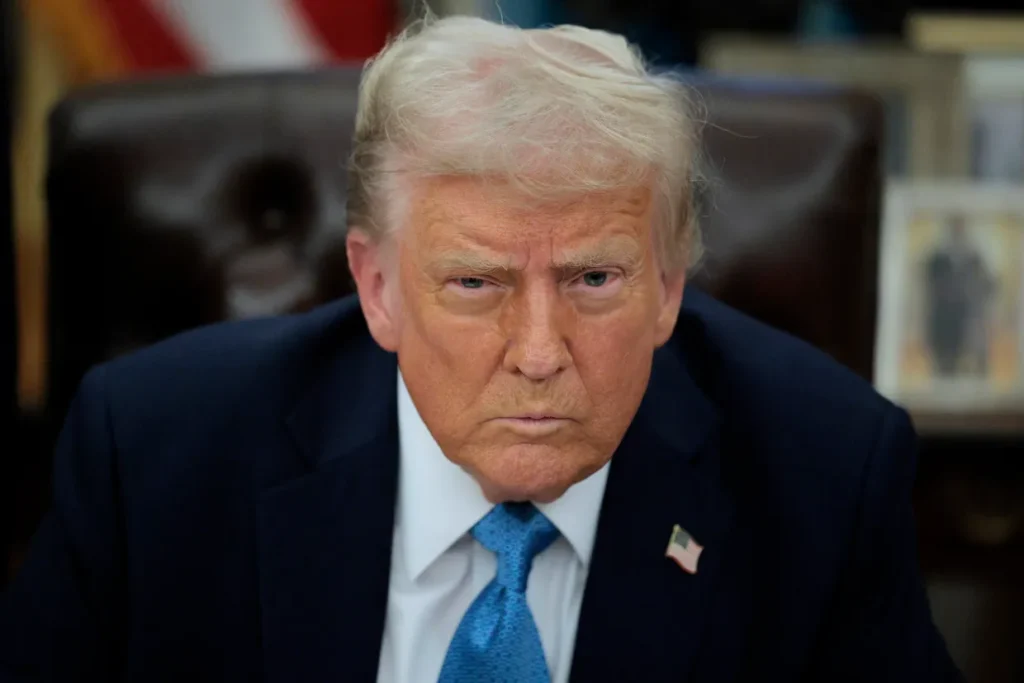
Trump’s rejection of further entanglement in Ukraine is not a spur-of-the-moment decision, nor is it a product of impulsive diplomacy. It is, in fact, a deliberate strategic pivot aimed at extricating the United States from a costly, unsustainable war.
Throughout his election campaign, Trump repeatedly signaled his intention to end U.S. involvement in Ukraine and pursue normalization with Russia. His view, shaped by pragmatism rather than ideological loyalty, is that America has overextended itself globally—both militarily and economically.
With public debt surpassing $36 trillion, a depleted military stockpile, and looming geopolitical crises in the Middle East and the Pacific, Trump believes the U.S. must shift its priorities.
His doctrine, which could be summarized as “America First, Europe Last,” redefines the global balance of power by retrenching behind U.S. strategic borders—including Canada, Mexico, the Panama Canal, and Greenland—while scaling back commitments in Europe and Ukraine.
From Trump’s perspective, Ukraine is a losing investment. His geopolitical calculus prioritizes economic stability and military readiness over propping up foreign governments. In this context, his push for a negotiated peace with Russia is not merely a cost-cutting measure, but part of a broader vision to reposition the U.S. as a more selective global actor rather than the world’s default security provider.
This strategic shift has sent shockwaves through European capitals and, most of all, Kyiv, where leaders fear an imminent American withdrawal that would leave Ukraine politically and militarily exposed.
Zelensky’s Dilemma: A War Without an Endgame
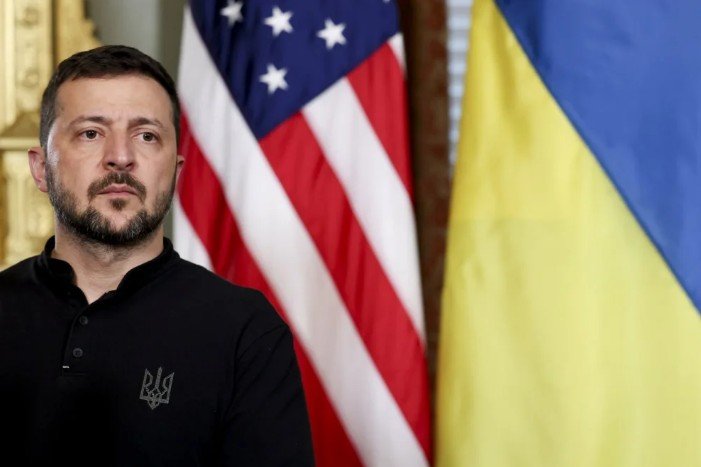
For Zelensky, the collapse of Washington’s support is nothing short of a political and military catastrophe.
The Ukrainian government cannot afford peace—not because of ideological commitment to resistance, but because peace would mean the immediate end of martial law. With no ongoing conflict, Ukraine would be legally required to hold elections—an event that would almost certainly result in Zelensky’s removal from office.
His official presidential term has already expired, and his refusal to hold elections has raised legitimate concerns about democratic legitimacy. Trump’s public remark labeling him “a dictator who refuses to hold elections”—though blunt—carries weight in international circles.
Beyond domestic concerns, Ukraine’s military reality is dire. The Russian offensive has gained steady momentum, and morale among Ukrainian forces is deteriorating rapidly.
- Frontline positions are collapsing as Russian forces consolidate gains in key regions.
- Ukraine’s weapon supplies are dwindling, with European allies unable to compensate for lost U.S. support.
- Reports of mass desertions, mutinies, and refusals to fight have increased dramatically.
For Zelensky and his administration, the continuation of war is the only viable path—not because victory is feasible, but because peace would expose the fragile foundation of his government.
As a result, Ukraine’s leadership is now desperately maneuvering to keep U.S. military assistance flowing, even as it becomes clear that Washington is pivoting away from its previous commitments.
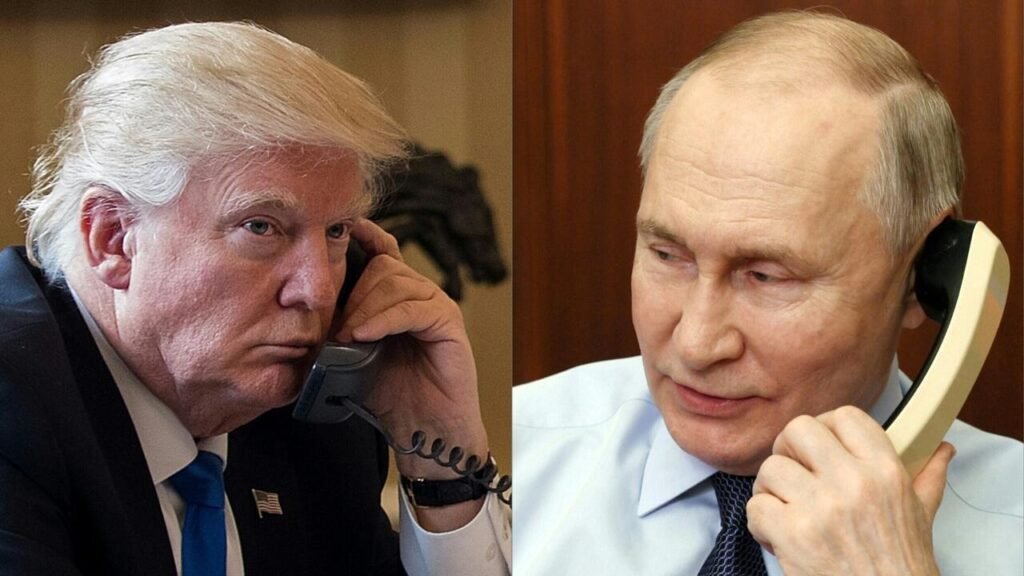
The European Reaction: Fear and Fracture
Trump’s hardline stance on Ukraine has sent European leaders into a state of panic. The war, once framed as a joint Western effort, is increasingly becoming Europe’s burden alone—something many European governments are neither politically nor economically prepared for.
In response, French President Emmanuel Macron and British Prime Minister Keir Starmer rushed to Washington to salvage U.S. commitment to Ukraine. Their mission? To convince Trump to endorse a so-called European “peacekeeping force” in Ukraine, backed by a U.S. security guarantee.
Their plan was simple:
- Establish a European-led military presence in Ukraine under the guise of a peacekeeping mission.
- Secure a U.S. commitment to intervene in the event of Russian hostilities.
- Create a scenario where any renewed fighting would draw the U.S. back into the conflict.
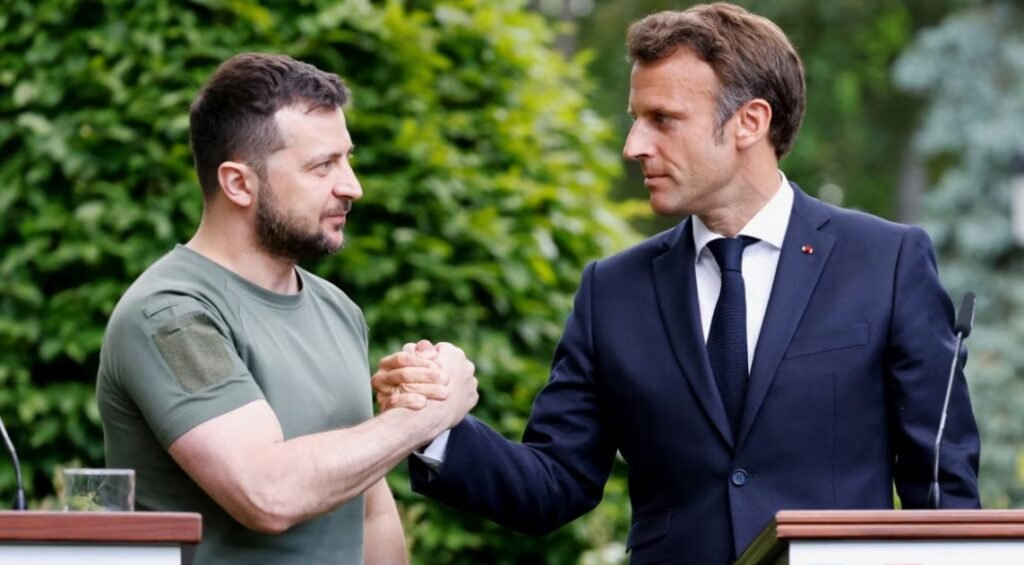
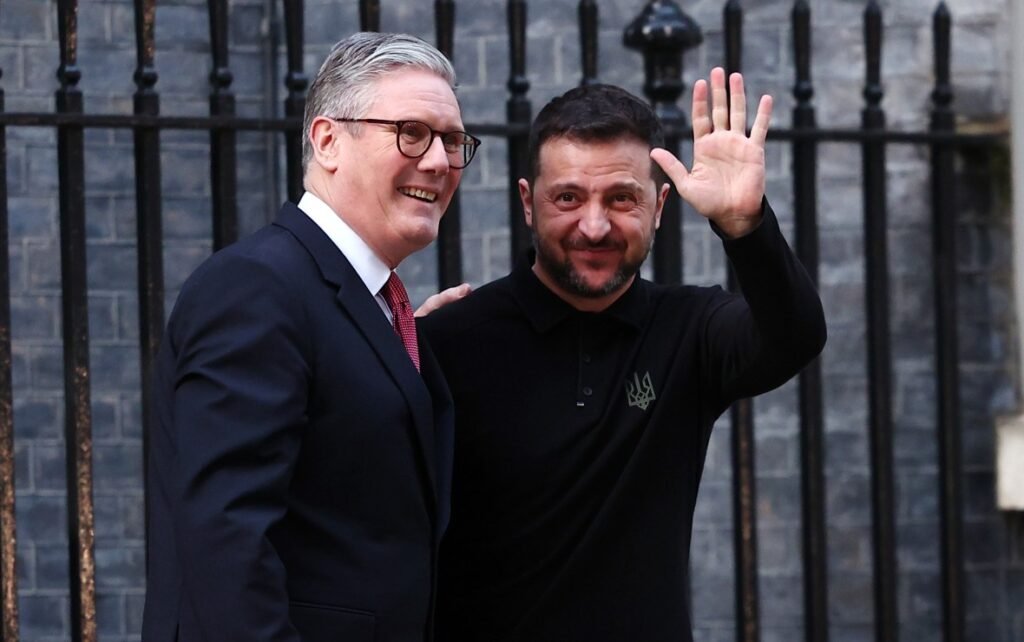
However, their attempts at persuasion failed spectacularly. Trump, despite entertaining diplomatic niceties, flatly refused to commit U.S. forces or offer security guarantees. Both Macron and Starmer left Washington empty-handed, their plans in tatters.
This diplomatic failure has left Europe at a crossroads. With no U.S. backing, European leaders must now decide whether to:
- Fund Ukraine’s war effort alone, stretching already fragile economies.
- Seek a negotiated peace, which would likely require territorial concessions to Russia.
- Continue providing military aid, knowing that without U.S. support, victory is impossible.
The Beginning of the End for Ukraine?
The Trump-Zelensky confrontation has exposed the unsustainable contradictions of the West’s Ukraine strategy. The reality is clear:
- Russia has won the war militarily.
- Ukraine, deprived of U.S. backing, faces collapse.
- European leaders are powerless to alter the outcome.
The final act of the war in Ukraine is now unfolding. Whether through negotiation or battlefield defeat, Kyiv will soon have to accept reality—a reality that Zelensky and his allies worked tirelessly to deny.